
The Crowdfunding Safety Net: How GoFundMe is Redefining Financial Security and Disrupting Traditional Markets
The rise of crowdfunding platforms like GoFundMe has quietly transformed how individuals and communities address financial emergencies, from medical bills to disaster recovery. With total donations surpassing $25 billion by 2023 and over 15 million campaigns launched in 2024 alone, these platforms are no longer niche tools—they've become a de facto financial safety net. But as crowdfunding gains traction, it's also upending traditional industries like insurance and emergency savings. Here's how investors should navigate this shift.
The Crowdfunding Surge: A New Financial Ecosystem
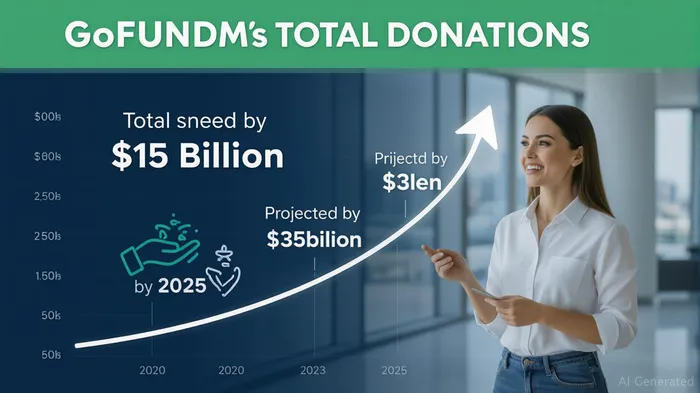
The data is clear: crowdfunding is filling gaps left by traditional systems. Medical expenses, the largest category (33% of donations in 2024), highlight a stark reality—millions lack adequate health insurance or savings to cover emergencies. Meanwhile, disaster relief campaigns raised over $2 billion in 2024, often reaching goals within days. This speed and reach underscore crowdfunding's unique advantage over slow-moving insurance claims or bureaucratic aid programs.
Insurance: Adapting to Disintermediation
Traditional insurers face a dual challenge: losing market share to peer-to-peer (P2P) models while grappling with regulatory complexity.
- P2P Insurance Growth: Carriers like Allianz (AZSEY) and AIG (AIG) are launching P2P platforms to compete, but these efforts remain small-scale. The broader shift is toward Excess & Surplus (E&S) markets, which now account for 34% of U.S. commercial insurance. This segment caters to high-risk, non-standard cases—precisely the scenarios crowdfunding platforms dominate.
- Regulatory Hurdles: The SEC's requirement for equity crowdfunding startups to secure directors and officers (D&O) insurance complicates scaling. Meanwhile, insurers must balance innovation with compliance, as seen in the $5 million fundraising cap for U.S. companies under Regulation A.
Investment Takeaway: Traditional insurers like Allianz may underperform if they can't adapt. Look to P2P innovators (e.g., Lemonade) or E&S-focused firms like Allied World Assurance (AWH) for upside.
Emergency Savings: A Tech-Driven Evolution
The emergency savings industry is fighting back with technology and partnerships to remain relevant.
- Mobile-First Dominance: With 58% of GoFundMe users accessing via mobile, traditional banks are racing to integrate real-time transfers, AI-driven budgeting tools, and penalty-free withdrawals. For example, JPMorgan ChaseJPM-- (JPM) now offers “emergency savings accounts” with automated contributions.
- Niche Crowdfunding Platforms: Specialized platforms targeting healthcare, education, or climate resilience are squeezing margins for traditional savings products. Yet, institutions like Amwins, a global brokerage, are leveraging data analytics to offer tailored policies, blurring lines between old and new models.
Investment Takeaway: Fintech firms like Plaid (acquired by Visa) or payment processors like PayPalPYPL-- (PYPL) could benefit from the shift to mobile-first financial solutions.
The Risks and Opportunities Ahead
- Fraud and Trust Issues: Despite blockchain and AI tools, crowdfunding's growth faces headwinds from scams and underfunded campaigns. This could limit its long-term scalability.
- Regulatory Pushback: The SEC's scrutiny of crowdfunding's “financial instrument” status may lead to stricter rules, favoring established players.
Investment Strategy: Where to Bet
- InsurTech Leaders: P2P insurers like LemonadeLMND-- (LMND) or enablers like HippoHIPO-- (which uses AI for property claims) offer exposure to innovation.
- E&S Market Plays: Allied World Assurance (AWH) and Validus Holdings (VR) are well-positioned in the growing E&S space.
- Fintech Infrastructure: Companies like FiservFI-- (FSIV), which provide banking software, or blockchain firms like RippleXRP-- (XRP) could profit from crowdfunding's tech needs.
- Avoid Laggards: Insurers like MetLifeMET-- (MET) or PrudentialPUK-- (PRU) lacking digital agility may struggle against disruptors.
Conclusion
Crowdfunding isn't just a supplement to traditional safety nets—it's a disruptive force reshaping finance. Investors ignoring this shift risk missing out on the next wave of financial innovation. While regulatory and operational hurdles remain, the sector's growth trajectory is undeniable. Position portfolios for the winners in P2P insurance, mobile banking, and E&S markets, while staying wary of outdated players. The future of financial security is peer-to-peer—and it's here to stay.

Stay ahead of the market.
Get curated U.S. market news, insights and key dates delivered to your inbox.
AInvest
PRO
AInvest
PRO



Comments
No comments yet