
Cross Timbers Royalty Trust Declares September Cash Distribution of $0.031753 per Unit.
ByAinvest
Friday, Sep 19, 2025 8:03 am ET1min read
CRT--
The trust reported significant volume increases in both oil and gas sales. Oil volumes jumped 40% from 10,000 barrels to 14,000 barrels month-over-month, while gas volumes more than doubled, surging 126.5% from 49,000 Mcf to 111,000 Mcf. This substantial production increase signals improved operational performance in the trust's underlying properties.
Oil pricing showed modest improvement, rising 1.7% to $63.13 per barrel from $62.10. However, gas prices declined 12.4% to $3.17 per Mcf from $3.62. While the lower gas price partially offsets the volume gains, the net impact remains positive given the magnitude of the volume increases.
The excess cost situation presents a mixed picture. The Texas Working Interest properties saw excess costs increase by $129,000, with cumulative excess costs now totaling $5,128,000 (including $1,373,000 in accrued interest). These excess costs represent expenses exceeding revenues that must be recovered before net profits flow to unitholders. More positively, the Oklahoma Working Interest properties fully recovered their $118,000 in excess costs, which should improve future distributions from these assets.
The substantial volume increases despite ongoing excess cost challenges demonstrate the trust's underlying assets maintain productive capacity. However, the persistent high excess costs in Texas properties will continue limiting distribution potential until they're worked down.
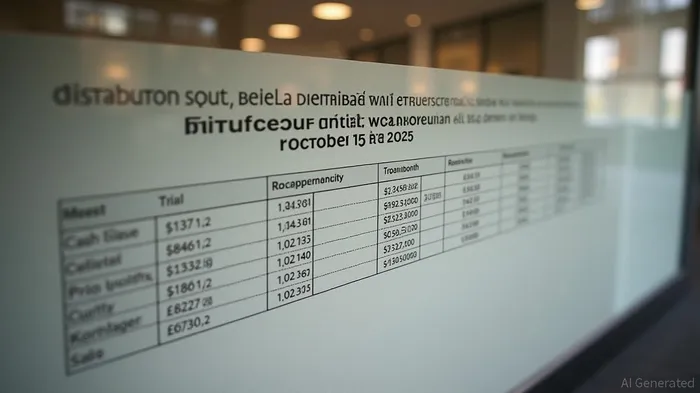
Cross Timbers Royalty Trust has declared a cash distribution of $0.031753 per unit, payable on October 15, 2025, to unitholders of record on September 30, 2025. The underlying oil and gas sales for the current and prior month distributions are shown in the table. Excess costs increased by $129,000 on properties underlying the Texas Working Interest net profits interests, while excess costs of $118,000 were fully recovered on properties underlying the Oklahoma Working Interest net profits interests.
Cross Timbers Royalty Trust (NYSE:CRT) has declared a cash distribution of $0.031753 per unit, payable on October 15, 2025, to unitholders of record as of September 30, 2025. The distribution comes alongside notable operational improvements in the trust's underlying assets.The trust reported significant volume increases in both oil and gas sales. Oil volumes jumped 40% from 10,000 barrels to 14,000 barrels month-over-month, while gas volumes more than doubled, surging 126.5% from 49,000 Mcf to 111,000 Mcf. This substantial production increase signals improved operational performance in the trust's underlying properties.
Oil pricing showed modest improvement, rising 1.7% to $63.13 per barrel from $62.10. However, gas prices declined 12.4% to $3.17 per Mcf from $3.62. While the lower gas price partially offsets the volume gains, the net impact remains positive given the magnitude of the volume increases.
The excess cost situation presents a mixed picture. The Texas Working Interest properties saw excess costs increase by $129,000, with cumulative excess costs now totaling $5,128,000 (including $1,373,000 in accrued interest). These excess costs represent expenses exceeding revenues that must be recovered before net profits flow to unitholders. More positively, the Oklahoma Working Interest properties fully recovered their $118,000 in excess costs, which should improve future distributions from these assets.
The substantial volume increases despite ongoing excess cost challenges demonstrate the trust's underlying assets maintain productive capacity. However, the persistent high excess costs in Texas properties will continue limiting distribution potential until they're worked down.
Stay ahead of the market.
Get curated U.S. market news, insights and key dates delivered to your inbox.
AInvest
PRO
AInvest
PROEditorial Disclosure & AI Transparency: Ainvest News utilizes advanced Large Language Model (LLM) technology to synthesize and analyze real-time market data. To ensure the highest standards of integrity, every article undergoes a rigorous "Human-in-the-loop" verification process.
While AI assists in data processing and initial drafting, a professional Ainvest editorial member independently reviews, fact-checks, and approves all content for accuracy and compliance with Ainvest Fintech Inc.’s editorial standards. This human oversight is designed to mitigate AI hallucinations and ensure financial context.
Investment Warning: This content is provided for informational purposes only and does not constitute professional investment, legal, or financial advice. Markets involve inherent risks. Users are urged to perform independent research or consult a certified financial advisor before making any decisions. Ainvest Fintech Inc. disclaims all liability for actions taken based on this information. Found an error?Report an Issue


ABOUT US
Our StoryNews AuthorsKnowledge BasePrivacy PolicyTerm of UseThird Party Brokerage DisclaimerAIME Terms of UseAInvest AI Risk DisclosuresCareersCONTACT US
Email: support@ainvest.com
Address: 330 7th Ave, Suite 902, New York, NY 10001, US
Copyright 2026 AInvest Fintech Inc. All rights reserved.


Comments
No comments yet