
The Cross-Chain Ecosystem Showdown: Why Stargate's Acquisition Is a High-Stakes Liquidity Play for Wormhole and LayerZero
 Aime Summary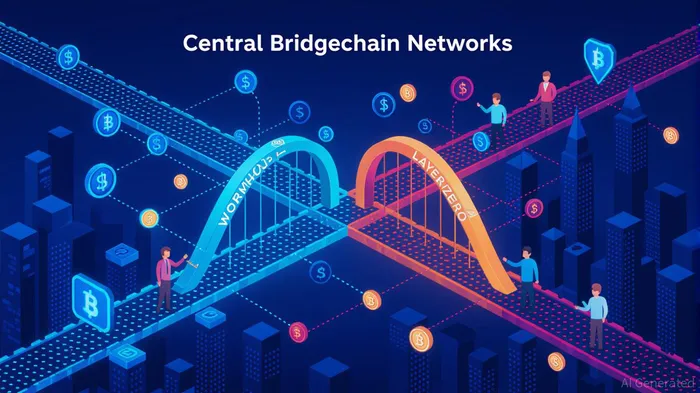
In the rapidly evolving decentralized finance (DeFi) landscape, cross-chain interoperability has emerged as the linchpin of innovation. The recent battle between Wormhole and LayerZero to acquire Stargate Finance underscores a critical shift in how liquidity, governance, and value are being redefined in the multichain era. This acquisition contest is not merely a financial negotiation but a strategic clash over the future of cross-chain infrastructure—and its implications for tokenholder value creation are profound.
Strategic Valuation Analysis: Liquidity as the New Currency
Stargate Finance, with its $348 million in total value locked (TVL) and $4 billion in July 2025 bridge volume, represents a critical node in the DeFi ecosystem. Its treasury of $92 million, including $76 million in stablecoins and $16 million in EthereumETH--, further cements its role as a liquidity powerhouse. LayerZero's initial offer of $110 million in ZRO tokens—valuing STG at $0.1675—has been widely criticized as undervaluing Stargate's assets and growth trajectory. By contrast, Wormhole's push for a revised bid highlights a broader thesis: liquidity is the new currency, and cross-chain protocols must compete to capture it.
Wormhole's argument hinges on the synergy between its 40+ chain integrations and Stargate's existing infrastructure. By combining Stargate's liquidity pools with Wormhole's Guardian validator network (now including Google Cloud and AMD), the merged entity could dominate cross-chain messaging and asset transfers. This would not only increase transaction volumes but also amplify fee generation, a critical revenue stream in DeFi.
Market Dynamics: Governance, Quorum, and Tokenholder Sentiment
The governance vote for LayerZero's acquisition proposal requires 70% approval from veSTG holders and a quorum of 1.2 million veSTG tokens. While LayerZero revised its offer to include six months of revenue distribution for stakers, critics argue this fails to address the core issue: the valuation gap. Wormhole's request for a five-day delay in the vote reflects its confidence in presenting a more competitive bid, but it also exposes the fragility of decentralized governance in high-stakes deals.
Tokenholder sentiment is further complicated by the contrasting visions of the two bidders. LayerZero's proposal emphasizes consolidation and unified governance, with future Stargate revenue directed toward ZRO buybacks. Wormhole, however, advocates for a collaborative model, leveraging Stargate's user base to expand both ecosystems. This divergence mirrors broader debates in DeFi about centralization risks versus scalability.
Investment Implications: W, ZRO, and STG in the Crosshairs
For investors, the outcome of this acquisition battle will have direct implications for W, ZRO, and STG.
Wormhole (W): With a market cap of $3.36 billion and a circulating supply of 4.7 billion tokens, Wormhole's valuation appears undervalued relative to its strategic position. A successful acquisition of Stargate could catalyze a re-rating of W, particularly if the merged entity captures a larger share of cross-chain fees. However, W's recent 7-day price decline (-6.30%) suggests market skepticism about its ability to outbid LayerZero.
LayerZero (ZRO): While ZRO's market data is less transparent, its $0.1675 offer for STG implies a premium over the token's intrinsic value. If the vote passes, ZRO could benefit from Stargate's revenue streams and expanded TVL. However, the risk of a hostile takeover by Wormhole or a tokenholder revolt remains high.
Stargate (STG): STG holders face a binary outcome. A LayerZero acquisition at $0.1675 would lock in a 2.5% premium over its July 2025 price of $0.1637. A Wormhole-led bid, however, could unlock higher valuations if the merged entity achieves its growth targets. The token's volatility—trading 94.90% below its all-time high—reflects the uncertainty.
Broader Trends: The Future of Cross-Chain Dominance
The Stargate acquisition battle is emblematic of a larger trend: the commoditization of cross-chain infrastructure. As DeFi protocols seek to capture liquidity across 80+ chains, the ability to bridge assets and data efficiently becomes a competitive moat. Wormhole's focus on institutional partnerships (e.g., Ripple, Algorand) and native token transfers (NTT) positions it as a long-term play, while LayerZero's enterprise solutions and CosmosATOM-- interoperability efforts highlight its scalability ambitions.
For investors, the key question is whether liquidity capture can be monetized sustainably. Stargate's $2 million in annual revenue and $92 million treasury demonstrate the potential, but execution risks remain. A successful acquisition would require not just financial resources but also the ability to integrate ecosystems without disrupting user experience.
Conclusion: A High-Stakes Bet on the Multichain Future
The rivalry between Wormhole and LayerZero to acquire Stargate is more than a liquidity play—it's a bet on the future of DeFi. For W, the acquisition could unlock a re-rating if it secures Stargate's TVL and treasury. For ZRO, the outcome hinges on whether tokenholders accept the valuation premium. And for STG, the vote is a test of governance resilience in a high-stakes environment.
Investors should monitor the governance vote closely, with a focus on quorum participation and tokenholder sentiment. In the long term, the winner of this contest will likely shape the next phase of cross-chain innovation, making it a pivotal moment for the DeFi ecosystem.

Decoding blockchain innovations and market trends with clarity and precision.
Latest Articles
Stay ahead of the market.
Get curated U.S. market news, insights and key dates delivered to your inbox.






Comments
No comments yet