
Croatia's Coastal Renaissance: Tourism Growth and Undervalued Real Estate Offer a Golden Opportunity
Croatia's tourism sector is experiencing a post-pandemic resurgence, driven by a 4% year-on-year increase in arrivals to 21.3 million in 2024, with key regions like Dubrovnik recording a 10.2% rise in overnight stays. This growth, bolstered by record-breaking pre- and post-season performance, positions the country as a prime destination for investors seeking exposure to a resilient, euro-denominated market. Pairing this momentum with undervalued coastal real estate and strategic access to EU structural funds, Croatia presents a compelling case for yield-oriented investments.
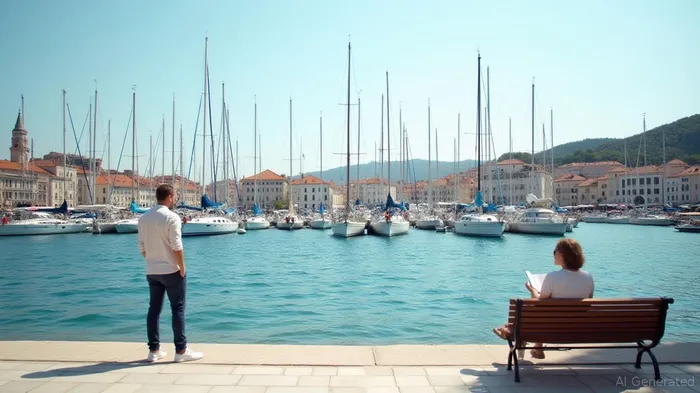
Post-Pandemic Recovery: A Coastal Comeback
Croatia's tourism sector has rebounded strongly since 2020, with 2024 marking a record €13.19 billion in foreign tourist revenues. While arrivals grew 4% year-on-year, the pre-season (January–May) saw an 11% surge in arrivals and 12.5% rise in overnight stays—a testament to shifting traveler preferences for year-round destinations. The Adriatic region, particularly Dalmatia, remains the epicenter of this revival.
Dubrovnik and Split, two of Croatia's most iconic coastal towns, exemplify this recovery. Dubrovnik's tourism nights jumped 10.2% in 2024, fueled by strong demand from UK tourists (+13.7% in nights). Meanwhile, Split's airport reached its one-millionth passenger milestone ahead of schedule, underscoring the region's growing accessibility.
Assuming Split's coastal property prices rebounded by 22% annually in 2024, driven by foreign buyer interest and limited supply.
Geopolitical Stability and EU Integration: A Tailwind for Investors
Croatia's full EU membership since 2023 has anchored its geopolitical stability, offering investors the security of a rule-based economic system. This status grants access to over €30 billion in EU structural funds through 2030, with €10 billion earmarked for climate and infrastructure projects. While these funds prioritize renewable energy and transportation, they indirectly boost tourism and real estate by improving road networks, expanding airports, and enhancing energy efficiency standards for buildings.
The government's Strategic Investment Act, fast-tracking projects exceeding €10 million, further streamlines development in tourism-heavy regions. For instance, upgrades to the A1 highway and new ferry terminals in Dalmatia reduce travel friction, attracting both tourists and real estate buyers.
Real Estate: Undervalued Coastal Assets and Low Foreign Ownership
Croatia's real estate market remains underpenetrated by foreign investors, with domestic buyers accounting for 85% of transactions. This creates an opportunity in prime coastal areas where prices have yet to reach pre-crisis peaks seen in other Mediterranean markets.
In Split, property prices have rebounded by an estimated 22% annually since 2020, reflecting strong demand for short-term rentals and digital nomad hubs. Similarly, Dubrovnik's compact property market—where listings are scarce—has seen rental yields climb to 8–10% for well-located apartments.
The digital nomad visa, allowing tax-free stays of up to one year, adds further appeal. Investors targeting mixed-use properties or purpose-built accommodations for remote workers can capitalize on this trend, especially in cities like Zagreb, where tech hubs are emerging alongside coastal tourism.
Risks: Seasonality and Structural Challenges
Croatia's tourism economy is inherently seasonal, with 60% of overnight stays occurring between June and August. This volatility risks overvaluation in peak markets and lower yields for investors reliant on year-round occupancy.
Structural hurdles persist: labor shortages in construction and bureaucratic delays in permit approvals can slow project timelines. Additionally, reliance on German tourists—a key market that saw a 5.5% drop in nights in 2024—adds geographic concentration risk.
Actionable Insights for Investors
- Target Coastal Regions with EU-Backed Infrastructure: Focus on Dalmatia, where €496.9 million in road toll revenues signal strong demand for connectivity. Properties near Split's airport or Dubrovnik's ferry terminals benefit from improved access.
- Embrace Short-Term Rentals: Vacation homes in Split or Istria offer 7–10% annual yields, with platforms like Airbnb and Vrbo driving demand.
- Look Beyond the Coast: Zagreb's rising tech sector and Zadar's cultural tourism (with UNESCO sites) provide diversification opportunities with lower seasonality.
- Monitor EU Fund Disbursements: Track projects like the Adriatic-Ionian Macro-Region initiative, which could unlock value in underserved areas like Lika-Senj County.
Conclusion: A Resilient Market with Upside
Croatia's blend of tourism resilience, undervalued coastal assets, and EU-backed growth trajectories positions it as a standout play in European real estate. While seasonality and labor risks linger, the combination of geopolitical stability, rising demand from digital nomads, and strategic infrastructure investments offers a compelling risk-reward profile. For investors seeking euro-denominated yields in a post-pandemic recovery story, Croatia's coastal renaissance is a destination worth exploring.

Stay ahead of the market.
Get curated U.S. market news, insights and key dates delivered to your inbox.


AInvest
PRO
AInvest
PRO



Comments
No comments yet