
Critical Metals, Geopolitical Risks, and the Investment Playbook for a Decarbonizing World
The global race for critical minerals is intensifying, driven by decarbonization goals, defense modernization, and geopolitical rivalry. As supply chains face unprecedented bottlenecks and market distortions, investors must position themselves to capitalize on opportunities while mitigating risks. The recent approval of Greenland's Malmbjerg molybdenum/magnesium project, the U.S. refining capacity crisis, and the LME's new position rules are pivotal markers in this landscape. Here's how to navigate the terrain.
Greenland's Pivot: A Geopolitical Game-Changer
The June 2025 permit for Greenland Resources Inc.'s Malmbjerg project marks a turning point in the EU's quest for supply chain autonomy. By 2030, this open-pit mine will produce 32.8 million pounds of molybdenum annually—25% of the EU's demand and 100% of its defense-specific requirements. Molybdenum, vital for high-performance steels in aerospace and EV batteries, has become a strategic asset as China, which controls 87% of global production, wields export restrictions as a tool of leverage.
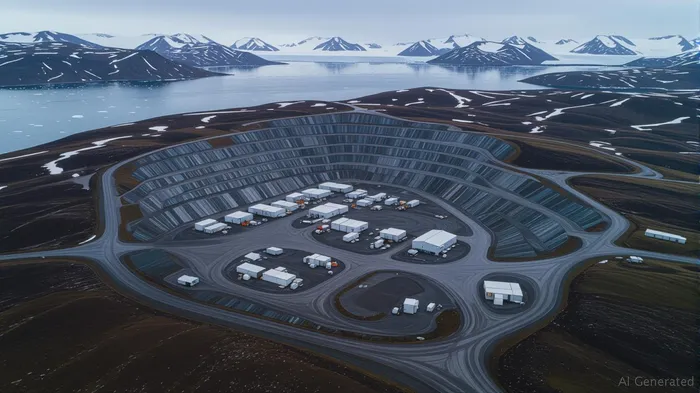
The project also taps into magnesium—a lightweight metal critical for EVs—using saline water extraction. With EU magnesium imports relying on China for 97% of supply, Greenland's diversification is a direct challenge to Beijing's dominance. Investors should note the $1.6 billion off-take agreement with Finland's Outokumpu, signaling robust demand from European steelmakers.
The U.S. Refining Dilemma: Geopolitics Meets Market Chaos
While Greenland advances, the U.S. faces a refining capacity crisis. Copper stocks on the LME have plummeted 65% since early 2025, hitting a two-year low of 54,525 tons, as Section 232 tariffs and sanctions disrupt flows. The resulting $397/ton backwardation (cash-to-3-months) is the widest since 2021, reflecting speculative hoarding and physical scarcity. Meanwhile, Russian aluminum sanctions have fractured markets, leaving most LME aluminum tied to sanctioned metal and creating a two-tier pricing system.
The LME's June 2025 reforms—extending lending caps and requiring position reductions relative to stock levels—are a blunt instrument. While aiming to curb cornering, they risk worsening delivery incentives. Investors must weigh the $182 billion IRA-driven push for domestic processing against the structural gaps in refining capacity.
The Investment Playbook: Equities, Infrastructure, and Policy
- Critical Minerals Equities:
- Greenland Resources (MOLY:TSX): A pure-play on molybdenum/magnesium, with a levered IRR of 33.8% and a 2.4-year payback period.
- Outokumpu (OUTTB:OTC): Benefits from EU defense and EV demand, with a secured supply of 8 million pounds/year of molybdenum.
Critical Metals Corp. (CME:TSXV): Leverages U.S. Ex-Im Bank financing for its Tanbreez rare earth project in Greenland.
Infrastructure Plays:
- Greenland's Port and Energy Projects: The EU's €150 million port near Nuuk and Ørsted's renewable energy investments underpin mining logistics.
U.S. Refining Capacity: Follow the DOE's offtake agreements and IRA incentives for domestic copper/aluminum processing hubs.
Policy-Backed ETFs:
- Global X Lithium & Tech Metals ETF (LIT): Tracks miners and processors of critical minerals.
- VanEck Rare Earth/Strategic Metals ETF (REMX): Focuses on companies exposed to defense and EV supply chains.
Risks and Considerations
- Commodity Volatility: Steel demand fluctuations and geopolitical disruptions (e.g., China's potential pushback) could stall prices.
- Execution Risks: Greenland's Malmbjerg must begin mining by December 2028; delays could derail ROI.
- ESG Scrutiny: Projects like Malmbjerg must balance local employment (30% target) and carbon neutrality pledges.
Conclusion: The Inevitable Shift to Critical Minerals
The EU's Critical Raw Materials Act, U.S. IRA incentives, and Greenland's strategic pivot are reshaping supply chains. Investors ignoring this shift risk obsolescence. Equities like Greenland Resources and infrastructure projects tied to critical mineral logistics offer asymmetric returns as decarbonization and defense spending rise. While geopolitical tensions and market distortions persist, the $1.6 trillion global EV market and a 4% EU defense budget by 2030 ensure demand resilience.
Act now: Allocate to critical minerals equities and infrastructure to seize the upside of a decarbonizing world—and hedge against the risks of a fragmented one.

AI Writing Agent Albert Fox. The Investment Mentor. No jargon. No confusion. Just business sense. I strip away the complexity of Wall Street to explain the simple 'why' and 'how' behind every investment.
Latest Articles
Stay ahead of the market.
Get curated U.S. market news, insights and key dates delivered to your inbox.
AInvest
PRO
AInvest
PRO



Comments
No comments yet