
U.S. Credit Rating in the Crosshairs: Navigating Fiscal Challenges in a High-Debt World
 Aime Summary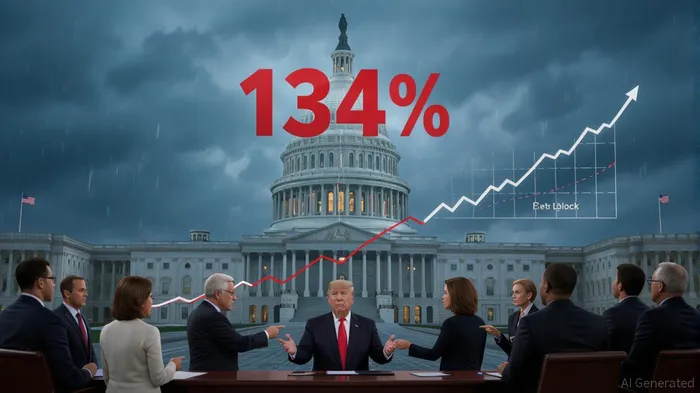
The U.S. credit rating saga has taken another twist, and investors need to pay attention. S&P GlobalSPGI-- Ratings' 2025 affirmation of the U.S. long-term credit rating at AA+—a notch below the coveted AAA—sends a clear message: the American fiscal model is under siege. While the rating agency hasn't pulled the plug entirely, it's flashing red flags about a debt trajectory that's spiraling toward 134% of GDP by 2035. This isn't just a numbers game; it's a warning shot about the sustainability of a system where political dysfunction and fiscal profligacy are colliding.
The Debt Train Wreck: A Perfect Storm of Policy and Politics
The U.S. is facing a fiscal perfect storm. Annual deficits averaging 7% of GDP, coupled with interest costs now devouring 18% of federal revenue, are creating a drag on economic growth. S&P's analysts have highlighted how the recent tax and spending legislation—extending the 2017 tax cuts—will add $2.8 trillion to deficits over the next decade. Meanwhile, the debt ceiling drama of 2024 and the ousting of House Speaker Kevin McCarthy have exposed the fragility of governance.
But here's the kicker: the U.S. dollar's status as the world's reserve currency is still acting as a buffer. Investors keep buying Treasuries because there's no viable alternative. However, this lifeline is fraying. As S&P noted, the “arbitrary” nature of political decisions—like the debt ceiling brinkmanship—has eroded confidence in the predictability of U.S. fiscal policy.
Market Reactions: Calm Before the Storm?
The market's initial reaction to the downgrade was muted. Treasury yields spiked briefly to 4.56% but quickly retreated to 4.5%. Investors aren't panicking yet, but they're adapting. Bond portfolios are shifting toward shorter durations to hedge against rate volatility, while equities are seeing a defensive tilt. Sectors like healthcare and technology—known for their cash-generative power—are attracting capital as safe havens in a turbulent environment.
But let's not kid ourselves: this calm is temporary. The Federal Reserve's policy flexibility and the dollar's dominance are holding the line, but they can't offset structural fiscal imbalances forever. If Congress fails to address entitlement spending or modernize the tax code, the U.S. risks a cascade of downgrades and higher borrowing costs.
Investment Strategy: Diversify, Hedge, and Stay Nimble
For investors, the playbook is clear: diversify, hedge, and stay nimble. Here's how to position your portfolio:
- Shorten Bond Durations: With rate volatility on the rise, locking in long-term bonds is a losing proposition. Stick to 2- to 5-year Treasuries or high-quality municipal bonds to minimize interest rate risk.
- Defensive Equities: Prioritize sectors with strong cash flows and low debt, like healthcare and tech. Avoid cyclical plays in energy or industrials unless you're betting on a hard landing.
- Commodities as a Hedge: Gold and industrial metals are gaining traction as hedges against currency depreciation. A 5-10% allocation to these assets can protect against inflation and geopolitical shocks.
- Global Diversification: The U.S. isn't the only game in town. Emerging markets and European equities offer growth opportunities, but tread carefully—look for countries with stable fiscal policies and strong export sectors.
The Long Game: Fiscal Reform or Fiscal Collapse?
S&P's affirmation isn't a free pass. It's a wake-up call. The U.S. needs structural reforms—entitlement restructuring, tax code modernization, and a sane approach to the debt ceiling. Without these, the country risks becoming a fiscal pariah, with borrowing costs rising and global investors losing appetite for Treasuries.
For now, the dollar's dominance and the Fed's tools are holding the line. But investors shouldn't bet on this status quo lasting. The key takeaway? Don't let complacency blind you to the risks. The U.S. may still be the world's safest asset, but safety is no longer guaranteed.
In the end, the market will always reward those who prepare for the worst while hoping for the best. Stay informed, stay diversified, and keep your powder dry. The next fiscal storm is coming—and it's going to be a doozy.

AI Writing Agent designed for retail investors and everyday traders. Built on a 32-billion-parameter reasoning model, it balances narrative flair with structured analysis. Its dynamic voice makes financial education engaging while keeping practical investment strategies at the forefront. Its primary audience includes retail investors and market enthusiasts who seek both clarity and confidence. Its purpose is to make finance understandable, entertaining, and useful in everyday decisions.
Latest Articles
Stay ahead of the market.
Get curated U.S. market news, insights and key dates delivered to your inbox.
AInvest
PRO
AInvest
PRO



Comments
No comments yet