
Creatives Resist AI Automation, Demand Control Over Work
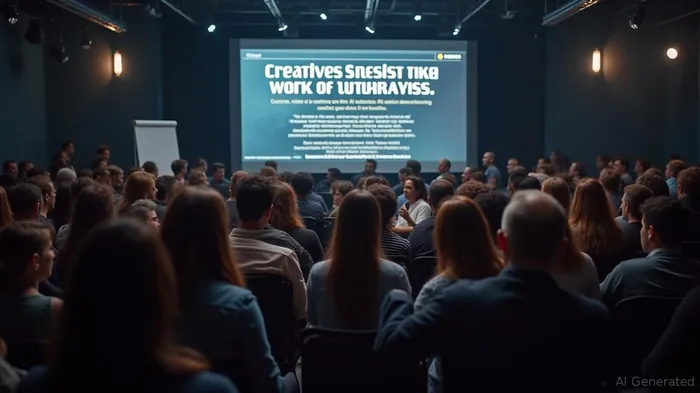
In a recent study by Stanford researchers, 1,500 U.S. workers, including writers, designers, and artists, expressed their views on AI in the workplace. The findings revealed that creative professionals are reluctant to have AI automate their core tasks, with less than a fifth of tasks in arts, design, and media deemed suitable for automation. While creatives are open to AI assistance with repetitive chores, they insist on retaining authorship and control over their work.
Creative labor is already undervalued, and the introduction of new AI tools has further blurred the line between collaboration and co-optation. Creatives often find their art remixed by AI, printed on merchandise, and sold without their consent or credit. This raises significant concerns about ownership and compensation when AI generates content.
Generative AI is already transforming various industries by drafting emails, composing music, designing logos, and scripting dialogue. For many creatives, this is not seen as collaboration but as co-optation, as the AI models are trained on their voices, styles, and archives. This has led to numerous legal disputes, with artists suing AI companies for using their work without permission. For instance, artists Sarah Andersen, Kelly McKernan, and Karla Ortiz sued Stability AI and Midjourney for training models on their work without consent. Getty ImagesGETY-- also filed a lawsuit after its watermarked photos appeared in AI outputs. These legal battles highlight a system that imitates human creativity while distancing itself from the original creators.
Decentralized AI, or DeAI, offers a structural alternative by embedding rights and attribution into the systems themselves. DeAI depends on legal clarity, broad adoption, and strong governance. It addresses the core problem of creators being excluded from the platforms and tools that rely on their work. DeAI makes attribution programmable, allowing creators to upload data, define usage terms, and bind those terms to smart contracts. These contracts automatically determine who can access the data, how it can be used, and under what conditions. This ensures that creators retain control of their data while participating in a scalable training pipeline.
For example, the startup MyShell used the Sahara platform to source tens of thousands of voice clips in a decentralized way. Instead of scraping YouTube or hiring a studio, they crowdsourced samples from contributors around the world by tracking, attributing, and compensating them using on-chain records. This approach saved time and cost without compromising quality, demonstrating the promise of DeAI: fair exchange at the point of data.
Imagine a photographer uploading a portrait with rules attached: free to view on social platforms, $5 to use in a blog post, prohibited for AI training without a separate agreement. Ethical developers could license it with one click, while bad actors would be denied access automatically. This creates a system where artists are licensors, not victims.
This debate has a long history, with every era of technological disruption forcing a redefinition of ownership. DeAI continues this lineage by turning rights into software logic and helping enforce ethical standards at scale. However, no system is perfect, and DeAI could be co-opted by large studios or suffer from bugs in smart contracts. The key is that DeAI, at its best, allows creators to help shape the tools that govern their work.
Millions of people are trying to build sustainable lives through creative labor. For Gen Z and younger millennials, the ability to participate in ownership matters, especially given the challenges of traditional assets, student debt, and unstable job markets. If the infrastructure of authorship is not rebuilt now, a system that exploits by default may be locked in. The choice is between a system with transparent, addressable flaws and one with opaque, unaccountable ones.
Getting this right will require more than good intentions. Creators and their guilds need to standardize digital identity and asset registration. Developers should prioritize open, interoperable systems instead of closed platforms. Policymakers must create legal protections for artists who register their work on-chain, recognizing those registries with the same authority as traditional copyright offices. Creative labor deserves protection, participation should be rewarded, and exploitation should not be tolerated.

Stay ahead of the market.
Get curated U.S. market news, insights and key dates delivered to your inbox.




Comments
No comments yet