
U.S. CPI Miss and Sector Rotation: Banks on the Rise, Food Products at Risk
 Aime Summary
The December 2025 U.S. Consumer Price Index (CPI) report delivered a subtle but significant surprise: a year-over-year inflation rate of 2.7%, exceeding the median forecast of 2.6%. While this figure may seem modest, it underscores the stubbornness of inflation in key sectors like food and shelter, even as energy prices retreat. For investors, this data point is a clarion call to reassess tactical allocations, particularly in a landscape where monetary policy is poised to pivot between tightening and easing. The Federal Reserve's cautious stance—hinting at a single rate cut in 2026—has created a fertile ground for sector rotation, with financials gaining momentum and consumer staples facing headwinds.
The CPI Miss: A Signal of Persistent Inflation
The CPI report revealed a mixed picture. While energy prices moderated sharply (2.3% year-over-year, down from 4.2% in November), food inflation remained elevated at 3.1%, driven by surging costs for staples like coffee (+20%) and beef (+16%). Shelter costs, which account for nearly a third of the CPI basket, rose 0.4% in December, reflecting the lingering impact of housing market imbalances. These trends suggest that inflation is no longer a broad-based phenomenon but is increasingly concentrated in essential goods and services.
The core CPI, which excludes food and energy, stagnated at 2.6%, below expectations. This divergence highlights a critical nuance: while headline inflation remains “uncomfortably high,” core inflation is showing signs of moderation. However, the Federal Reserve's focus on core metrics may obscure the real-world pain of rising grocery bills and utility costs. As Mark Zandi of Moody'sMCO-- noted, tariffs and supply chain bottlenecks continue to distort price signals, creating a “false sense of stability” in core readings.
Sector Rotation: Financials on the Offensive
The CPI miss has accelerated a shift in investor sentiment toward rate-sensitive sectors, particularly financials. Banks and insurers, which thrive in higher-rate environments, have outperformed the broader market. The S&P 500 Financials sector surged 3.07% in December, outpacing the S&P 500's meager 0.06% gain. This outperformance is no accident.
The Federal Reserve's December rate cut of 25 basis points, while a nod to easing inflation, has not dampened expectations for further easing in 2026. A flattening yield curve—10-year yields rose 15 bps while 2-year yields fell 2 bps—signals market bets on prolonged higher rates followed by a rapid pivot. For banks, this environment is a double-edged sword: net interest margins benefit from higher rates, but prolonged tightening risks credit demand. However, the current trajectory favors financials, as investors anticipate a “soft landing” scenario where rates stabilize before easing.
Consumer Staples: A Defensive Sector Under Pressure
In contrast, the Consumer Staples sector has struggled to adapt to the new inflationary reality. The Consumer Staples Select Sector SPDR Fund (XLP) fell 1.59% in December, reflecting investor concerns over margin compression. With food prices rising 0.7% monthly and tariffs adding 0.5 percentage points to inflation, companies like Procter & Gamble and Coca-Cola face a delicate balancing act: absorb costs or risk losing market share.
The sector's challenges are compounded by shifting consumer behavior. As households allocate more of their budgets to essentials, discretionary spending declines, creating a ripple effect across the economy. While some of the December CPI data may be distorted by the government shutdown, the underlying trend—persistently high prices for necessities—is real. For investors, this raises a critical question: Is the sector's defensive appeal still valid in a world where even staples are vulnerable to margin erosion?
Tactical Allocation: Balancing Rate Sensitivity and Deflationary Risks
The CPI miss and subsequent market reaction highlight the importance of tactical asset allocation. Here's how investors can navigate the current landscape:
Overweight Financials: With the Fed signaling a cautious approach to rate cuts, financials remain a compelling play. Banks with strong capital positions and insurers with long-duration liabilities are particularly well-positioned. Consider ETFs like the Financial Select Sector SPDR Fund (XLF) or individual stocks such as JPMorgan ChaseJPM-- (JPM) and American Express (AXP).
Hedge Consumer Staples Exposure: While staples are traditionally a safe haven, the current inflationary environment demands caution. Investors should consider hedging with short-term municipal bonds or inflation-linked Treasuries. The iShares 20+ Year Treasury Bond ETF (TLT) could serve as a counterbalance to sector-specific risks.
Monitor the 10-Year Treasury Yield: The yield on the 10-year Treasury (currently ~4.25%) is a critical barometer for monetary policy expectations. A sustained move above 4.5% would signal prolonged tightening, favoring financials further. Conversely, a drop below 4.0% could indicate deflationary pressures, necessitating a rebalancing toward defensive sectors.
Conclusion: A New Normal for Inflation and Investment
The December CPI report is a reminder that inflation is no longer a transient phenomenon but a structural challenge. For investors, this means abandoning rigid sector allocations in favor of dynamic strategies that adapt to shifting monetary conditions. Financials, with their sensitivity to interest rates, offer a clear path to capitalize on the Fed's cautious pivot. Meanwhile, consumer staples require a more nuanced approach, balancing defensive positioning with active hedging against margin risks.
As the Federal Reserve navigates the delicate tightrope between inflation control and economic growth, the ability to rotate between sectors will be the hallmark of successful portfolios in 2026. The key is to stay agile, informed, and unafraid to challenge conventional wisdom in a world where the rules of investing are being rewritten.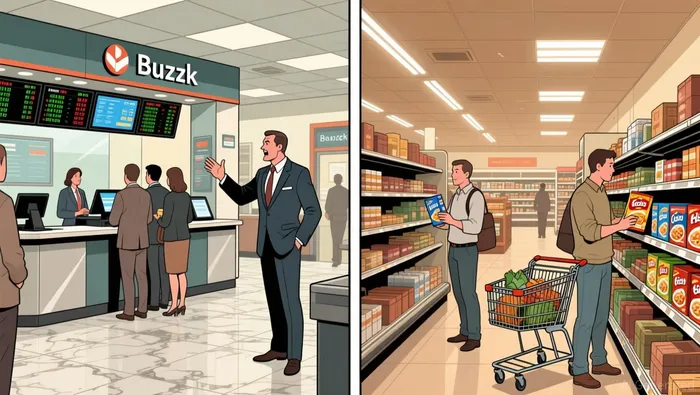

Stay ahead of the market.
Get curated U.S. market news, insights and key dates delivered to your inbox.
AInvest
PRO
AInvest
PRO



Comments
No comments yet