
CPI Report 2025: Why the Delayed Data Could Signal a Slowdown in Inflation


 Aime Summary
The U.S. government shutdown earlier this year had far-reaching consequences, including a major disruption in one of the most-watched economic reports: the Consumer Price Index (CPI). With data collection halted for October and delayed into November, the release of the latest CPI report on December 18, 2025, has been anything but routine. The data, which showed annual inflation at 2.7%—below the 3.1% forecast—has raised new questions about the strength and persistence of price pressures. For investors and market observers, this report is more than just a number—it's a signal of where inflation may be headed and what the Federal Reserve might do next.
The Impact of the Government Shutdown on CPI Reporting
The Bureau of Labor Statistics (BLS) was unable to collect October 2025 CPI data due to the 43-day government shutdown, which delayed the release of the November report from its usual December 10 window. This absence of October data meant the report could not include month-over-month changes, leaving investors and analysts with only year-on-year data to interpret according to CNBC.
The shutdown introduced another layer of uncertainty: data collection for November didn’t begin until mid-month, potentially skewing results. Economists have warned that this incomplete data might not accurately reflect the full picture of inflation trends. Still, the report gave the first major inflation reading since the government reopened and offered a glimpse into whether prices are continuing to rise at the same pace as expected.
Key Takeaways from the November CPI Report
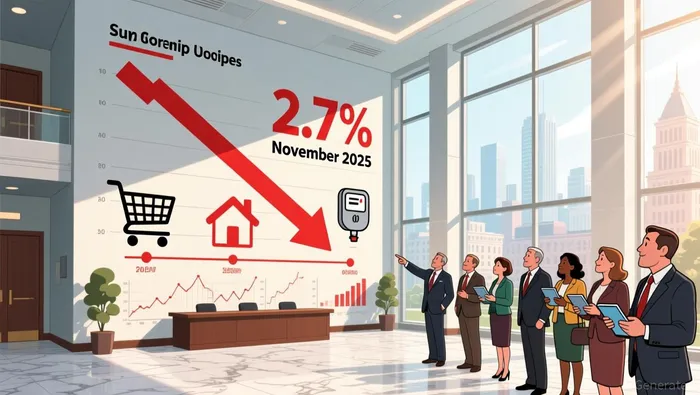
The November CPI report showed a year-on-year increase of 2.7%, falling below the projected 3.1%. This marks a slowdown in inflation, which had been trending just above the Federal Reserve’s 2% target. The core CPI, which strips out the more volatile food and energy components, also rose by 2.6%, missing the 3.0% estimate.
Some categories showed signs of easing, such as food and housing. Food prices rose at a 2.6% annual rate in November, down from 3.1% in September, while housing prices increased by 3.0%, compared to 3.6% the prior month. Energy prices, however, continued to climb, rising 4.2% over the last 12 months, suggesting that some inflationary pressures remain stubborn.
What the Numbers Mean for the Fed and the Economy
For the Federal Reserve, this report may reinforce the cautious approach it has taken since its December 2025 rate cut. The central bank reduced its key interest rate by 0.25 percentage points, bringing the target range to 3.50–3.75%, with three of its 12 members dissenting. The Fed has signaled that more rate cuts could come in 2026, depending on how inflation and the labor market evolve. With the November CPI coming in below expectations, the door to further easing has widened, at least for now.
The CME Group's FedWatch tool, which tracks market expectations for rate changes, currently shows a 60% probability of a rate cut in March 2026. This suggests that investors are beginning to price in more accommodative monetary policy, especially if inflation continues to decelerate and the labor market remains weak.
Market Reactions and Investor Takeaways
The release of the CPI report triggered an immediate market reaction. Stock futures jumped, and Treasury yields dipped as investors interpreted the lower-than-expected inflation data as a positive sign for economic growth. A slower inflationary environment typically boosts stock prices and lowers bond yields, as it reduces the pressure on central banks to raise interest rates.
Still, caution is warranted. The Fed emphasized that its decisions would remain data-dependent, and the November report doesn't close the door on future inflation surprises. The delayed release of October's Producer Price Index (PPI) data, which will be published alongside the November PPI on January 14, 2026, will add to the mix of factors the Fed will consider.
For investors, the takeaway is clear: while this report offers some optimism, it should not be seen as a green light to ignore inflation. The road to sustained price stability remains uneven, with energy and global supply chain factors still exerting upward pressure. Investors should continue to monitor both CPI and PPI reports, as well as employment data, to gauge the Fed's next moves and adjust their portfolios accordingly.

Delivering real-time insights and analysis on emerging financial trends and market movements.
Latest Articles
Stay ahead of the market.
Get curated U.S. market news, insights and key dates delivered to your inbox.






Comments
No comments yet