
CPI Data Could Trigger Fed Rate Hike: Investors Face Higher Yields
 Aime Summary
- U.S. Treasury yields climbed to multi-month highs as persistent inflation concerns overshadowed liquidity injections from Treasury buyback programs.
- Consensus forecasts indicate August CPI will show a 0.4% monthly increase, potentially confirming a Federal Reserve interest rate hike on September 16.
- The 30-year fixed mortgage rate has reached its highest level since May 2025, hitting 6.97% as borrowing costs rise alongside the 10-year Treasury yield.
- Investors are closely monitoring the upcoming CPI and PPI reports, as data-driven decisions by the Fed could reverse recent monetary accommodation.
- Analysts highlight that energy shocks, tariffs, and AI infrastructure demand are driving inflationary pressures that limit the central bank's ability to maintain current policies.
Investors are bracing for a pivotal week in U.S. monetary policy, as the upcoming August Consumer Price Index (CPI) and Producer Price Index (PPI) reports are expected to provide the final confirmation needed for the Federal Reserve to resume its interest rate hiking cycle. With the central bank's September 16 meeting approaching, market participants are pricing in a high probability of a rate increase, driven by persistent inflationary pressures that have defied recent disinflationary trends. The stakes are particularly high given the ambiguity surrounding Federal Reserve communications and the strong likelihood that inflation data will exceed the 2% target.
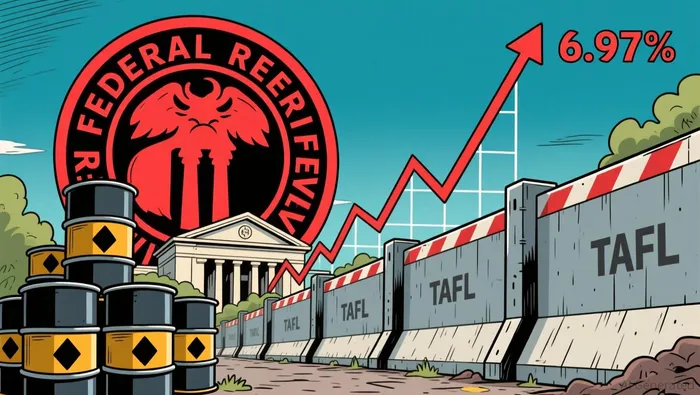
The market has already begun to react to the prospect of tighter monetary policy. Treasury yields have climbed to multi-month highs, with the 10-year note reaching 4.857%, its highest level since November 2023. This rise in yields has rippled through the economy, pushing the average rate on a 30-year fixed mortgage to 6.97%, the highest level since May 2025 . Despite the Treasury Department's announcement of expanded debt buyback programs—increasing purchases to $6 billion to inject liquidity—the market remains focused on fundamental inflation risks rather than temporary liquidity conditions .
Why Is CPI Data Critical For The Fed Rate Hike Decision?
The upcoming inflation data is critical because it will likely seal the case for a September interest rate hike, marking a significant shift in monetary policy. Consensus estimates call for a monthly headline inflation increase of 0.4% and core inflation of 0.2%. While a lower core print might allow the Fed to "give disinflation a chance," a 0.4% core print would likely tip the balance toward a rate hike . Governor Christopher Waller has indicated that if inflation comes in "hot," he would consider voting for a rate increase, adding to the market's expectation of tightening .
Analysts predict that the combination of persistent inflation from energy shocks, tariffs, and AI infrastructure demand will limit the Fed's ability to maintain current accommodation. Rising oil prices, which have advanced more than 23% year-over-year, are a key driver of this inflationary pressure . Crude prices floating above $90 per barrel indicate that the war-induced energy shock is not temporary, further complicating the Fed's task . Additionally, tariffs are proving to be an enduring inflationary factor as the U.S. administration uses them for political objectives .
How Do Rising Yields And Inflation Impact Investors?
The rise in Treasury yields and inflation expectations is directly impacting investors by increasing borrowing costs and pressuring equity markets. Higher yields have kept the U.S. stock market under pressure, as investors reassess the valuation of growth stocks and other rate-sensitive assets . The bond market rout, combined with signaling from Federal Reserve officials, has raised the stakes around the inflation data, leaving investors heavily data-point dependent .
For the Fed to avoid increasing rates, a top-line monthly increase of 0.25% or less is required, a scenario that analysts view as unlikely . The economy was already at full employment when rates were cut late last year, suggesting that a hike should have occurred in July . With balance sheet contraction unlikely and communications policy confused, the federal funds rate remains the primary tool to return inflation to the 2% target . Investors should prepare for a series of subsequent rate increases, reversing the accommodation provided late last year .
What Are The Key Drivers Behind Persistent Inflation?
Several structural and cyclical factors are driving persistent inflation, making it difficult for the Federal Reserve to achieve its 2% target. Energy shocks remain a primary culprit, with oil prices advancing 1.3% in August and crude floating above $90 per barrel . The war-induced energy shock, now in its seventh month, is proving to be a persistent drag on price stability . Additionally, the build-out of AI data centers is drawing on commodities and final goods, further driving inflation through increased demand .
Tariffs are also playing a significant role, as the U.S. administration continues to use them as a tool for political objectives . This has created an enduring inflationary factor that is difficult to unwind without significant economic disruption. The confluence of these factors—energy shocks, tariffs, and AI infrastructure demand—has created a complex inflationary environment that is challenging for policymakers to navigate. As Chair Kevin Warsh has noted, policymakers should not rely on isolated data points, but the current environment has left markets focused on minute decimal places in the upcoming inflation data .
What Should Investors Watch For Next?
Investors should focus on the upcoming August CPI and PPI reports, as these data points will provide the clearest signal of the Federal Reserve's next move. The consensus forecasts point to continued pressure above the 2% target, limiting the Fed's ability to maintain current accommodation . The market is currently leaning 65-35 towards a rate hike, reflecting the high probability that inflation data will exceed expectations .
Additionally, investors should monitor the Federal Reserve's communication strategy, as ambiguity from Chair Warsh has thickened the fog around the central bank's reaction function . The market's reaction to the inflation data will likely determine the direction of Treasury yields, mortgage rates, and equity valuations in the coming weeks. With the economy at full employment and inflation stubbornly high, the likelihood of a sustained tightening cycle remains elevated .
What Are The Risks To The Rate Hike Scenario?
While the consensus points to a rate hike, there are risks that the data could come in cooler than expected, potentially delaying tightening. A top-line monthly increase of 0.25% or less would allow the Fed to hold rates steady, but analysts view this scenario as unlikely . The risk of CPI arriving at a 0.5% monthly pace remains a concern, which could accelerate the tightening cycle . Investors should remain vigilant for any signs of disinflation or unexpected economic weakness that could alter the Fed's path.

Stay ahead of the market.
Get curated U.S. market news, insights and key dates delivered to your inbox.


AInvest
PRO
AInvest
PRO




Comments
No comments yet