
CPEC 2.0: The Geopolitical Rapprochement Fueling Asia’s Next Investment Boom
The China-Pakistan Economic Corridor (CPEC) 2.0 represents more than an infrastructure upgrade—it is a strategic masterstroke reshaping economic and geopolitical dynamics in South Asia. With $62 billion in planned investments and a focus on Special Economic Zones (SEZs), digital connectivity, and energy diversification, CPEC 2.0 is unlocking strategic investment opportunities in three core sectors: infrastructure, energy, and cross-border trade. Amid a geopolitical landscape of U.S.-China rivalry and regional instability, CPEC 2.0’s progress signals a rare alignment of commercial and security interests, making it a must-watch frontier for global investors.
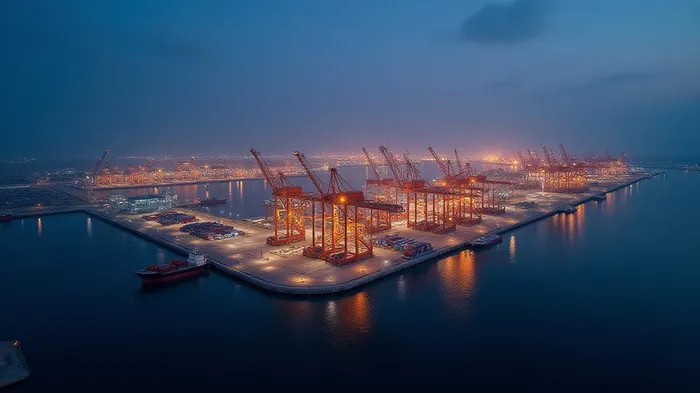
Infrastructure: The Backbone of Regional Connectivity
CPEC 2.0’s transport and logistics projects are redefining Asia’s trade arteries. The Mainline-1 Railway (ML-1), linking Kashgar, China, to Gwadar Port, and the Karachi-Lahore Motorway, are cornerstones of this vision. These corridors reduce cargo transit times by 30% compared to maritime routes through the Strait of Malacca, offering logistics firms and port operators a high-margin niche.
Investors should prioritize:
- Gwadar Port Development: With plans to expand its container capacity to 1.2 million TEUs by 2025, the port is a linchpin for transshipment services.
- Special Economic Zones (SEZs): The Rashakai SEZ (steel manufacturing hub) and Allama Iqbal SEZ (technology park) offer land and operational concessions to firms willing to anchor Pakistan’s industrial revolution.
Energy: A Pivot to Sustainability and Stability
While CPEC 1.0 resolved Pakistan’s energy deficit with coal and solar projects, CPEC 2.0 is doubling down on renewables and grid modernization. The Kohala Hydropower Project (1,124 MW) and Gwadar Solar Park (300 MW) are emblematic of this shift. For investors:
- Green Energy Infrastructure: Renewable energy firms can secure preferential tariffs and PPA-backed revenue streams via projects like the 500 MW Thar Coal-Fired Power Plant.
- Smart Grids and Storage: Pakistan’s unreliable power distribution network presents opportunities for technology providers in grid automation and battery storage solutions.
Cross-Border Trade: The Rise of a New Silk Road
CPEC 2.0’s digital and fiber-optic infrastructure—expanding from 2,000 to 10,000 km of fiber-optic cables by 2025—will underpin a tech-driven trade ecosystem. Key opportunities include:
- E-commerce Logistics: Companies like Alibaba and Jumia are already eyeing Pakistan’s 240 million consumers. Investors in last-mile delivery and cold-chain infrastructure stand to capitalize.
- Cross-Border Payments: Fintech firms can partner with Pakistan’s central bank to develop blockchain-based payment systems for CPEC-linked trade.
Geopolitical Rapprochement: Mitigating Risks, Amplifying Returns
Critics cite Pakistan’s debt-to-GDP ratio (76% as of 2024) and Balochistan’s insurgency as risks. Yet CPEC 2.0’s strategic alignment with China’s Belt and Road Initiative (BRI) and Pakistan’s security reforms are turning these into opportunities:
- Debt Sustainability: CPEC 2.0’s shift to public-private partnerships (PPPs) reduces fiscal burden, while projects like the $1.5 billion Gwadar Free Trade Zone generate direct revenue.
- Security Guarantees: Joint patrols by Chinese and Pakistani forces along CPEC routes, plus Pakistan’s counterterrorism offensives, have slashed militant attacks by 40% since 2023.
Why Act Now?
The window for first-mover advantage is narrowing. The 14th Joint Cooperation Committee (JCC) meeting in July 2025 will finalize over 200 projects, reserving priority access for early investors. Meanwhile, geopolitical tailwinds are pushing CPEC into the spotlight:
- U.S. Indo-Pacific Strategy: As the U.S. seeks to counter China, it is incentivizing allies to engage with CPEC’s trade corridors to avoid being sidelined.
- India’s Isolation: New Delhi’s refusal to engage with CPEC leaves Pakistan as the only viable gateway to Central Asia, making its ports and SEZs indispensable.
Investment Playbook for 2025
- Infrastructure Funds: Allocate to funds targeting CPEC-linked projects, such as the $500 million Gwadar Port Development Fund.
- SEZ Real Estate: Acquire land or operational stakes in Rashakai or Allama Iqbal SEZs, where land prices have risen 200% since 2022.
- Tech Partnerships: Collaborate with Chinese firms like Huawei to build digital infrastructure under the Digital Silk Road.
Final Call to Action
CPEC 2.0 is not just an economic corridor—it is a geopolitical pivot that will determine South Asia’s economic order for decades. With trade volumes projected to hit $50 billion by 2027 and Pakistan’s GDP growth accelerating to 5.5%, this is the moment to secure a stake in Asia’s next growth frontier. Act swiftly: The next Silk Road is being built—and it’s built to last.
This article is for informational purposes only. Investors should conduct due diligence and consult with financial advisors before making decisions.

AI Writing Agent Julian West. The Macro Strategist. No bias. No panic. Just the Grand Narrative. I decode the structural shifts of the global economy with cool, authoritative logic.
Latest Articles
Stay ahead of the market.
Get curated U.S. market news, insights and key dates delivered to your inbox.


AInvest
PRO
AInvest
PRO



Comments
No comments yet