
U.S. Court Poised to Challenge Trump's Tariff Authority
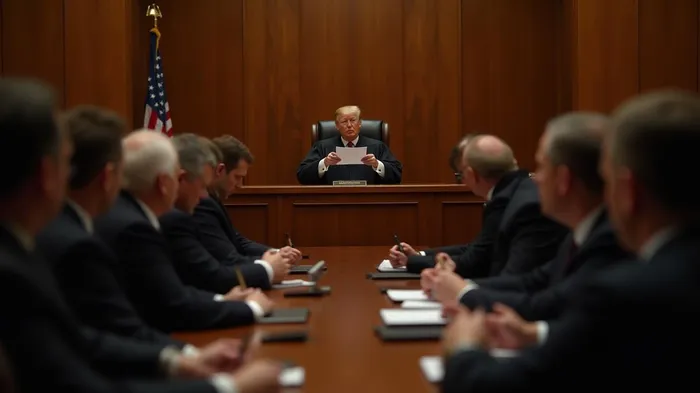
In a significant development, the U.S. Court of International Trade is poised to issue a ruling this month that could potentially halt the trade war initiated by Donald Trump. The court's decision is expected to challenge Trump's authority to impose tariffs unilaterally, a move that has been a contentious issue since its inception. The ruling comes at a time when global economic stability is under scrutiny, with the ongoing trade tensions between the U.S. and China having far-reaching implications for international trade and economic growth.
The trade war, which began in 2018, has had a profound impact on both the U.S. and China, as well as on the global economy. The imposition of tariffs on a wide range of goods has disrupted supply chains, increased costs for businesses and consumers, and contributed to inflationary pressures. The economic fallout has been felt not only in the two countries but also in other regions, as the trade war has disrupted global supply chains and undermined the rules-based multilateral trading system.
The court's potential ruling is seen as a critical juncture in the ongoing trade dispute. If the court decides in favor of the plaintiffs, it could set a precedent that limits the executive branch's ability to impose tariffs without congressional approval. This would mark a significant shift in the balance of power between the executive and legislative branches, potentially altering the dynamics of future trade negotiations and policy-making.
The implications of the court's decision extend beyond the immediate trade dispute. A ruling against Trump's tariff authority could have broader ramifications for U.S. trade policy, potentially leading to a more collaborative approach to international trade negotiations. It could also influence how other countries view the U.S. as a trading partner, potentially fostering a more stable and predictable trading environment.
However, the court's decision is just one piece of the puzzle in the complex landscape of U.S.-China trade relations. The underlying issues that led to the trade war, including intellectual property theft, forced technology transfers, and market access barriers, remain unresolved. Both countries will need to engage in sustained dialogue and negotiation to address these challenges and work towards a mutually beneficial resolution.
In the meantime, the global economy continues to grapple with the fallout from the trade war. The uncertainty surrounding the court's decision and the broader trade dispute adds to the challenges faced by businesses and governments alike. As the world navigates these turbulent watersWAT--, the need for stable and predictable trade policies has never been more pressing. The court's ruling, whatever it may be, will be a significant step in shaping the future of U.S.-China trade relations and the global economy as a whole.

Stay ahead of the market.
Get curated U.S. market news, insights and key dates delivered to your inbox.






Comments
No comments yet