
Costco vs. Walmart: Why This Price Gap Matters for Investors
 Aime Summary
, highlighting a widening value gap between warehouse clubs and traditional supermarkets. Traditional retailers like KrogerKR-- and Publix face pressure as discount chains capture market share through aggressive pricing strategies. Membership fees and bulk purchasing requirements create barriers for some consumers, limiting the universality of savings at warehouse clubs. Inflation trends and food cost volatility continue to drive shoppers toward the most affordable options, benefiting cost-leaders like CostcoCOST--. Investors should monitor how these pricing dynamics influence quarterly earnings and long-term market positioning for major retail stocks
The gap between discount grocery leaders and traditional supermarkets is no longer a subtle difference but a structural reality reshaping the retail sector. Recent data from Consumer Reports indicates that Costco has solidified its position as the most affordable large grocery chain in the nation, outpacing WalmartWMT-- by a significant margin. This shift is critical for investors tracking the performance of major retailers like Walmart (WMT) and Costco (COST), as consumer behavior increasingly favors value over convenience in a high-inflation environment. The implications extend beyond simple price tags, touching on supply chain efficiency, membership loyalty, and the overall viability of the traditional supermarket model.
How does a Costco vs. Walmart price comparison reveal the bulk buying advantage?
A detailed analysis of 32 common grocery items provides a clear picture of the economic advantage held by warehouse clubs. The data shows that while Walmart wins on specific individual items like chicken, sugar, and eggs, Costco delivers a . This aggregate savings is driven by the fundamental economics of bulk purchasing, where Costco leverages its massive scale to negotiate lower unit costs from suppliers and pass those savings to members. In a recent Consumer Reports survey, this trend was confirmed across multiple test markets, with Costco , followed by BJ's and other discount chains.
However, the raw price differential tells only part of the story. The net savings for a consumer depend heavily on the ability to absorb the $65 annual membership fee, which must be offset by frequent shopping trips. Furthermore, the bulk model requires significant storage capacity, particularly for perishables, which can erode the per-unit advantage if food spoils before consumption. This creates a bifurcated consumer base: those with larger households and freezers who benefit from the savings, and smaller households or those in food deserts who may find the upfront costs and travel time prohibitive. For investors, this highlights a key differentiator in the retail sector: the membership model creates a that is less sensitive to short-term price fluctuations, provided the value proposition remains intact.
Why are traditional supermarkets losing ground in the Costco vs. Walmart price comparison?
The competitive pressure on traditional supermarkets is intensifying as the price gap between them and discount warehouse clubs widens. , . Traditional chains like Kroger, Publix, and Food Lion are caught in the middle, , while failing to offer the same bulk-value proposition as Costco or BJ's. This pricing structure forces these retailers to justify their premiums through superior service, location convenience, or specialized product offerings, which becomes increasingly difficult as inflation drives consumers to prioritize unit prices.
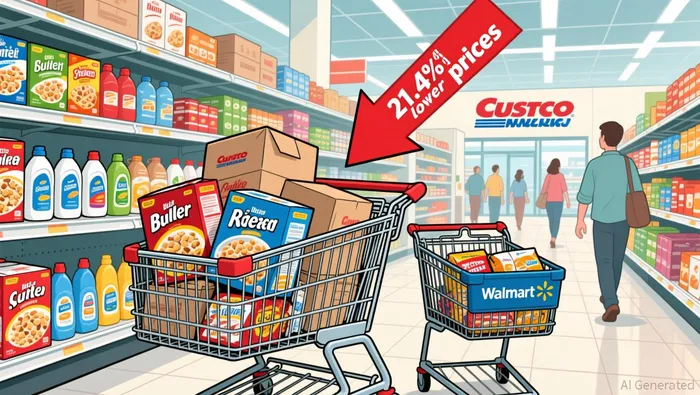
The data suggests a structural challenge for the traditional grocery model. , the pressure on household budgets is forcing shoppers to re-evaluate their spending habits. Discount warehouse clubs are well-positioned to capture this demand because their business model is inherently designed for low margins and high volume. In contrast, traditional supermarkets often carry higher operating costs and a more complex supply chain, making it harder to match the pricing of warehouse clubs without sacrificing profitability. This dynamic is particularly acute in regions like Tennessee, where only Costco, Aldi, and BJ's offered prices lower than Walmart, leaving the majority of local grocery stores at a distinct disadvantage.
What are the investment implications of Costco and Walmart pricing trends in 2026?
For investors, the pricing trends between Costco and Walmart signal a shift in the retail landscape that favors companies with strong membership models and disciplined cost control. , even in a high-inflation environment, demonstrates the resilience of its value proposition. This is a significant moat, as it suggests that Costco can continue to attract price-sensitive consumers who are looking to maximize their purchasing power. The membership fee acts as a barrier to entry for competitors and a source of predictable recurring revenue, which is highly valued in the current market.
However, the outlook is not without risks. The success of the warehouse club model is contingent on consumer behavior, specifically the ability of shoppers to afford larger upfront quantities and manage inventory effectively. In scenarios where economic conditions tighten or fuel prices rise, the cost of travel to warehouse clubs could negate the savings for some consumers. Additionally, the pressure on traditional retailers to cut prices could lead to margin compression, affecting the profitability of companies like Walmart and traditional grocers. Investors should watch for how these companies navigate the trade-off between maintaining market share through price cuts and protecting their bottom lines. The data indicates that while Costco is currently the clear winner in terms of value, the long-term winner will be the company that can best balance price leadership with operational efficiency and customer loyalty.
The competitive dynamics between these retail giants are likely to intensify in 2026 as inflation remains a key concern for consumers. The structural advantages of the warehouse club model are clear, but the ability to sustain these advantages will depend on supply chain management and the evolving needs of the American shopper. As the retail sector continues to evolve, the ability to offer genuine value will remain the primary driver of success, making the pricing strategies of Costco and Walmart critical indicators for the broader economy.

Stay ahead of the market.
Get curated U.S. market news, insights and key dates delivered to your inbox.


AInvest
PRO
AInvest
PRO



Comments
No comments yet