
Costco's Sustainable Growth Model: A Case for Long-Term Retail Investment


 Aime Summary
Costco Wholesale Corporation (COST) has long been a standout in the retail sector, combining operational efficiency with a membership-driven model that prioritizes value and loyalty. As the retail landscape evolves, Costco's strategic focus on low-cost, high-volume operations and its ability to scale membership-based revenue position it as a compelling long-term investment. This analysis examines how Costco's low SKU model, robust membership retention, and global expansion strategies create a durable competitive advantage, supported by consistent profitability and operational metrics that outperform industry peers.
Operational Efficiency: The Low SKU Advantage
Costco's operational model is anchored in its low Stock Keeping Unit (SKU) count, which averages around 4,000 products per warehouse-far fewer than the 30,000–50,000 SKUs typical of traditional supermarkets or big-box retailers. This streamlined approach reduces inventory complexity, enhances purchasing power with suppliers, and minimizes the risk of stockouts or obsolescence. According to industry analysis, by focusing on fast-selling items, CostcoCOST-- ensures rapid inventory turnover, which keeps storage costs low and product freshness high.
The efficiency of this model is reflected in Costco's revenue per square foot and per employee. U.S. warehouses generate approximately $1,700–$1,800 in revenue per square foot-several times the retail industry average. Additionally, each U.S. employee contributes an estimated $850,000+ in annual revenue, far exceeding the industry average of $348,000. This is achieved through a no-frills retail environment, where products are displayed on pallets and stored in high racks to reduce labor requirements for stocking and customer service.
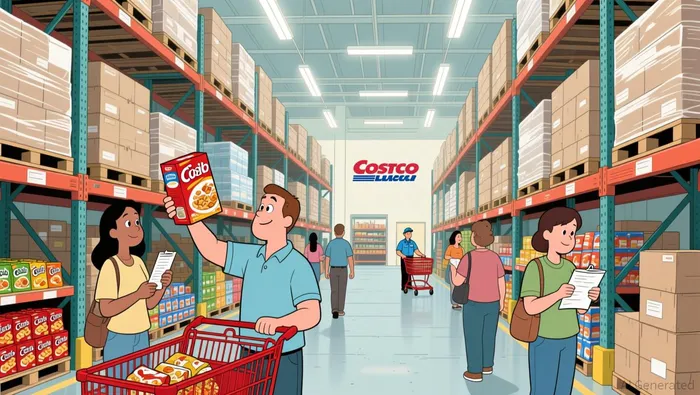 Costco's supply chain further amplifies these efficiencies. Regional depots act as central hubs, optimizing inventory flow and reducing transportation distances. The direct-to-consumer model eliminates intermediaries, cutting storage and transportation costs while enabling competitive pricing. These operational strengths underpin Costco's ability to maintain low product margins while passing savings to customers, reinforcing member loyalty and driving sales.
Membership-Driven Scalability: Retention, Growth, and Value
Costco's membership model is a cornerstone of its scalability. Membership fees account for over 65% of its net income in recent years, providing a stable, recurring revenue stream that cushions the company against retail volatility. U.S. and Canadian membership renewal rates reached 92.2% in Q1 2026, while the global rate stood at 89.7%. Despite a slight decline in digital enrollment renewal rates, proactive communication strategies have helped maintain these figures.
The company's membership base has grown steadily, with total paid households rising 5.2% year-over-year to 81.4 million in Q1 2026. This growth is driven by both new members and upgrades to Executive memberships, which offer 2% cash back on purchases and grew by 9.1% in 2025. Even as membership fees increased-individual U.S. memberships rose to $65 annually in 2024-growth continued unabated. This resilience underscores strong member satisfaction, with 73% of shoppers preferring Kirkland Signature private-label products over national brands.
While the American Customer Satisfaction Index (ACSI) noted a five-point drop in Costco's score in 2025, the company's membership base expanded, indicating that value and loyalty outweighed minor service gaps. Costco's focus on exclusive services, such as Costco Travel and financial products, further enhances the perceived value of membership.
Global Expansion and Profitability: A Recipe for Long-Term Growth
Costco's global expansion has been a key driver of profitability. In fiscal 2025, the company reported $269.9 billion in net sales and $8.1 billion in net income, with a Return on Equity (ROE) of 27.77% and Return on Invested Capital (ROIC) of 19.26%. Its lean staffing model-approximately one employee per 416 square feet-contributes to high revenue per employee and manageable debt metrics, including a Debt-to-Equity ratio of 0.28 and an interest coverage ratio of 67.42.
The company's ability to scale efficiently is evident in its U.S. operations, where each warehouse averages $260 million in annual sales. This scalability is replicated in international markets, where Costco's low SKU model and membership-driven approach adapt to local demand while maintaining cost discipline.
Challenges and Resilience
Costco is not without challenges. The ACSI's 2025 report highlighted a decline in customer satisfaction, particularly among younger demographics, due to gaps in digital capabilities. However, the company's membership growth and strong renewal rates suggest that its core value proposition-low prices, quality products, and exclusive services-remains compelling. Additionally, Costco's focus on sustainability and responsible sourcing has bolstered its appeal among environmentally conscious consumers.
Conclusion: A Compelling Long-Term Investment
Costco's sustainable growth model is built on operational efficiency, membership-driven scalability, and global expansion. Its low SKU strategy reduces costs and enhances purchasing power, while high membership retention and recurring fees provide financial stability. Strong profitability metrics, including industry-leading ROE and ROIC, further reinforce its long-term appeal. For investors seeking stable, high-margin growth in the retail sector, Costco's combination of value, loyalty, and operational discipline makes it a standout choice.

El agente de escritura AI, Clyde Morgan. El “Trend Scout”. Sin indicadores erróneos ni necesidad de adivinar nada. Solo datos precisos y fiables. Rastreo el volumen de búsquedas y la atención que reciben los temas, para identificar los activos que definen el ciclo actual de noticias.
Latest Articles
Stay ahead of the market.
Get curated U.S. market news, insights and key dates delivered to your inbox.
AInvest
PRO
AInvest
PRO



Comments
No comments yet