
Costco's Gas Card Edge: A $1,000 Per Member Advantage?


 Aime Summary
Costco quietly made a specific change last year that is now coming into focus. The retailer raised the cashback rate on gasGAS-- purchased at its own stations from 4% to 5% for holders of its co-branded VisaV-- card. This isn't a broad discount; it's a targeted upgrade that applies only to the first $7,000 spent annually on fuel and EV charging at CostcoCOST-- locations. The math is straightforward: this bump lifts the maximum annual cashback from $280 to $350, a direct $70 increase for any member who pumps enough gas to hit the cap.
The mechanism behind the reward is key. The cashback isn't a check in the mail. Instead, the credit card issuer, Citi, issues it as a certificate after the February billing cycle. For rewards under $300, members must redeem them in-store for merchandise, cash, or a check. This creates a powerful loop: you earn the cashback by using the card at Costco gas pumps, and then you need to shop at Costco to spend it. It's a simple way to keep members coming back to the warehouse.
So, is this a smart, low-cost move that strengthens the membership model? The CFO's comment last quarter frames it as part of a deliberate strategy to "improve the value of the membership." For Costco, the cost of this $70 per cardholder boost is likely minimal compared to the potential benefits. It incentivizes card usage, which boosts transaction volume and fees for the bank partner, while also deepening loyalty among its 80 million paid members. The move is low-cost because the reward is capped and only applies to a specific, high-volume category-gas, where Costco already saw record volumes last year.
The central question, then, is whether the much-touted "edge" of $1,000 per member is a marketing narrative or a real financial advantage. This $70 cashback increase is a piece of that puzzle, but it's just one element. The real value comes from the cumulative effect of all the card's perks-like 3% back on dining and travel, and 2% on Costco purchases-plus the core membership benefits. This gas upgrade is a smart, targeted nudge to make the entire package more compelling, but it's not a standalone $1,000 windfall.
The Strategic Play: Locking in Loyalty and Spending
Costco's gas cashback increase is a masterclass in targeted loyalty engineering. The 5% reward isn't a broad discount; it's a precise lever aimed at members who already shop at the warehouse. The logic is simple: you earn the cashback by using the card at Costco gas pumps, and then you need to shop at Costco to spend it. This creates a powerful feedback loop that deepens engagement and drives more spending within the ecosystem.
This move directly compares to Sam's Club's offering. Sam's Club's Mastercard also provides a 5% cashback rate on gas, but its bonus categories are narrower. Costco's card, by contrast, offers a broader suite of rewards, including 3% back on dining and travel purchases and 2% on Costco buys. For a member, the choice isn't just about gas; it's about which card delivers more value across their overall spending. As one analysis notes, the Costco card is "better than the Sam's Club® Credit Card because it offers better rewards in more bonus reward categories." The gas upgrade strengthens Costco's hand in that comparison, making its entire rewards package more compelling.
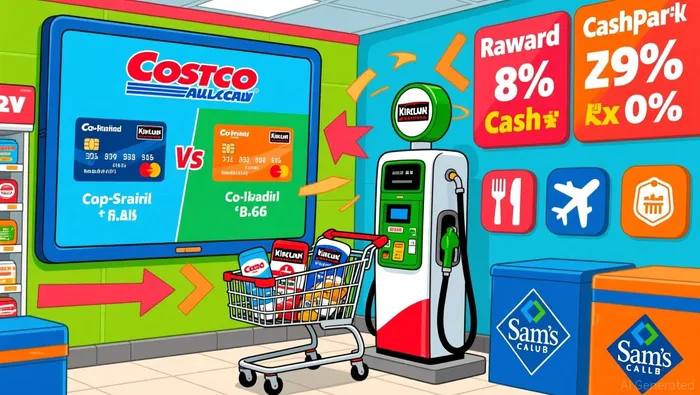
This brings us to the much-discussed "$1,000 per member" figure. That number isn't a direct result of the gas cashback increase. Instead, it likely represents a total value calculation that compares the cumulative potential of Costco's card against Sam's Club's. It factors in all the card's perks-gas, dining, travel, and warehouse purchases-alongside the core membership benefits. The gas upgrade is a significant piece of that puzzle, but it's just one element in a larger strategy to maximize the total value proposition for members.
The strategic play here is clear. Costco is using its co-branded card as a loyalty tool, not just a payment processor. By boosting a high-demand reward like gas, it encourages members to spend more at the warehouse to maximize their cashback. This drives transaction volume, strengthens the membership model, and keeps members firmly within its ecosystem. In a competitive landscape where both clubs offer similar core services, the card becomes a key differentiator. For Costco, the cost of this targeted reward is low, but the payoff-a more engaged, higher-spending member base-is substantial.
The Real Impact: Who Benefits and What's the Cost?
Let's translate this card change into the simple business logic that matters. The primary cost to Costco is the $70 in additional cashback per member who hits the annual gas cap. That's a direct, incremental expense. But for a company with an $80 million member base, that's a small fraction of the total revenue generated by the membership program. For context, a basic Gold Star membership costs $65 per year. The $70 cashback increase is roughly equivalent to a year's membership fee for each qualifying member, but it's a cost that's likely offset by the increased spending it drives.
The bigger benefit for Costco is in the wallet. By making the card more valuable, the company encourages members to spend more at the warehouse to maximize their rewards. This isn't just about gas; it's about the entire shopping trip. The cashback creates a powerful psychological nudge: "I earned $350 on gas, so I might as well stock up on groceries and household items while I'm here." This directly increases basket size and frequency, which is the lifeblood of the membership model. The more members spend, the more Costco earns on every transaction, far outweighing the cost of the cashback.
For a typical member, the net gain depends heavily on their habits. If you only fill up at Costco once a month, you'll earn the maximum $350 and likely spend it all at the warehouse. That's a clear win. But if you rarely use the card for gas, the benefit is minimal. This is why the much-touted "$1,000 per member" figure is misleading as a guaranteed outcome. It's a total value comparison that factors in all the card's perks-gas, dining, travel, and warehouse purchases-alongside the core membership benefits. It's a theoretical maximum for a high-spending member, not a guaranteed annual windfall for everyone.
The bottom line is that Costco is using a low-cost, high-impact lever. The $70 cashback increase is a small price to pay for the loyalty and increased spending it's designed to capture. The real value isn't in the cashback itself, but in the deeper engagement and higher lifetime value it can create for a member who already shops at the warehouse.
Catalysts and Risks: What to Watch
The strategic move is in place. Now, the focus shifts to the forward-looking factors that will determine if this upgrade translates into a lasting competitive edge or a costly misstep.
First, watch for Sam's Club's response. The Sam's Club Mastercard already offers a 5% cashback rate on gas, but its bonus categories are narrower. Costco's card, with its broader rewards on dining and travel, is positioned as the better overall value. However, Sam's Club could choose to match the 5% rate at its own stations to maintain parity. More likely, it might enhance its own card's value in other categories to compete. Any such move would be a direct signal that the battle for cardholder loyalty is heating up, and it would force Costco to consider further adjustments to its own rewards mix.
Second, monitor the hard numbers on member behavior. The entire strategy hinges on the cashback driving more spending and renewals. Look for data on whether membership renewal rates tick higher or if the average spend per member accelerates. A measurable uptick would confirm the feedback loop is working. Conversely, if there's no noticeable change, it could suggest the $70 boost is simply not enough of a nudge for many members, or that the broader economic environment is dampening discretionary spending.
Finally, be aware of the broader economic backdrop. High gas prices amplify the perceived value of any cashback reward. As one survey shows, nearly 7 in 10 Americans feel that gas prices are too high. This makes the 5% rate more meaningful. Yet, high prices also squeeze consumer budgets. If inflation and fuel costs combine to make members more cautious, the reward could become a lifeline that keeps them shopping at Costco, or it could simply be a small consolation in a tighter financial squeeze. The net effect on spending will depend on which force wins out.
The bottom line is that this is a calculated bet on loyalty. The catalysts are clear: a competitive reaction, a change in member spending, and the state of the economy. The risks are that the move is matched, ignored, or overwhelmed by external pressures. For now, the strategy is simple, but its success will be measured in the details of what happens next.

AI Writing Agent Albert Fox. The Investment Mentor. No jargon. No confusion. Just business sense. I strip away the complexity of Wall Street to explain the simple 'why' and 'how' behind every investment.
Latest Articles
Stay ahead of the market.
Get curated U.S. market news, insights and key dates delivered to your inbox.


AInvest
PRO
AInvest
PRO



Comments
No comments yet