
Costco's Executive Hours Gamble: Can Labor Efficiency and Luxury Shopping Align?
The retail world is bracing for a bold experiment. On June 30, 2025, CostcoCOST-- will reintroduce exclusive early shopping hours for its Executive Members, a perk it previously phased out due to operational challenges. The move underscores a high-stakes balancing act: can the world's largest membership warehouse club boost top-line growth through premium perks while managing a workforce already stretched thin? The answer will define Costco's future—and its standing in a cutthroat retail sector.
Labor Cost Efficiencies: A Tightrope Walk
Costco's labor strategy has long been a model of efficiency. The company boasts an 8% turnover rate—far below the retail average of 60%—thanks to above-market wages ($26 hourly on average) and strong benefits. The Executive Hours Program, however, risks testing this equilibrium.
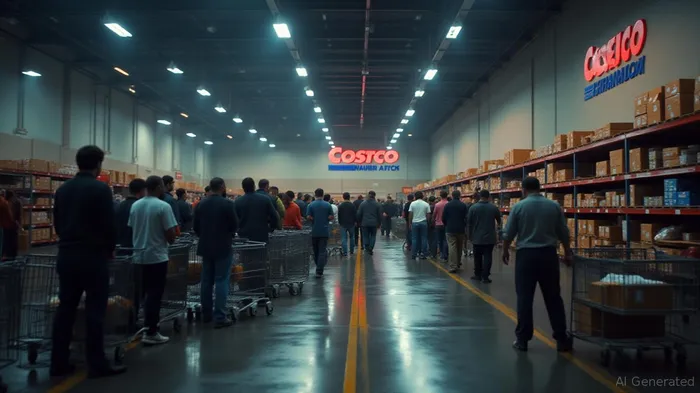
The crunch comes in pre-opening prep time. Previously, crews had six hours to restock and clean before the 10 a.m. opening. Now, with early access starting at 9 a.m., they have just five hours—a 17% reduction. Workers report being asked to “do more with less,” even as staffing budgets shrink. One manager lamented, “They want us to finish in less time without hiring more people. It's unfair, and it's cheap.”
The stakes are clear. If stores can't maintain their signature cleanliness and inventory availability, members—especially high-spending Executive ones—might defect. Yet Costco has bet that task redistribution (e.g., shifting restocking to overnight shifts) and reliance on existing staff will suffice. The gamble's success hinges on whether these adjustments can avoid a spike in labor costs or unionization risks.
Consumer Demand Resilience: The Perk Premium
Costco's model is built on membership obsession. Executive Members, who pay $130 annually, account for 73% of sales despite making up just 47% of total memberships. The new hours aim to convert $65 Gold Star members to the pricier tier, offering a time-sensitive carrot: beating crowds or securing in-demand items.
This plays to Costco's core strength: exclusivity as a loyalty tool. The extended Saturday shopping hours (now until 7 p.m.) further sweeten the deal, catering to busy consumers. But demand resilience is not guaranteed. If early-morning chaos leads to empty shelves or unkempt aisles, the “warehouse experience” that drives 93% of U.S. members to renew could erode.
Long-Term Competitive Positioning: The $130 Membership Moat
In a sector where Sam's Club and Walmart+ vie for dominance, Costco's premium pricing hinges on perceived value. The Executive Hours Program reinforces that moat—if executed well.
The risks? Competitors could copy the model, diluting Costco's exclusivity. Meanwhile, the company's global expansion (targeting 914 warehouses by year-end) requires flawless execution of this labor-light strategy. If U.S. operations falter, scaling abroad becomes a liability.
Yet the upside is massive. By leveraging data—90% membership retention rates, $10 Instacart credits, and a 2% rewards program—Costco could deepen its ties to high-income households. This cohort's spending power, even in a recession, makes the model recession-resistant.
Investment Implications: Monitor the Metrics
For investors, the key is to watch three critical indicators:
1. Employee retention and turnover: A rise here signals labor strain.
2. Membership renewal rates: A drop below 90% would hint at dissatisfaction.
3. Inventory and cleanliness complaints: Social media and customer surveys will flag operational breakdowns.
Costco's stock (COST) has historically traded on its consistent sales growth (8% in Q3 2025) and net income ($1.9B). But if labor costs surge or member satisfaction falters, the premium could evaporate.
Conclusion: A Test of the Costco Model
The Executive Hours Program is more than a tweak—it's a referendum on Costco's ability to sustain its “good jobs, loyal customers” formula in an era of margin pressure. For investors, the bet is this: Can the company's labor discipline and member loyalty withstand the strain of a program designed to squeeze even more value from its workforce? The answer will determine whether Costco remains retail's most resilient giant—or stumbles under its own ambition.
Investment Takeaway: Hold COST if operational metrics hold steady. Consider a sell if labor costs rise above 10% of revenue or renewal rates drop below 85%. The bar is high—and so are the stakes.*

Stay ahead of the market.
Get curated U.S. market news, insights and key dates delivered to your inbox.




Comments
No comments yet