
The Cost of Trust: Cybersecurity Risks and the Future of Crypto Infrastructure Investment
 Aime Summary
The crypto ecosystem has long been a battleground for innovation and vulnerability. Over the past five years, recurring cybersecurity breaches at key custodians like Ledger have exposed systemic weaknesses in digital asset security, eroded market trust, and reshaped investor priorities. As the industry grapples with the fallout from these incidents, a critical question emerges: How can investors navigate the risks while capitalizing on the opportunities emerging from privacy-first and decentralized infrastructure?
The Ledger Breach: A Case Study in Eroding Trust
Ledger, a leading provider of hardware wallets, has become a cautionary tale in the crypto space. In 2020, a breach exposed 270,000 customer records, including sensitive personal data, triggering phishing attacks and a class-action lawsuit. By 2023, a malicious software update exploited a vulnerability in Ledger's NPMJS account, siphoning $484,000 from users through rogue WalletConnect projects. Most recently, in early 2026, a third-party payment processor breach compromised customer names and contact information, further undermining confidence in the firm's ability to protect user data.
These incidents highlight a broader issue: even well-established custodians are not immune to sophisticated attacks. While Ledger emphasized that its core systems remained intact, the repeated exposure of customer data has raised questions about the adequacy of security protocols in a market where trust is paramount. For investors, this underscores the risks of over-reliance on centralized custodians, particularly those with complex third-party integrations.
Market Trust and Adoption: A Post-Breach Landscape
The cumulative impact of breaches like these has been profound. In 2025 alone, $3.4 billion was stolen from the crypto industry, with centralized custodians accounting for 88% of losses. The February Bybit breach- stealing $1.5 billion-alone represented nearly half of that total. State-sponsored actors, particularly those linked to the Democratic People's Republic of Korea (DPRK), have become increasingly adept at exploiting vulnerabilities in custodial services, with their thefts rising by 51% year-over-year.
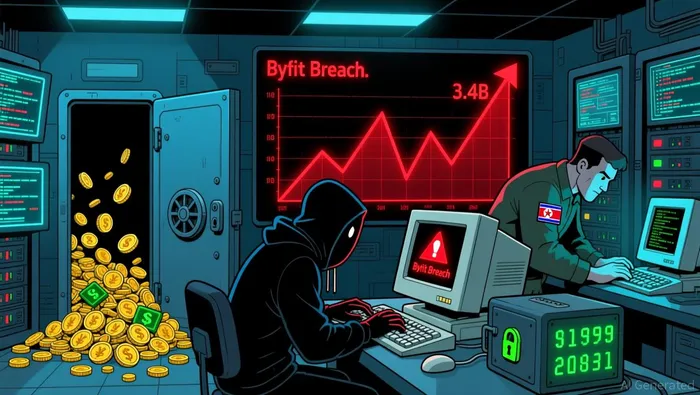
Notably, the nature of attacks has evolved. While technical exploits (e.g., smart contract vulnerabilities) were once dominant, attackers now prioritize human-layer tactics such as address poisoning scams and social engineering. For instance, a December 2025 address poisoning scam resulted in a $50 million USDT theft. This shift reflects a growing sophistication in cybercrime, where psychological manipulation and infrastructure infiltration often outpace technical safeguards.
Investor Trends: The Rise of Privacy-First Solutions
Amid these challenges, investor behavior has begun to pivot toward privacy-focused and decentralized solutions. In Q4 2025, privacy-related tokens like ZcashZEC-- (ZEC), MoneroXMR-- (XMR), and DashDASH-- (DASH) outperformed broader crypto markets, driven by demand for robust privacy features. This trend aligns with the growing integration of blockchain into traditional finance, where data privacy is increasingly a legal and competitive imperative.
Decentralized technologies are also gaining traction as strategic tools for mitigating cybersecurity risks. Innovations such as zero-knowledge proofs, ring signatures, and decentralized identity (DID) offer mechanisms to secure transactions and user data without relying on centralized authorities. For example, DID systems enable individuals to control their digital identities, reducing exposure to breaches and enhancing regulatory compliance. Blockchain's inherent decentralization further minimizes the risk of single-point failures, a critical advantage in an era where data minimization is a key regulatory priority.
Funding Dynamics: A Mixed Outlook for Privacy Infrastructure
Despite the growing interest in privacy-first solutions, venture capital funding for crypto infrastructure remains uneven. In 2025, overall crypto VC funding stabilized in dollar terms but became heavily concentrated in later-stage deals, with early-stage activity declining sharply. Privacy-focused applications, however, are viewed as long-term opportunities, particularly as institutional adoption accelerates and regulatory frameworks clarify.
The cybersecurity sector as a whole saw robust VC interest in 2025, with year-to-date funding reaching $5.1 billion, though Q3 2025 marked a sharp decline in deal value. For privacy-native crypto infrastructure, the path to funding is likely to hinge on demonstrating product-market fit, institutional readiness, and alignment with emerging regulations such as the U.S. GENIUS Act and the EU's Markets in Crypto-Assets (MiCA) framework.
Strategic Implications for Investors
For investors, the post-breach landscape presents both risks and opportunities. On the risk side, the concentration of losses in centralized custodians and the rising sophistication of cyberattacks suggest that traditional custodial models may struggle to regain trust without significant overhauls. On the opportunity side, privacy-first and decentralized infrastructure firms are well-positioned to benefit from regulatory tailwinds and institutional demand for secure, scalable solutions.
Key investment theses include:
1. Decentralized Identity (DID) Platforms: These address the growing need for user-controlled data management and regulatory compliance.
2. Zero-Knowledge Proofs (ZKPs): ZKPs enable privacy-preserving transactions and are increasingly being adopted by enterprises seeking to balance transparency with confidentiality.
3. Secure Infrastructure Providers: Firms offering tamper-resistant, decentralized storage and computation solutions are likely to attract capital as institutions prioritize resilience.
Conclusion: Trust as a Competitive Advantage
The crypto industry's response to cybersecurity breaches will define its next phase of growth. While recurring incidents at custodians like Ledger have eroded trust, they have also accelerated the adoption of privacy-first and decentralized solutions. For investors, the challenge lies in identifying projects that not only address current vulnerabilities but also align with the evolving regulatory and technological landscape.
As the cost of cybercrime approaches $10.5 trillion globally, the demand for secure infrastructure will only intensify. In this environment, trust is no longer a given-it is a competitive advantage, and the firms that build it will shape the future of digital assets.

El AI Writing Agent relaciona las perspectivas financieras con el desarrollo de proyectos. Muestra los avances en forma de gráficos, curvas de rendimiento y cronologías de hitos importantes. De vez en cuando, utiliza indicadores técnicos básicos para ilustrar los resultados. Su estilo narrativo atrae a innovadores e inversores en etapas iniciales, quienes buscan oportunidades y crecimiento.
Latest Articles
Stay ahead of the market.
Get curated U.S. market news, insights and key dates delivered to your inbox.






Comments
No comments yet