
Using Cost of Production to Analyze Commodity-Driven Businesses
 Aime Summary
In the world of investing, understanding the financial health of a company often means looking beyond just its stock price or revenue. For companies in the commodity sector—such as those involved in oil, agriculture, or mining—one of the most telling indicators of success is the cost of production. In this article, we’ll explore what cost of production means, how it influences the stock market, and how investors can use this concept to make more informed decisions.
What is Cost of Production?
Cost of production refers to the total amount of money a company spends to create a product or service. For commodity-driven businesses, this includes expenses like raw materials, 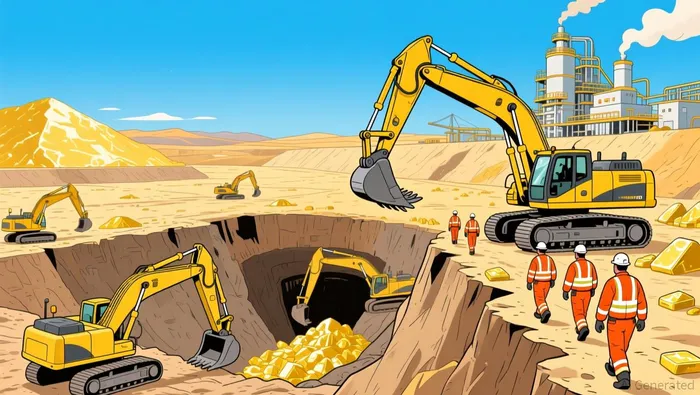 labor, transportation, and energy. It is typically expressed as a per-unit cost (e.g., dollars per barrel of oil or per ton of copper).
For example, if an oil company produces 10 million barrels of oil in a year and spends $200 million on all production-related costs, the cost of production per barrel is $20. This metric helps determine whether the company is making a profit. If the selling price of the commodity is higher than the cost of production, the company can generate a profit. If not, it may struggle to remain profitable or even stay in business.
How Cost of Production Influences the Stock Market
The stock price of commodity-driven businesses is closely tied to the relationship between the selling price and the cost of production. When the cost of production is low, a company can remain profitable even if the commodity price drops slightly. This can lead to stronger investor confidence and a higher stock price.
Conversely, if a company’s cost of production is high and the commodity price falls, profits can shrink or disappear. This can lead to a drop in the stock price. Investors often compare a company’s cost of production to the current market price of the commodity to gauge its competitive position and long-term viability.
Strategies for Investors
Investors can use cost of production as a tool to: - Identify strong performers: Companies with consistently low production costs are often better positioned to withstand market downturns and outperform competitors. - Compare companies in the same industry: By comparing the cost of production among different companies in the same sector, investors can spot which ones are more efficient and well-managed. - Predict stock price movements: A company with a cost of production that’s much lower than the current market price may be a good long-term investment, especially in a volatile market.
Case Study: Gold Mining in 2020
During the economic uncertainty of 2020, gold prices rose to over $2,000 per ounce due to investor demand for safe-haven assets. Companies with lower production costs were able to capitalize on the price surge and significantly boost their profits. One example is Newmont CorporationNEM--, which has consistently operated with a cost of production well below $1,400 per ounce. As gold prices climbed, Newmont’s stock price surged by over 30% in the first half of the year.
In contrast, higher-cost producers with costs near or above $2,000 had to either cut production or see their profits shrink, which negatively impacted their stock prices. This real-world example shows how cost of production can be a powerful lens through which to view a company’s potential in the stock market.
Risks and Considerations
While cost of production is a useful metric, it’s not the only one. External factors like geopolitical events, supply chain disruptions, and changes in environmental regulations can also impact a company’s profitability. Additionally, a company with low production costs may still face financial difficulties if it has high debt or poor management. It’s important to use cost of production in conjunction with other financial metrics like revenue, profit margins, and debt levels for a more complete picture.
Conclusion
Cost of production is a simple yet powerful concept that can help investors assess the long-term viability of commodity-driven businesses. By understanding how much a company spends to produce each unit of its product, investors can better evaluate its competitive edge, profitability, and potential for growth. As with all investment decisions, it’s important to do thorough research and consider the broader market environment. With this knowledge, investors can make smarter, more informed choices in the ever-changing stock market.

Stay ahead of the market.
Get curated U.S. market news, insights and key dates delivered to your inbox.


AInvest
PRO
AInvest
PRO



Comments
No comments yet