
The Cost of Cultural Missteps: Cracker Barrel's Logo Backlash and the Investor Trust Dilemma


 Aime Summary
In the retail sector, where brand identity is often as valuable as inventory, cultural missteps can trigger seismic shifts in investor confidence. Cracker Barrel's 2024 rebranding fiasco—a case study in how a single decision can erode decades of goodwill—offers a stark lesson for investors. The chain's abrupt removal of its iconic “Uncle Herschel” logo, a symbol of Southern hospitality and nostalgia, sparked a firestorm of backlash that sent its stock plummeting and exposed the fragility of brand equity in an era of heightened cultural sensitivity.
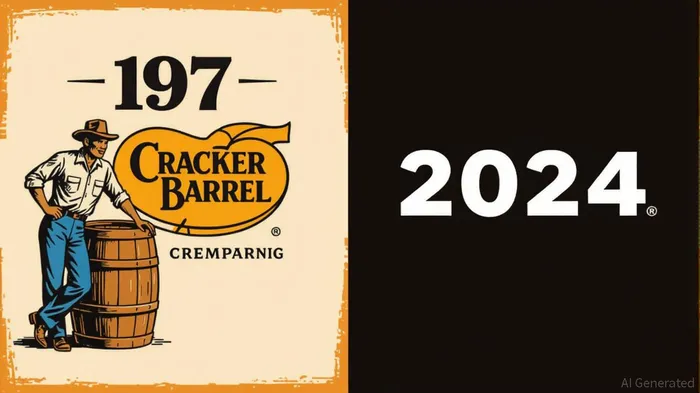
The controversy began when Cracker BarrelCBRL-- unveiled its “All the More” rebranding campaign, replacing the beloved “Uncle Herschel” figure with a text-only logo. The move, intended to modernize the brand, was perceived by many as a betrayal of the chain's roots. Social media erupted with criticism, conservative commentators decried it as a “woke rebrand,” and even former President Donald Trump weighed in, calling it a “mistake.” The stock price dropped 12% in a single day, eroding $200 million in market value. By August 2025, the stock had yet to recover fully, trading at $54.50—well below its pre-rebrand level.
The financial fallout was not merely a short-term blip. Cracker Barrel's 2024 net income plummeted to $40.9 million from $99 million in 2023, while same-store sales growth stagnated. The company's $700 million investment in store remodels and digital upgrades, announced alongside the rebrand, failed to offset the reputational damage. Investors, who had already been skeptical of the chain's relevance in a fast-casual dining landscape, now questioned its leadership's ability to balance innovation with tradition.
The backlash underscores a broader risk for retailers: the erosion of trust when brands alienate their core customer base. Cracker Barrel's misstep was not just aesthetic but cultural. The “Uncle Herschel” figure, though never officially tied to a specific person, had become a totem of Southern Americana. Its removal was interpreted as a rejection of the values—family, tradition, and “country hospitality”—that defined the brand. This disconnect between corporate strategy and customer sentiment proved costly.
For investors, the lesson is clear: brand reputation is a fragile asset. Retailers must navigate cultural shifts with nuance, ensuring that modernization efforts do not erase the emotional connections that drive loyalty. Cracker Barrel's experience mirrors other rebranding misfires, such as Starbucks' 2011 green-cup controversy or Pepsi's tone-deaf 2017 ad, where tone-deaf decisions led to stock volatility and long-term brand damage.
Investors should scrutinize companies for their ability to manage cultural risks. Key indicators include:
1. Customer Sentiment Analysis: Monitor social media and reviews for shifts in brand perception.
2. Leadership Communication: Assess whether executives acknowledge missteps and adapt strategies.
3. Brand Cohesion: Evaluate whether rebranding aligns with core values or risks alienation.
Cracker Barrel's partial reversal—reintroducing “Uncle Herschel” to menus and stores—offers a glimmer of hope. Yet the stock's sluggish recovery suggests lingering doubts. For now, the chain's story serves as a cautionary tale: in retail, where heritage and identity are currency, even well-intentioned changes can trigger a crisis of trust. Investors would do well to weigh cultural alignment as rigorously as financial metrics when evaluating retail stocks.
In an era where brands are both cultural artifacts and financial assets, the line between innovation and irrelevance is perilously thin. Cracker Barrel's logo backlash reminds us that in retail, as in investing, the past is never as dead as we'd like to believe.

Stay ahead of the market.
Get curated U.S. market news, insights and key dates delivered to your inbox.
AInvest
PRO
AInvest
PRO



Comments
No comments yet