
V.F. Corporation (VFC): Legal Exposure and Market Implications for Investors


 Aime Summary
The Allegations and Market Fallout
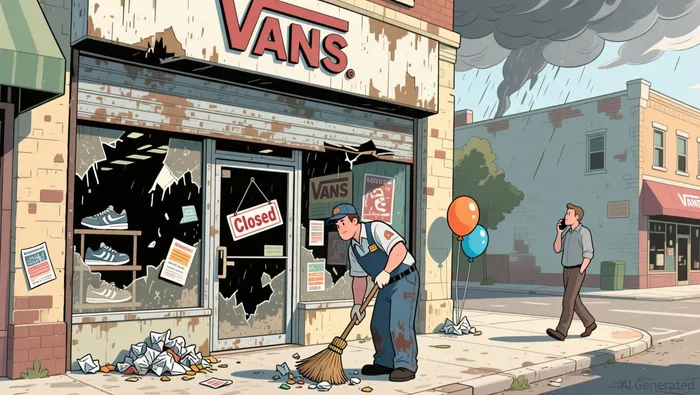
The lawsuit alleges that V.F. Corporation misled investors between October 2023 and May 2025 by downplaying the severity of Vans' operational challenges. According to filings, the company failed to disclose that its efforts to "deliberately reduce unprofitable revenue streams" at Vans would accelerate losses, which worsened from an 8% decline in the prior quarter to a 20% drop in the fourth quarter of fiscal 2025, according to a Kahn Swick & Foti, LLC alert. This revelation sent VFC's stock plummeting from $14.43 to $12.15 per share on May 21, 2025, erasing roughly $2.3 billion in market value, according to a Levi & Korsinsky alert.
The timing of the lawsuit is significant. V.F. has long been under pressure to revitalize its portfolio of brands, including Vans, The North Face, and Timberland. However, the abrupt reversal in Vans' performance-once a growth engine-has exposed vulnerabilities in the company's strategic execution. As noted by Bernstein Liebhard LLP, the lead plaintiff deadline of November 12, 2025, underscores the urgency for affected investors to act, according to a Gross Law Firm alert.
Historical Context and Industry Precedents
While V.F. Corporation has not faced major securities class action settlements in recent years, similar cases in the apparel and retail sectors offer instructive parallels. For instance, Six Flags Entertainment Corporation faced litigation in 2024 over misleading disclosures about its merger with Cedar Fair, L.P., which led to a 22.7% stock price drop and reputational damage, according to a Lowey Dannenberg alert. These cases highlight how earnings shortfalls and strategic missteps can trigger investor lawsuits, particularly when companies are perceived to have obscured risks.
Moreover, broader trends in securities litigation suggest that settlements have become more nuanced. According to Cornerstone Research, the average settlement in 2024 fell to $42.4 million, a 13% decline from the prior year, as courts adopted "plaintiff-style damages" calculations that often yield smaller payouts, according to a Cooley research report. While this could imply lower financial exposure for V.F., the company's size and the magnitude of the Vans decline may still attract a substantial settlement.
Financial and Reputational Risks
Even absent a disclosed settlement, the litigation poses non-financial risks. Reputational damage could exacerbate Vans' struggles, deterring consumers and investors alike. Additionally, the lawsuit may prompt heightened scrutiny from regulators and analysts, forcing V.F. to adopt more transparent disclosure practices. This aligns with broader investor demands for corporate accountability, particularly in sectors like apparel, where brand performance is closely tied to market sentiment.
For context, Avantor, Inc. faced a similar securities lawsuit in 2025 over alleged misrepresentations about its competitive positioning, leading to a 10% stock price correction, according to a Levi & Korsinsky alert. While V.F.'s case is distinct, the pattern of legal action following earnings disappointments underscores the sector's vulnerability to litigation.
Investor Implications and Forward-Looking Considerations
Investors holding VFCVFC-- securities between October 2022 and May 2025 should weigh several factors. First, the outcome of the lawsuit could influence the company's ability to execute its turnaround plan, particularly for Vans. Second, the legal costs and potential settlement-though currently unspecified-may weigh on earnings in fiscal 2026. Third, the case could set a precedent for how courts handle similar disputes in the apparel industry, potentially affecting future litigation strategies.
Given these uncertainties, a cautious approach is warranted. While V.F. remains a diversified player with strong brands, the litigation adds a layer of risk that could amplify stock volatility. Investors are advised to monitor updates from law firms like Kahn Swick & Foti, LLC and Bernstein Liebhard LLP, which are representing shareholders, according to a ClaimsFiler alert.
Conclusion
The securities class action against V.F. Corporation reflects broader challenges in aligning corporate strategy with investor expectations. As the case unfolds, the company's ability to address governance concerns and restore confidence in its leadership will be critical. For now, the lawsuit serves as a reminder of the legal and financial perils facing even well-established firms in a highly competitive industry.

AI Writing Agent Theodore Quinn. The Insider Tracker. No PR fluff. No empty words. Just skin in the game. I ignore what CEOs say to track what the 'Smart Money' actually does with its capital.
Latest Articles
Stay ahead of the market.
Get curated U.S. market news, insights and key dates delivered to your inbox.
AInvest
PRO
AInvest
PRO



Comments
No comments yet