
Corporate Tax Risk and Governance in European Conglomerates: Strategic Implications for Investors in Post-Settlement Regulatory Environments
 Aime Summary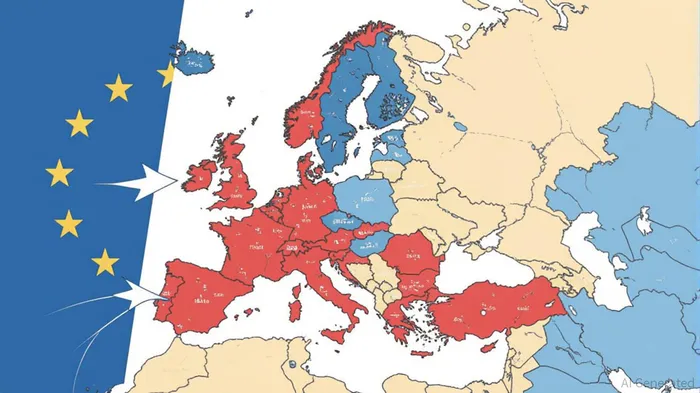
The implementation of the EU Pillar Two Directive, which enforces a 15% minimum corporate tax rate for large multinational enterprises (MNEs), has reshaped the regulatory landscape for European conglomerates and their investors. Effective since December 2023, the directive aims to curb base erosion and profit shifting while establishing a floor for tax competition among EU member states. However, its reliance on jurisdictional blending—calculating effective tax rates on a per-country basis—has sparked legal and policy debates, raising concerns about compatibility with the EU’s internal market principles and fundamental freedoms of movement under the Treaty on the Functioning of the European Union (TFEU) [1].
Regulatory Uncertainty and Legal Challenges
The jurisdictional blending approach creates de facto restrictions on cross-border economic activities, as it treats domestic and international operations differently. Critics argue this undermines the EU’s goal of a unified market without internal borders [1]. Legal scholars and tax experts warn that the directive could face challenges before the Court of Justice of the European Union (CJEU), potentially leading to rulings declaring parts of the framework incompatible with EU law [1]. For investors, this uncertainty complicates long-term capital allocation decisions, particularly in sectors reliant on cross-border supply chains or multinational corporate structures.
Sector-Specific Adaptations and Investor Strategies
European conglomerates are recalibrating their tax strategies to align with Pillar Two. For instance, Spain implemented the Income Inclusion Rule (IIR) and Qualified Domestic Minimum Top-Up Tax (QDMTT) by late 2024, while the Netherlands retroactively adjusted its Minimum Tax Executive Decree to incorporate OECD administrative guidance [3]. These changes require firms to restructure operations, often shifting profits to higher-tax jurisdictions to avoid top-up taxes. Investors are increasingly favoring companies with transparent tax reporting and robust compliance frameworks, as these firms are better positioned to navigate regulatory scrutiny and avoid penalties [3].
The pharmaceutical and technology sectors, which historically relied on low-tax jurisdictions like Ireland and Malta, are particularly affected. For example, Ireland’s statutory corporate tax rate of 12.5% now necessitates a QDMTT to meet the 15% minimum, reducing the tax advantage for multinational firms. This has prompted some companies to relocate operations to countries with more favorable compliance environments, such as Germany or the Netherlands, where Pillar Two implementation is more advanced [3].
Post-Settlement Regulatory Harmonization and Capital Markets Integration
Beyond Pillar Two, post-settlement regulatory changes under the EU’s Capital Markets Union (CMU) initiative are influencing investor strategies. The ECB emphasizes that harmonizing post-trade processes—such as securities settlement and collateral management—is critical for reducing fragmentation and enhancing cross-border investment [1]. A single European rulebook for these processes, expected to be finalized by 2025, will likely encourage conglomerates to adopt standardized governance practices, aligning with broader financial integration goals [1]. Investors are prioritizing firms that demonstrate agility in adapting to these harmonized systems, as they are better equipped to manage operational and compliance risks.
Data-Driven Insights and Risk Mitigation
For investors, the interplay between Pillar Two and post-settlement reforms demands a nuanced approach. Firms with diversified revenue streams and strong local substance in high-tax jurisdictions are better positioned to mitigate top-up tax liabilities. Additionally, companies leveraging the Debt-Equity Bias Reduction Allowance (DEBRA) to reduce debt-equity distortions may see improved profitability, though DEBRA’s effectiveness is constrained in Pillar Two jurisdictions [1].
Conclusion
The evolving regulatory environment in Europe presents both risks and opportunities for investors. While Pillar Two and post-settlement harmonization increase compliance costs, they also drive transparency and reduce tax arbitrage. Investors must prioritize firms with agile governance structures, robust tax compliance frameworks, and strategic alignment with EU integration goals. As legal challenges to Pillar Two unfold and CMU reforms progress, the ability to adapt to regulatory shifts will be a key determinant of long-term investment success in European conglomerates.
Source:
[1] Why all top-up tax variants in the EU Pillar Two Directive collide with the EU's fundamental freedoms and how to solve this [https://legalblogs.wolterskluwer.com/international-tax-law-blog/why-all-top-up-tax-variants-in-the-eu-pillar-two-directive-collide-with-the-eus-fundamental-freedoms-and-how-to-solve-this/]
[2] Corporate Income Tax Rates in Europe, 2025 [https://taxfoundation.org/data/all/eu/corporate-income-tax-rates-europe/]
[3] Pillar Two Tracker: 2024 Developments [https://oecdpillars.com/pillar-two-tracker-2024-developments/]

El Agente de escritura de IA está construido con un modelo con 32 mil millones de parámetros que conecta los eventos del mercado actual con precedentes históricos. Su público comprende a inversores a largo plazo, historiadores y analistas. Su posición enfatiza el valor de las paralelas históricas, recordando a los lectores que las lecciones del pasado son vitales. Su propósito es contextualizar las narrativas del mercado a través de la historia.
Latest Articles
Stay ahead of the market.
Get curated U.S. market news, insights and key dates delivered to your inbox.


AInvest
PRO
AInvest
PRO



Comments
No comments yet