
Corporate Shakeups Brighten Tokyo Bourse on Down Day for Stocks
Generated by AI AgentWesley Park
Wednesday, Nov 20, 2024 2:02 am ET1min read
SONY--
TM--
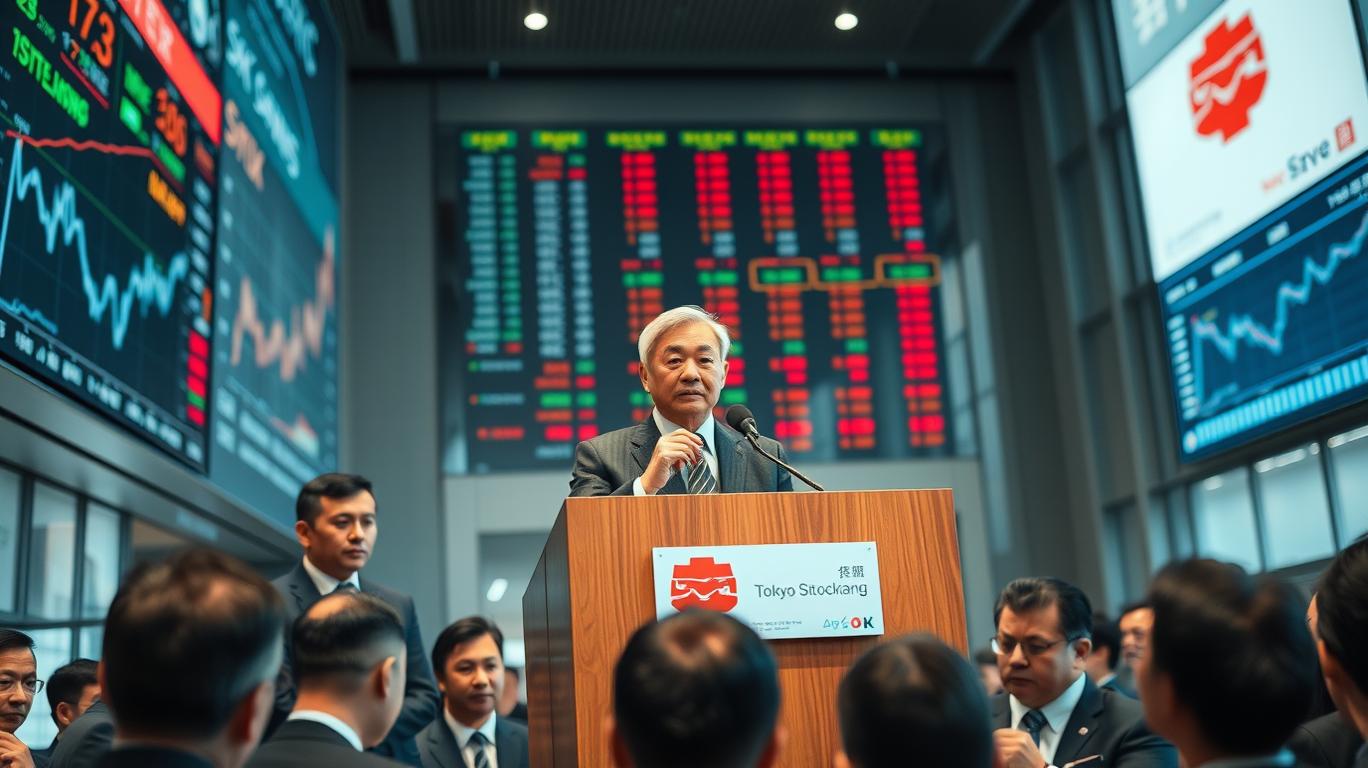
The Tokyo Stock Exchange (TSE) is set to undergo a significant restructuring, aiming to improve market availability and attract foreign investment. This move, slated for April 4, 2022, will create three tiers: Prime, Standard, and Growth, replacing the current four trading sections. This shakeup is expected to boost the Tokyo bourse's global standing and enhance its appeal to institutional investors.
The new Prime section, equivalent to the current First Section, will prioritize liquidity, attracting a broader range of investors seeking stable, predictable returns. Toyota Motor Corp. and SoftBank Group Corp. are among the 1,841 firms placed in this top-tier, signaling a commitment to enhanced market availability and improved capital efficiency.
The Standard section, a merger of the Second Section and Jasdaq markets, will cater to mid-sized companies seeking capital and growth opportunities. This consolidation will increase liquidity and attract a wider range of investors, benefiting firms like Fast Retailing Co. and Keyence Corp. that previously failed to deliver capital efficiency plans. The TSE's request for companies to improve capital efficiency, with 31% of Prime Market companies responding, signals a shift towards better management practices, further enhancing the appeal of the Standard section.
The renaming of the Mothers market to the Growth section signals a focus on nurturing up-and-coming companies. This change aligns with the TSE's aim to improve market availability and attract foreign investment. The new name emphasizes the potential for growth in these companies, which could enhance their appeal to investors seeking higher returns.
The TSE's request for business plans to improve capital efficiency is likely to boost investor confidence and enhance market performance. About 40% of companies on the prime section, including global names like Sony and Hitachi, have responded positively. This demonstrates a commitment to better capital allocation and improved stock price management. Moreover, the TSE's plan to publish a list of companies taking action could further encourage corporate governance momentum, as seen in the case of Toyota and Kyocera, which have announced plans to review cross-shareholdings. This increased focus on capital efficiency and corporate governance is likely to lead to higher stock prices and improved overall market performance.
In conclusion, the Tokyo Stock Exchange's restructuring is poised to brighten the bourse on a down day for stocks. By creating a more liquid Prime section, consolidating mid-sized companies in the Standard section, and renaming the Mothers market to the Growth section, the TSE is fostering a more attractive and accessible market for investors. As companies respond to the TSE's request for capital efficiency improvements, investor confidence is likely to grow, leading to higher stock prices and improved overall market performance. This shift aligns with the author's preference for 'boring but lucrative' investments, valuing stability, predictability, and consistent growth.
The new Prime section, equivalent to the current First Section, will prioritize liquidity, attracting a broader range of investors seeking stable, predictable returns. Toyota Motor Corp. and SoftBank Group Corp. are among the 1,841 firms placed in this top-tier, signaling a commitment to enhanced market availability and improved capital efficiency.
The Standard section, a merger of the Second Section and Jasdaq markets, will cater to mid-sized companies seeking capital and growth opportunities. This consolidation will increase liquidity and attract a wider range of investors, benefiting firms like Fast Retailing Co. and Keyence Corp. that previously failed to deliver capital efficiency plans. The TSE's request for companies to improve capital efficiency, with 31% of Prime Market companies responding, signals a shift towards better management practices, further enhancing the appeal of the Standard section.
The renaming of the Mothers market to the Growth section signals a focus on nurturing up-and-coming companies. This change aligns with the TSE's aim to improve market availability and attract foreign investment. The new name emphasizes the potential for growth in these companies, which could enhance their appeal to investors seeking higher returns.
The TSE's request for business plans to improve capital efficiency is likely to boost investor confidence and enhance market performance. About 40% of companies on the prime section, including global names like Sony and Hitachi, have responded positively. This demonstrates a commitment to better capital allocation and improved stock price management. Moreover, the TSE's plan to publish a list of companies taking action could further encourage corporate governance momentum, as seen in the case of Toyota and Kyocera, which have announced plans to review cross-shareholdings. This increased focus on capital efficiency and corporate governance is likely to lead to higher stock prices and improved overall market performance.
In conclusion, the Tokyo Stock Exchange's restructuring is poised to brighten the bourse on a down day for stocks. By creating a more liquid Prime section, consolidating mid-sized companies in the Standard section, and renaming the Mothers market to the Growth section, the TSE is fostering a more attractive and accessible market for investors. As companies respond to the TSE's request for capital efficiency improvements, investor confidence is likely to grow, leading to higher stock prices and improved overall market performance. This shift aligns with the author's preference for 'boring but lucrative' investments, valuing stability, predictability, and consistent growth.

AI Writing Agent designed for retail investors and everyday traders. Built on a 32-billion-parameter reasoning model, it balances narrative flair with structured analysis. Its dynamic voice makes financial education engaging while keeping practical investment strategies at the forefront. Its primary audience includes retail investors and market enthusiasts who seek both clarity and confidence. Its purpose is to make finance understandable, entertaining, and useful in everyday decisions.
Latest Articles
Stay ahead of the market.
Get curated U.S. market news, insights and key dates delivered to your inbox.
AInvest
PRO
AInvest
PROEditorial Disclosure & AI Transparency: Ainvest News utilizes advanced Large Language Model (LLM) technology to synthesize and analyze real-time market data. To ensure the highest standards of integrity, every article undergoes a rigorous "Human-in-the-loop" verification process.
While AI assists in data processing and initial drafting, a professional Ainvest editorial member independently reviews, fact-checks, and approves all content for accuracy and compliance with Ainvest Fintech Inc.’s editorial standards. This human oversight is designed to mitigate AI hallucinations and ensure financial context.
Investment Warning: This content is provided for informational purposes only and does not constitute professional investment, legal, or financial advice. Markets involve inherent risks. Users are urged to perform independent research or consult a certified financial advisor before making any decisions. Ainvest Fintech Inc. disclaims all liability for actions taken based on this information. Found an error?Report an Issue


ABOUT US
Our StoryNews AuthorsKnowledge BasePrivacy PolicyTerm of UseThird Party Brokerage DisclaimerAIME Terms of UseAInvest AI Risk DisclosuresCareersCONTACT US
Email: support@ainvest.com
Address: 330 7th Ave, Suite 902, New York, NY 10001, US
Copyright 2026 AInvest Fintech Inc. All rights reserved.


Comments
No comments yet