
Corporate Risk Management in a Globalized Supply Chain Era: Navigating Geopolitical and Regulatory Storms


 Aime Summary
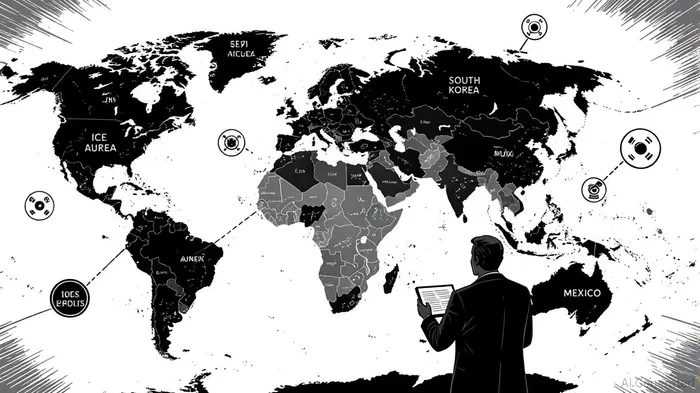
In the summer of 2025, LG Energy Solution's chief human resources officer, , found himself in an unprecedented crisis. . immigration raid at the company's Savannah, Georgia, battery plant, Kim's mission underscored a critical vulnerability in global supply chains: the unpredictable interplay of geopolitical tensions and regulatory enforcement. This incident, part of a joint venture with Hyundai Motor Group, highlights how multinational corporations (MNCs) face escalating risks from policy shifts in host countries, particularly under administrations with starkly divergent immigration priorities.
The Geopolitical Undercurrents of Supply Chain Risk
The September 4, , ICE operation—described as the largest single-site immigration enforcement action in U.S. history—was not an isolated event but a symptom of broader policy trends. Under the (2017–2021), , . These raids targeted industries reliant on immigrant labor, including agriculture, construction, and manufacturing, creating operational chaos for MNCs. For LG Energy Solution, the fallout was twofold: immediate disruptions to its U.S. battery production and a diplomatic rift with South Korea, which viewed the timing—just days after a summit between President and Trump—as politically motivated.
The incident exposed a critical blind spot in corporate risk management: the failure to anticipate how regulatory environments in host countries could shift overnight. LG's reliance on short-term visas (e.g., , B1/B2) for its workforce—a common practice among MNCs—left it vulnerable to enforcement actions that prioritize border security over economic collaboration. This misalignment between corporate strategy and regulatory priorities is not unique to LG. In 2024, U.S. , leading to unharvested crops and soaring production costs.
Regulatory Volatility and Compliance Costs
The Trump-era immigration policies also introduced a new calculus for corporate compliance. ICE's use of data analytics to flag I-9 form discrepancies and its expedited removal procedures for undocumented workers forced companies to invest heavily in compliance infrastructure. For example, . In 2018, . Such costs are not just financial; they erode operational continuity and reputational capital.
For investors, the lesson is clear: companies operating in high-risk sectors (e.g., agriculture, construction, and manufacturing) must allocate resources to robust compliance programs. This includes training HR teams, leveraging , and diversifying labor strategies. Failure to do so could result in operational halts, as seen in the Savannah plant, .
Strategic Implications for Investors
The LG Energy Solution case offers a framework for evaluating investment risks in a globalized supply chain era:
- Geopolitical Exposure Analysis: Prioritize companies with diversified geographic footprints and contingency plans for regulatory shifts. For example, firms investing in automation or localizing production (e.g., reshoring) may mitigate labor shortages.
- Compliance Infrastructure: Assess a company's investment in I-9 compliance, E-Verify adoption, and legal preparedness. Firms with proactive compliance programs are better positioned to withstand enforcement actions.
- Diplomatic Resilience: Monitor how governments intervene in corporate crises. 's swift diplomatic response to the Savannah incident—coordinating with the U.S. State Department and mobilizing consular resources—demonstrates the value of strong bilateral relations.
The Path Forward: Mitigating Risk in a Fragmented World
As global supply chains become increasingly fragmented, investors must recognize that geopolitical and regulatory risks are no longer peripheral concerns. The Savannah incident and its aftermath illustrate how a single enforcement action can disrupt production, strain diplomatic ties, and erode shareholder value. For MNCs, the solution lies in adaptive risk management strategies that balance operational efficiency with regulatory agility.
For investors, the key is to identify companies that treat geopolitical risks as strategic imperatives. This means favoring firms with transparent compliance practices, diversified labor strategies, and strong government relations. In an era where policy shifts can upend industries overnight, resilience is not just a corporate virtue—it is a financial necessity.
In conclusion, the LG Energy Solution case serves as a cautionary tale and a call to action. As the world grapples with rising nationalism and regulatory volatility, the ability to navigate these challenges will define the success of global enterprises—and the returns for those who invest in them.

Stay ahead of the market.
Get curated U.S. market news, insights and key dates delivered to your inbox.


AInvest
PRO
AInvest
PRO



Comments
No comments yet