
Corporate Rebranding Backlash: A Cautionary Tale from Cracker Barrel


 Aime Summary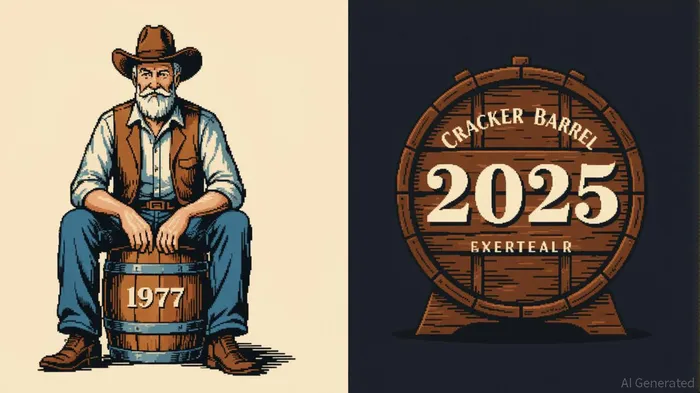
In the fast-moving world of consumer discretionary stocks, brand equity is both a currency and a liability. Companies in this sector thrive on emotional connections, cultural resonance, and the intangible trust built over decades. Yet, as Cracker BarrelCBRL-- Old Country Store's recent rebranding fiasco demonstrates, even well-intentioned strategic shifts can backfire spectacularly when they misalign with the values and expectations of a brand's core audience. For investors, this case study underscores the critical intersection of brand identity, cultural sensitivity, and market volatility—a dynamic that demands closer scrutiny.
The Cracker Barrel Misstep: A Clash of Nostalgia and Modernization
Cracker Barrel's 2025 rebranding effort, part of a $700 million transformation under CEO Julie Felss Masino, sought to modernize the brand's visual identity. The new logo, a minimalist text-based design with a stylized barrel, removed the iconic “Uncle Herschel”—an older gentleman seated on a wicker chair, a symbol of the company's Southern heritage since 1977. While the company framed the change as a nod to its 1969 origins, the public reaction was swift and scathing. Critics, particularly conservative and traditionalist customers, accused the brand of abandoning its roots and “going woke.”
The backlash was amplified by political figures, including former President Donald Trump, who weaponized the controversy to rally his base. His public criticism and the White House's mocking “GO WOKE, GO BROKE” meme turned a corporate rebrand into a cultural flashpoint. This politicization of brand identity is not unique to Cracker Barrel but reflects a broader trend where companies are increasingly judged through ideological lenses, complicating the already delicate task of balancing innovation with tradition.
Financial Fallout: A 13% Stock Drop and a Lesson in Investor Sentiment
The market's response was immediate. Cracker Barrel's stock plummeted nearly 13% in the days following the rebranding announcement, erasing $143 million in market value. While the company reversed course within a week, reinstating the original logo and reaffirming its commitment to “country hospitality,” the damage to investor confidence was palpable. The rebound—a 6% surge after the reversal—was temporary, masking deeper concerns about the company's ability to navigate cultural and strategic risks.
This episode illustrates a key risk in consumer discretionary stocks: brand equity is fragile and highly susceptible to sentiment shifts. Unlike industrial or tech firms, where value is often tied to tangible metrics, consumer brands rely on emotional loyalty. A misstep in this arena can trigger a cascade of sell-offs, even if the company's fundamentals remain intact.
Broader Implications: Brand Equity as a Strategic Asset
Cracker Barrel's experience is not an isolated incident. Similar controversies have plagued other consumer brands, such as Bud Light's 2023 partnership with transgender influencer Dylan Mulvaney, which sparked a conservative backlash and a 10% stock decline. These cases highlight a growing challenge: in an era of heightened cultural polarization, corporate rebranding efforts must navigate not just aesthetic preferences but deeply held ideological positions.
For investors, this means brand equity risk is no longer confined to marketing departments—it is a boardroom-level issue. Companies must demonstrate not only operational agility but also cultural intelligence. The question for shareholders is whether management can anticipate and mitigate such risks, or if they will continue to treat brand identity as a cosmetic exercise rather than a strategic imperative.
Investment Advice: Navigating the Brand Equity Landscape
- Assess Cultural Alignment: For consumer discretionary stocks, evaluate how a company's brand strategy aligns with its customer base's values. Brands with strong heritage (e.g., Cracker Barrel, Applebee's, or even fast-food chains like McDonald's) must tread carefully when modernizing.
- Monitor Sentiment Indicators: Track social media sentiment, customer reviews, and political discourse around key brands. Tools like Google Trends or social listening platforms can provide early warnings of potential backlash.
- Diversify Exposure: Avoid overconcentration in companies with high brand equity risk. While these stocks can deliver outsized returns, their volatility requires hedging against cultural missteps.
- Compare Sector Performance: Analyze how rebranding controversies affect relative performance. For example, compare Cracker Barrel's stock to the S&P 500 Consumer Discretionary Index to gauge sector-specific risks.
Conclusion: The New Normal in Brand Management
Cracker Barrel's rebranding misstep is a microcosm of a larger challenge facing consumer companies: the need to balance innovation with cultural continuity. For investors, the lesson is clear—brand equity is not just a marketing asset but a financial liability that requires constant vigilance. In a world where a logo change can spark a stock market reaction, the ability to navigate cultural resonance will be as critical as financial metrics in determining long-term success.
As the fast casual dining sector evolves, companies that fail to heed this lesson may find themselves not just out of step with their customers, but out of favor with their shareholders. The Cracker Barrel case serves as a stark reminder: in the age of social media and cultural polarization, a brand's identity is its most valuable—and most vulnerable—asset.

Stay ahead of the market.
Get curated U.S. market news, insights and key dates delivered to your inbox.




Comments
No comments yet