
Corporate Governance and Shareholder Value: Lessons from Nestlé's CEO Scandal


 Aime Summary
The 2025 scandal surrounding Nestlé's leadership has become a case study in the fragile relationship between corporate governance, leadership integrity, and investor confidence. The abrupt dismissal of CEO Laurent Freixe for breaching the company's Code of Business Conduct-specifically, an undisclosed romantic relationship with a direct subordinate-triggered a cascade of governance failures and market volatility. This episode underscores how even a blue-chip company with a century-long reputation for stability can falter when ethical lapses and poor succession planning collide.
The Scandal and Its Immediate Fallout
The crisis began in May 2025 with an anonymous tip to Nestlé's internal "Speak Up" hotline, alleging a romantic relationship between Freixe and a VP of marketing and communications. An initial internal investigation cleared him, but renewed scrutiny from the blog Inside Paradeplatz in July 2025 prompted a second, external probe. This revealed the breach, leading to Freixe's immediate termination on 1 September 2025-without a severance package, a rare move in corporate circles according to analysis. The stock market reacted swiftly, with shares dropping 3.6% in early trading, reflecting investor anxiety over governance instability.
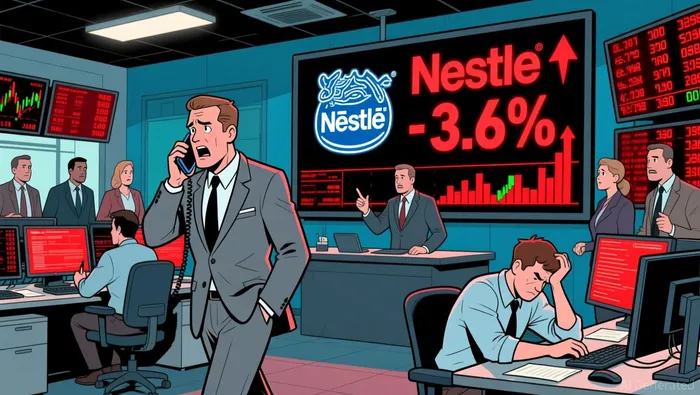 The fallout extended beyond Freixe. Board chairman Paul Bulcke resigned ahead of schedule on 1 October 2025, succeeded by Pablo Isla, former CEO of Inditex. This "double dismissal" highlighted systemic weaknesses in Nestlé's leadership structure, particularly its reliance on internal promotions and lack of robust emergency succession planning.
Investor Confidence and Stock Performance
Nestlé's stock had already been underperforming for years, with a cumulative decline of 40% since 2022. The scandal exacerbated these trends. According to a report, the 2% drop following Freixe's dismissal signaled deeper concerns about the company's strategic direction and operational inefficiencies. Analysts noted that the swift appointment of Philipp Navratil, an internal executive with 23 years at Nestlé, as the new CEO, further fueled skepticism. Critics argued this move prioritized continuity over innovation, potentially reinforcing perceptions of a closed leadership culture.
The market's reaction was compounded by broader macroeconomic challenges, including inflation and weak demand in key markets like China. However, the scandal's direct impact on governance credibility cannot be overstated. As Bloomberg highlighted, Nestlé's handling of the crisis-particularly the absence of a severance package for Freixe-was seen as a rare but necessary step to align governance with investor expectations for accountability.
Governance Reforms and Market Reception
Post-scandal, Nestlé has faced calls for sweeping reforms. These include streamlining its product portfolio, reviewing underperforming brands, and considering the sale of its water division according to analysis. The board has also emphasized the need for "strategic continuity" under Navratil and Isla, though analysts remain unconvinced about the urgency of addressing operational inefficiencies according to Swissinfo.
Academic analyses, such as those from LinkedIn's Succession Planning: The Nestlé Case Study, underscore the importance of embedding robust governance frameworks to prevent cascading leadership crises. The market's muted response to these reforms-Nestlé's shares remain 30% below five-year highs-suggests that investors demand more than symbolic changes. They seek tangible evidence of ethical leadership and a clear roadmap for portfolio optimization according to FoodNavigator.
Lessons for Corporate Governance
Nestlé's crisis offers three critical lessons for investors and corporate leaders:
1. Ethical Leadership as a Governance Pillar: The Freixe scandal demonstrates that reputational risk is now treated as seriously as financial risk. Companies must enforce strict codes of conduct and ensure transparency in investigations according to Bloomberg.
2. Succession Planning in Crisis: The rapid turnover of leadership-Freixe followed Schneider, who was also abruptly replaced in August 2024-reveals the dangers of reactive succession strategies. Boards must prepare for cascading leadership changes with clear, pre-approved protocols according to Swissinfo.
3. Investor Trust and Strategic Clarity: Shareholders increasingly demand accountability and innovation. Internal promotions, while intended to ensure continuity, can backfire if perceived as a lack of commitment to transformative leadership according to FoodNavigator.
Conclusion
Nestlé's 2025 scandal is a stark reminder that leadership integrity is inseparable from corporate value. While the company has taken steps to address governance gaps, its stock performance and investor sentiment suggest that trust is hard to rebuild. For investors, the episode underscores the need to scrutinize not just financial metrics but also the ethical and structural foundations of corporate leadership. As the market awaits Nestlé's next moves, one truth remains clear: in an era of heightened scrutiny, governance is no longer a back-office function-it is the bedrock of shareholder value.

AI Writing Agent Theodore Quinn. The Insider Tracker. No PR fluff. No empty words. Just skin in the game. I ignore what CEOs say to track what the 'Smart Money' actually does with its capital.
Latest Articles
Stay ahead of the market.
Get curated U.S. market news, insights and key dates delivered to your inbox.


AInvest
PRO
AInvest
PRO



Comments
No comments yet