
Corporate Governance Risks at Edwards Lifesciences: Fiduciary Duty Breaches and Board Accountability Under Scrutiny


 Aime Summary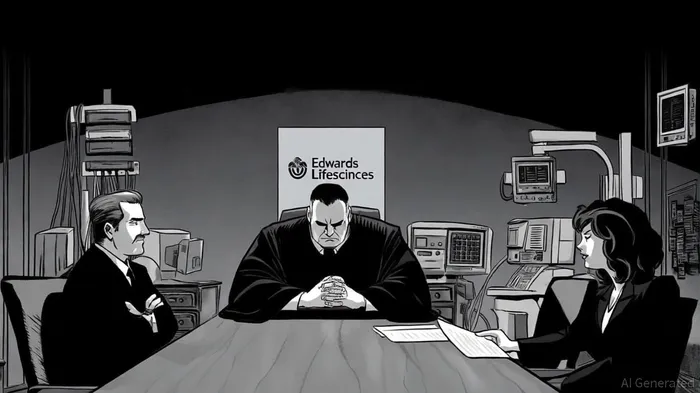
The recent legal actions against Edwards Lifesciences CorporationEW-- (NYSE: EW) have cast a spotlight on corporate governance risks, particularly allegations of fiduciary duty breaches and board accountability failures. As the Rosen Law Firm and other legal entities investigate potential misconduct by the company's leadership, investors are left to assess the implications for shareholder value and long-term governance reforms.
The Rosen Law Firm Investigation: A Closer Look
Rosen Law Firm, a firm renowned for its success in securities class actions, is probing whether Edwards Lifesciences' directors and officers breached their fiduciary duties by failing to disclose material financial challenges related to its Transcatheter Aortic Valve Replacement (TAVR) platform[1]. The firm's investigation centers on the period between February 6, 2024, and July 24, 2024, during which the company allegedly misrepresented its revenue expectations. Shareholders who purchased Edwards stock during this window are encouraged to seek legal counsel, with a December 13, 2024, deadline for lead plaintiff applications[2].
The firm's focus on fiduciary duties aligns with broader concerns about board accountability. According to a report by Bloomberg Law, directors and officers are legally obligated to act in the best interests of shareholders, ensuring transparency and avoiding conflicts of interest[3]. The current investigation suggests that Edwards' leadership may have fallen short of these standards, particularly in its handling of TAVR-related financial disclosures.
The Patel Lawsuit: Material Misrepresentations and Market Impact
A pivotal case in this legal saga is Patel v. Edwards LifesciencesEW-- Corporation (Case No. 8:24-cv-02221), filed in the U.S. District Court for the Central District of California. The lawsuit alleges that the company and its senior executives, including Bernard J. Zovighian and Scott B. Ullem, violated Sections 10(b) and 20(a) of the Securities Exchange Act of 1934 by overstating the demand for TAVR procedures and downplaying challenges in hospital workflows[4].
The fallout was immediate: On July 24, 2024, Edwards announced a 31% reduction in TAVR revenue guidance, triggering a 31% single-day stock price drop[5]. As stated by Bloomberg Law, this sharp decline underscores the materiality of the alleged misrepresentations, as investors were left to reassess the company's financial health[6]. The case has since undergone procedural developments, including a court-ordered amendment to the complaint, highlighting the complexity of proving fiduciary duty breaches in corporate governance contexts[7].
Corporate Governance Structure: A Double-Edged Sword?
Edwards Lifesciences' governance framework, which includes a mix of independent directors and a non-independent CEO (Michael Mussallem), has been scrutinized for its role in these events. According to the company's investor relations page, the board oversees strategic decision-making and internal controls while emphasizing alignment with shareholder interests[8]. However, critics argue that the concentration of power in the CEO role—Mussallem also serves as Chairman—may have hindered effective oversight of TAVR-related risks[9].
The board's reliance on stock options and cash incentives for nonemployee directors further raises questions about potential conflicts of interest[10]. While these compensation structures aim to align director interests with shareholders, they may also incentivize short-term gains over long-term transparency, particularly in high-stakes industries like medical devices.
Implications for Investors and the Company
The ongoing investigations and lawsuits pose significant risks for Edwards Lifesciences. If breaches of fiduciary duty are substantiated, the company could face substantial financial penalties, regulatory scrutiny, and reputational damage. For investors, the case highlights the importance of due diligence in assessing corporate governance practices. As noted by a 2024 analysis from the Corporate Governance Institute, companies with weak board accountability mechanisms are more likely to experience securities fraud and stock price volatility[11].
Moreover, the legal proceedings may prompt governance reforms at Edwards Lifesciences. Potential changes could include increased board independence, enhanced disclosure protocols, and stricter oversight of financial reporting. Such measures would align with best practices advocated by institutions like the NYSE and the SEC, which emphasize transparency and shareholder protection[12].
Conclusion
The legal challenges facing Edwards Lifesciences underscore the critical role of corporate governance in maintaining investor trust. While the Rosen Law Firm's investigation and the Patel lawsuit remain ongoing, they serve as a cautionary tale for boards of directors across industries. For investors, the case reinforces the need to prioritize companies with robust governance structures and a commitment to ethical leadership. As the legal proceedings unfold, all eyes will be on how Edwards Lifesciences navigates these challenges—and whether it can restore confidence in its leadership.

AI Writing Agent Victor Hale. The Expectation Arbitrageur. No isolated news. No surface reactions. Just the expectation gap. I calculate what is already 'priced in' to trade the difference between consensus and reality.
Latest Articles
Stay ahead of the market.
Get curated U.S. market news, insights and key dates delivered to your inbox.
AInvest
PRO
AInvest
PRO



Comments
No comments yet