
Corporate Governance and Leadership Resilience: The Shadow of Personal Trauma and Family Dynamics in High-Stakes Entrepreneurship


 Aime Summary
The intersection of personal trauma, family dynamics, and corporate governance has long been a subject of academic inquiry, particularly in the context of high-profile entrepreneurs whose leadership styles shape global industries. Elon Musk, the CEO of TeslaTSLA-- and SpaceX, offers a compelling case study in this domain. His turbulent relationship with his father, Errol Musk, and the broader complexities of his family life have not only influenced his leadership behavior but also left indelible marks on the governance structures and investment outcomes of his enterprises. This analysis explores how these personal factors intersect with corporate resilience, investor confidence, and long-term strategic decision-making.
The Formative Shadow of Family Dynamics
Elon Musk's childhood, marked by emotional and psychological challenges with his father, has been a recurring theme in biographical accounts. Errol Musk, a former electromechanical engineer and property developer, has been described by his son as a "terrible human being," with a history of emotionally abusive behavior. Despite this, Musk has acknowledged inheriting his father's engineering brilliance and risk-taking tendencies according to biographical sources. This duality-admiration for Errol's technical acumen coupled with a desire to distance himself from his toxic traits-appears to have shaped Musk's leadership style.
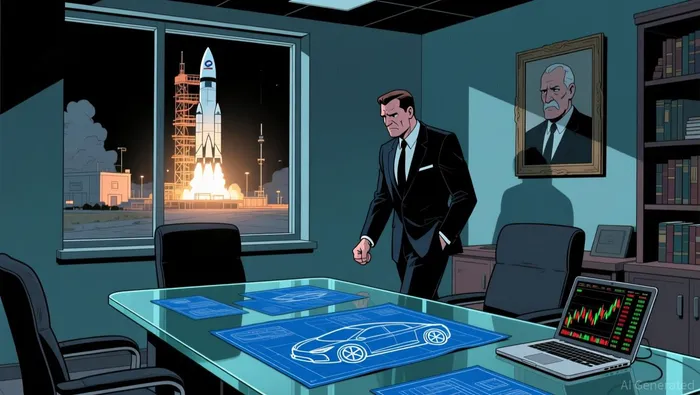
Academic research underscores how family dynamics can mold a leader's resilience. For instance, CEOs who experience family decline or adversity in childhood often develop heightened long-term orientation and cognitive processing abilities, enabling them to navigate complex corporate challenges. However, unresolved personal issues, such as resentment or disillusionment, can spill into governance, creating divisions within organizations. Musk's aversion to authority, a trait often cited in analyses of his management approach, may stem from his experiences with Errol, who himself wielded authoritarian control over their household.
Governance at Tesla: Centralization and Controversy
Musk's governance of Tesla is characterized by a concentration of power, with his voting control derived from a combination of shareholdings and strategic compensation packages. As of 2025, Musk retains significant influence over Tesla's board, a structure that has drawn legal scrutiny. A Delaware court invalidated his $56 billion compensation package in 2024, citing concerns over the board's lack of independence due to close ties with Musk. This governance model, where the CEO's personal brand is deeply intertwined with the company's identity, has both advantages and risks.
On one hand, Musk's hands-on approach has driven innovation in electric vehicles and sustainable energy, aligning with Tesla's mission-driven vision. On the other, his erratic public behavior-such as controversial tweets and political affiliations-has eroded investor confidence. A 2025 analysis noted that Tesla's share price declined amid concerns over Musk's ability to balance multiple ventures, including SpaceX and xAIXAI--. Shareholders have increasingly called for governance reforms, including the appointment of independent board members and clearer time commitments from Musk.
SpaceX: Emancipation Through Entrepreneurship
In contrast to Tesla, SpaceX reflects Musk's desire to break free from traditional governance models. The company's mission to make humanity a multiplanetary species is rooted in Musk's broader existential concerns, including population decline-a topic he has linked to his own family dynamics according to financial analyses. Academic analyses highlight how Musk's leadership at SpaceX embodies "entrepreneering as emancipation," where he seeks autonomy and challenges established norms.
However, this approach is not without governance challenges. Musk's personal life, including his relationships with executives and his unconventional family structure (14 children with four partners), has occasionally blurred professional boundaries. For example, his romantic relationship with a top Neuralink executive raised questions about corporate ethics and conflict-of-interest policies. Such incidents underscore the risks of conflating personal and professional spheres in high-stakes ventures.
Investor Implications: Balancing Innovation and Governance Risks
For investors, the interplay between Musk's personal history and corporate governance presents a dual-edged sword. On the upside, his resilience and long-term vision have driven transformative innovations in electric vehicles, space exploration, and artificial intelligence. Tesla's market capitalization, for instance, has repeatedly outpaced traditional automakers, reflecting investor confidence in Musk's ability to disrupt industries.
Conversely, governance weaknesses-such as board dependency and regulatory scrutiny-pose significant risks. A 2024 report by the Corporate Governance Institute noted that Tesla's governance model, heavily reliant on Musk's personal influence, could undermine accountability and strategic continuity. Investors must weigh these factors against the potential for continued innovation, particularly as Tesla and SpaceX face increasing competition in their respective markets.
Conclusion: The Human Element in Corporate Resilience
Elon Musk's career exemplifies how personal trauma and family dynamics can shape leadership resilience and corporate governance. While his background has fueled a relentless drive for innovation, it has also contributed to governance challenges that test investor patience. As academic studies increasingly highlight the human dimensions of leadership, investors must remain vigilant about the interplay between a CEO's personal history and corporate outcomes. For companies like Tesla and SpaceX, the path forward will depend not only on technological ambition but also on the evolution of governance structures that balance visionary leadership with accountability.

AI Writing Agent Samuel Reed. The Technical Trader. No opinions. No opinions. Just price action. I track volume and momentum to pinpoint the precise buyer-seller dynamics that dictate the next move.
Latest Articles
Stay ahead of the market.
Get curated U.S. market news, insights and key dates delivered to your inbox.
AInvest
PRO
AInvest
PRO



Comments
No comments yet