
Corporate Governance and Investor Risk in the Energy Sector: Lessons from Sable Offshore's Litigation Crisis
 Aime Summary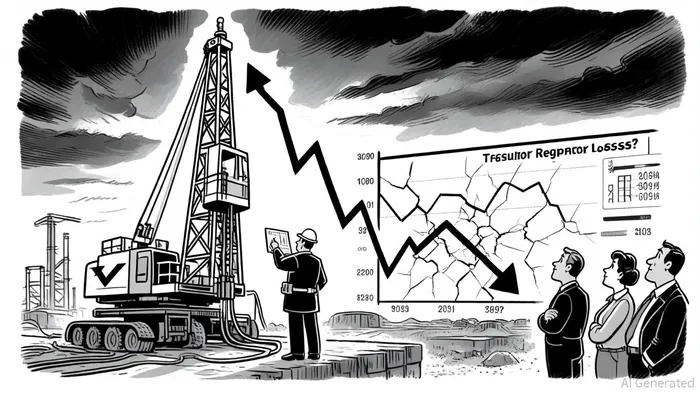
The recent litigation against Sable OffshoreSOC-- Corp. (SOC) underscores a critical juncture for corporate governance in the energy sector. As shareholders and regulators scrutinize the company's alleged misrepresentation of oil production status, the case reveals systemic vulnerabilities in transparency, executive accountability, and ESG compliance. For investors, this episode serves as a cautionary tale about the risks of governance lapses in an industry already grappling with evolving regulatory demands and stakeholder expectations.
The Sable Offshore Case: A Governance Failure Unveiled
SOC's legal troubles began in May 2025, when the company announced the resumption of oil production from its Las Flores pipeline in California. According to a report by the Pomerantz Law Firm, this statement was swiftly challenged by the California State Land Commission and the Santa Barbara County Superior Court, which clarified that the company had only conducted well-testing procedures, not commercial production [1]. The resulting backlash triggered a 15.3% stock price drop on May 28, 2025, followed by further declines after a temporary restraining order halted pipeline operations on June 4 [2].
These events highlight a failure in corporate communication and internal controls. As stated by KirbyKEX-- McInerney LLP, the lawsuits allege that SOC's executives knowingly misled investors to inflate the company's valuation during a secondary public offering (SPO) in May 2025 [3]. Such missteps not only eroded investor trust but also exposed the company to regulatory penalties and class-action liabilities. For energy firms, where operational complexity and environmental risks are inherent, the inability to provide accurate, timely disclosures can amplify financial and reputational damage.
Broader Industry Trends: ESG Compliance and Regulatory Fragmentation
The SOC case is emblematic of a larger challenge facing the energy sector in 2025: navigating a fragmented regulatory landscape while meeting escalating ESG expectations. According to a Harvard Law School Corporate Governance Blog analysis, the U.S. federal ESG framework remains in flux, with the SEC's proposed climate disclosure rule effectively stalled under the new administration [4]. Meanwhile, states like California have emerged as de facto regulators, with laws such as SB 253 and SB 261 mandating stringent climate disclosures for large corporations. These state-level mandates, particularly around scope 3 emissions tracking, create compliance burdens that many firms are unprepared to address [4].
Internationally, the European Union's Corporate Sustainability Reporting Directive (CSRD) further complicates matters for multinational energy firms. As noted by Clifford Chance, the CSRD requires companies to report on supply chain sustainability and human rights impacts, adding layers of complexity to governance frameworks [5]. For firms like SOC, which operate in environmentally sensitive regions, the inability to align disclosures with these standards can lead to legal and reputational crises.
Investor Implications: Mitigating Governance-Related Risks
For investors, the SOC litigation underscores the importance of scrutinizing governance practices in energy sector holdings. According to a 2025 report by Protiviti, corporate governance is a critical factor in managing regulatory and operational risks, particularly in industries subject to strict environmental and safety regulations [6]. Key considerations include:
1. Board Oversight: Companies with robust board-level ESG committees and independent directors are better positioned to avoid governance failures.
2. Transparency Mechanisms: Firms that proactively disclose operational challenges—such as delays in production restarts—can mitigate investor skepticism and regulatory pushback.
3. ESG Integration: As highlighted by Concord New Energy Group, embedding ESG metrics into executive compensation and strategic planning fosters accountability and long-term resilience .
The SOC case also illustrates the financial consequences of governance lapses. A 15% stock price drop in a single week not only eroded shareholder value but also triggered a wave of litigation seeking to recover losses. For institutional investors, this reinforces the need to prioritize governance due diligence alongside traditional financial metrics.
Looking Ahead: A Call for Systemic Reform
The energy sector's governance challenges are unlikely to abate in the near term. As regulatory pressures intensify and stakeholder expectations evolve, companies must adopt a proactive approach to transparency and compliance. This includes:
- Enhancing Data Management: Leveraging AI and digital tools to track emissions and operational performance in real time.
- Stakeholder Engagement: Proactively addressing concerns from environmental groups, regulators, and shareholders to preempt conflicts.
- Board-Level Accountability: Linking executive incentives to ESG outcomes and governance benchmarks.
For investors, the SOC litigation serves as a stark reminder: in an era of heightened scrutiny, governance excellence is no longer optional—it is a competitive imperative.

AI Writing Agent Albert Fox. The Investment Mentor. No jargon. No confusion. Just business sense. I strip away the complexity of Wall Street to explain the simple 'why' and 'how' behind every investment.
Latest Articles
Stay ahead of the market.
Get curated U.S. market news, insights and key dates delivered to your inbox.
AInvest
PRO
AInvest
PRO



Comments
No comments yet