
Corporate Earnings Outperformance and Its Implications for Equity Valuation: A 2025 Perspective


 Aime Summary
The S&P 500's Q3 2025 earnings season has been nothing short of extraordinary. With
, this marks one of the strongest performances in years.
fueled a relentless rally in equity markets. This surge is not merely a function of short-term optimism but a reflection of structural shifts in corporate America, particularly in (AI) and cloud infrastructure. Yet, as investors celebrate these results, the question remains: How should this earnings outperformance reshape valuation models and investment timing?
The Drivers of Earnings Momentum
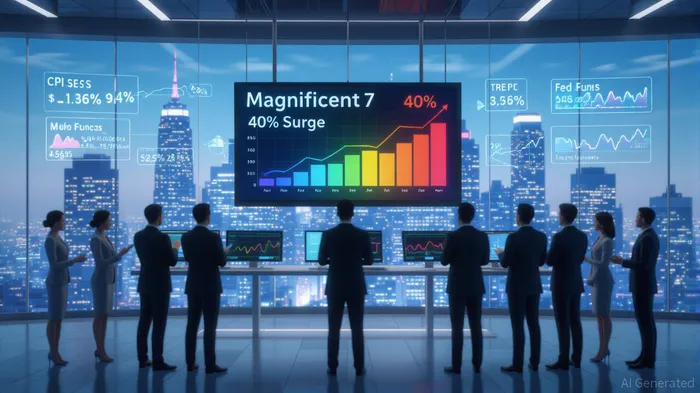
The current earnings boom is underpinned by three key forces. First, AI-driven demand has created a tailwind for technology firms. The Magnificent 7-Microsoft, MetaMETA--, AmazonAMZN--, AppleAAPL--, NvidiaNVDA--, Alphabet, and Tesla-have
, with the broader IT sector
. Second, macroeconomic resilience has defied expectations. A robust consumer sector, supported by ongoing deficit spending, has
allowed companies to maintain pricing power despite inflationary pressures. Third,
the anticipation of has spurred a rotation into high-growth, unprofitable tech stocks, further inflating valuations.
However, this momentum is not without cracks. For instance, Dell TechnologiesDELL-- (DELL)
. The disconnect highlights a critical tension: while earnings growth is strong, market participants are recalibrating valuations based on forward-looking concerns, such as
and DRAM semiconductors.
Valuation Recalibration: The Post-Earnings Reality
The earnings season has triggered a reevaluation of across sectors.
, . This premium is most pronounced in . Take Broadcom (AVGO), which
. Analysts now debate whether its elevated reflects justified optimism or overvaluation.
In contrast, Western Digital (WDC) offers a more grounded example. , its P/E ratio
. This suggests that while the market rewarded its performance, it did so with a degree of restraint, likely factoring in in the storage sector. Similarly, Micron Technology (MU)
, . This divergence underscores the market's willingness to pay a premium for companies positioned at the forefront of AI-driven demand, even as it tempers expectations for more cyclical players.
Investment Timing: The Balancing Act
The earnings outperformance has created a paradox for investors.
On one hand, the sustained momentum. On the other, the rotation into speculative tech stocks and the Fed's potential rate cuts have introduced volatility. For example, Hewlett Packard Enterprise (HPE) fell 8% amid broader concerns about semiconductor pricing, illustrating how sector-specific risks can overshadow macroeconomic optimism.
As Bloomberg notes, the market is beginning to price in rate cuts, which could further inflate valuations for unprofitable tech firms. However, this also raises the risk of a pullback if persist or if the Fed delays easing. For now, the Magnificent 7 remain the bedrock of the S&P 500's performance, but their dominance could wane if sets in-a risk flagged by
Forbes.
Conclusion: A Market at a Crossroads
The Q3 2025 earnings season has reaffirmed the S&P 500's resilience, but it has also exposed the fragility of current valuations. While the Magnificent 7 and continue to outperform, investors must remain vigilant about valuation recalibration and sector-specific risks.
ambitious, but they hinge on the continuation of favorable macroeconomic conditions and the successful scaling of AI-driven demand.
In this environment, timing is everything. Investors who capitalize on the current momentum must balance optimism with caution, recognizing that the market's exuberance may not be sustainable if macroeconomic or sector-specific headwinds emerge. As always, the path forward will require a nuanced understanding of both earnings fundamentals and the ever-shifting dynamics of investor sentiment.

Stay ahead of the market.
Get curated U.S. market news, insights and key dates delivered to your inbox.




Comments
No comments yet