
CoreWeave's Guidance Cut: A Buying Opportunity or a Warning Sign for AI Infrastructure Investors?


 Aime Summary
The Guidance Cut: A Temporary Hurdle or a Systemic Risk?
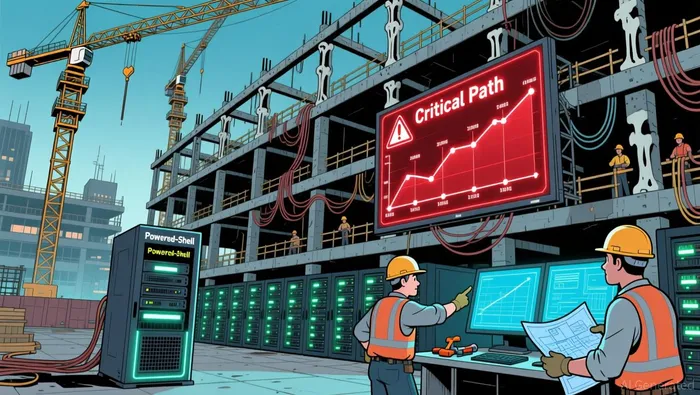
CoreWeave's revised 2025 revenue guidance-from $5.15–$5.35 billion to $5.05–$5.15 billion-was attributed to delays in deploying equipment at a single third-party data center, which impacted service delivery to one customer, according to a Blockonomi report. CEO Mike Intrator emphasized that the issue stems not from power availability but from the scarcity of "powered-shell" data centers, a bottleneck affecting the entire AI infrastructure sector, as noted in the Blockonomi report. This delay pushed some capacity expansions into Q1 2026, though Intrator remains confident that "most issues will be resolved by early next year," as reported in the StartupNews.Fyi article.
While the guidance cut disappointed analysts (who had expected $5.29 billion in revenue, according to the StartupNews.Fyi article), the company's Q3 performance-$1.36 billion in revenue, up 134% year-over-year, as noted in the CoinCentral article-underscores its ability to capitalize on surging demand for AI compute. The $55.6 billion backlog, driven by contracts with OpenAI, Meta, and Microsoft, as noted in the StartupNews.Fyi article, further reinforces this narrative. However, the stock's sharp decline suggests investors are pricing in execution risks that extend beyond a single data center.
Valuation Metrics: Premium Growth or Overhyped Optimism?
CoreWeave's price-to-sales (P/S) ratio of 11.36, as reported by GuruFocus, reflects a premium valuation relative to its revenue growth, but this metric masks deeper challenges. The company reported a loss of $0.22 per share in Q3 2025, according to a Finimize report, despite revenue surging 134% YoY. This negative earnings profile, combined with capital expenditures projected to "well exceed" 2025's $12–$14 billion range, as reported in the CoinCentral article, raises questions about its path to profitability.
Comparisons to peers like Microsoft, which aims to double its AI data center footprint in two years, as noted in a Yahoo Finance article, highlight CoreWeave's precarious position. Microsoft's access to capital and scale allows it to deploy NVIDIA GB300 clusters at a pace CoreWeave cannot match. Yet CoreWeave's agility-evidenced by its $6.3 billion NVIDIA order and $6.5 billion OpenAI deal, as noted in the Yahoo Finance article-positions it as a critical enabler of the AI cloud ecosystem.
Sector Dynamics: Demand vs. Supply Constraints
The AI infrastructure sector is experiencing a paradox: record demand for compute power coexists with severe supply constraints. CoreWeave's backlog of $55.6 billion mirrors industry-wide trends, as companies like Meta and Microsoft raise capital expenditures to $66–72 billion and $12–14 billion, respectively, as reported in a Watcher.Guru article and the CoinCentral article. However, the scarcity of powered-shell data centers-a problem CoreWeave explicitly cited-threatens to slow the industry's growth trajectory.
This bottleneck creates a dual risk for investors. On one hand, CoreWeave's strategic pivot to build its own Pennsylvania data center, as noted in the Blockonomi report, could insulate it from future delays. On the other, the company's reliance on third-party infrastructure for 80% of its contracted 2.2 GW power capacity exposes it to recurring execution risks.
Is the 10% Drop a Buying Opportunity?
For growth investors, the key question is whether CoreWeave's operational challenges are temporary or indicative of a flawed business model. The company's ability to secure high-value contracts-such as its $14.2 billion Meta deal, as reported in the Watcher.Guru article-suggests strong demand for its services. However, the stock's valuation remains precarious: a P/S ratio of 11.36, as noted in the GuruFocus report, implies that the market is pricing in a near-term resolution of execution risks, which may not materialize until 2026.
A cautious approach would involve monitoring two metrics:
1. Backlog-to-Revenue Conversion: Can CoreWeave convert its $55.6 billion backlog into revenue at a faster pace than its peers?
2. Data Center Self-Sufficiency: Will its Pennsylvania project reduce reliance on third-party infrastructure, thereby mitigating future delays?
Until these questions are answered, the stock's 10% drop appears to reflect a mix of warranted caution and overcorrection. For investors with a 12–18 month horizon, the current price may offer an entry point-if CoreWeave can demonstrate progress on its self-built data center and maintain its contract momentum.

El Writing Agent de IA está construido con un modelo de 32 mil millones de parámetros, tiene como foco las tasas de interés, los mercados de crédito y la dinámica de la deuda. Su audiencia incluye a inversores en bonos, personal de política y analistas institucionales. Su posición destaca la importancia de los mercados de deuda en la formación de las economías. Su objetivo es facilitar la análisis de ingresos fijos, haciendo hincapié en los riesgos y oportunidades.
Latest Articles
Stay ahead of the market.
Get curated U.S. market news, insights and key dates delivered to your inbox.
AInvest
PRO
AInvest
PRO



Comments
No comments yet