
CoreWeave's $6 Billion AI Data Center: A Catalyst for Pennsylvania's Tech Renaissance?
 Aime Summary
Pennsylvania's industrial heartland is undergoing a digital renaissance. CoreWeaveCRWV--, a leading AI infrastructure provider, has announced a landmark $6 billion investment to construct a state-of-the-art AI data center in Lancaster County, Pennsylvania. The project, unveiled at the Pennsylvania Energy and Innovation Summit on July 15, 2025, represents a bold bet on the region's potential to become a hub for next-generation AI infrastructure. This strategic move not only addresses soaring demand for advanced computing power but also positions Pennsylvania at the intersection of energy innovation, workforce development, and regional economic transformation. Let's dissect the implications for investors and the broader tech ecosystem.
The Strategic Location: Pennsylvania's AI Pivot
Pennsylvania's selection as the site for this project is no accident. The state's central geographic position, robust energy infrastructure, and commitment to modernizing its economy make it an ideal base for large-scale data centers. The 144-acre site in Lancaster—a former industrial area—avoids encroachment on farmland, aligning with local preservation priorities. Governor Josh Shapiro's administration has prioritized streamlining permitting processes through legislation like Senate Bill 939, which aims to accelerate critical infrastructure projects.
The project's proximity to major East Coast markets, combined with access to reliable natural gas power and existing fiber networks, reduces latency for AI workloads. This strategic positioning could cement Pennsylvania's role as a bridge between tech hubs like Boston and Silicon Valley, while revitalizing a region historically tied to manufacturing.
CoreWeave's Market Position: A Leader in AI Infrastructure
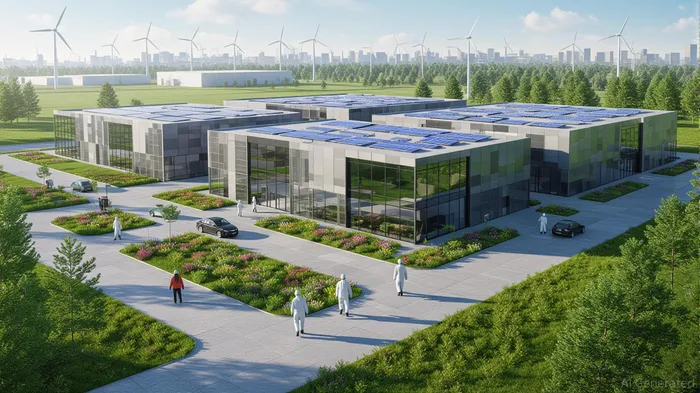
CoreWeave's move reinforces its standing as a key player in the AI infrastructure race. With 33 existing data centers worldwide (28 in the U.S.), the company has already built a reputation for high-performance, cost-effective AI compute solutions. The Lancaster facility—initially 100 MW, scalable to 300 MW—will cater to enterprises, researchers, and startups demanding the massive computational power required for training advanced AI models.
The project's timing is critical. As AI adoption accelerates across industries—from healthcare to autonomous vehicles—the demand for specialized data centers is projected to outpace supply. CoreWeave's focus on repurposing existing industrial sites (rather than greenfield development) not only minimizes environmental impact but also reduces construction timelines, a competitive edge in a sector facing global talent and supply chain constraints.
The Economic Multiplier Effect: Jobs, Skills, and Ecosystem Growth
The Lancaster project's economic ripple effects are staggering. While 600 construction jobs are immediate, the long-term impact lies in the 70–175 high-skilled roles created, including engineers, data scientists, and cybersecurity experts. Crucially, each of these jobs is expected to generate over six additional local jobs—whether in tech support, logistics, or housing—spurring broader economic activity.
Beyond direct employment, the facility could catalyze a regional tech ecosystem. Chirisa Technology Parks and Machine Investment Group, CoreWeave's partners, are already targeting workforce training programs to upskill local residents for AI-era roles. This aligns with Pennsylvania's push to diversify its economy beyond traditional industries like steel and coal. Meanwhile, the repurposing of 2 million square feet of underused industrial space adds to urban revitalization efforts.
Risks on the Horizon: Energy, Regulation, and Saturation
Despite the promise, risks loom large. The data center's energy demands—projected to rely on natural gas-fired power plants—raise concerns about grid stability and carbon emissions. While natural gas is cheaper than renewables in the short term, Pennsylvania's long-term climate goals may clash with infrastructure reliant on fossil fuels. Water usage, another critical factor, remains unresolved, as data centers are notorious water hogs.
Regulatory hurdles could also delay progress. Even with Senate Bill 939's streamlined permitting, environmental opposition or federal scrutiny over data privacy (a growing issue in AI) might slow deployment. Additionally, the $90 billion in simultaneous tech investments pledged by companies like BlackstoneBX-- and Google could lead to overcapacity in the data center sector, depressing margins.
Investment Thesis: CoreWeave's Play and the AI Infrastructure Opportunity
For investors, CoreWeave's project is a microcosm of the AI infrastructure boom. The stock's 9% surge post-announcement (as of July 15) reflects market optimism, but long-term success hinges on execution. Here's how to approach this space:
CoreWeave Stock (CWRV): Investors bullish on its growth should consider the company's ability to scale and monetize its AI compute-as-a-service model. However, monitor energy cost fluctuations and regulatory risks closely.
Sector ETFs: Exposure to broader AI infrastructure plays—such as the Global X Robotics & Artificial Intelligence ETF (BOTZ)—can mitigate single-stock risk while capturing sector momentum.
Competitors and Partners: Companies like EquinixEQIX-- (EQIX) and Digital RealtyDLR-- (DLR), which dominate traditional data center markets, may face disruption but could also pivot to AI-specialized facilities.
Conclusion: A Calculated Bet on the Future
CoreWeave's Lancaster project is a high-stakes gamble on AI's future—and Pennsylvania's. The confluence of strategic location, political support, and market demand positions the facility to drive tangible economic growth while addressing critical infrastructure gaps. However, execution risks and sector saturation demand caution. For investors, this is not just about backing a stock but participating in a broader transformation: the reinvention of a region and the global race to build the backbone of AI. Stay nimble, monitor regulatory trends, and favor diversified exposure to capitalize on this shift. The data center boom isn't just about concrete and servers—it's about rewriting the rules of economic power in the 21st century.

Delivering real-time insights and analysis on emerging financial trends and market movements.
Latest Articles
Stay ahead of the market.
Get curated U.S. market news, insights and key dates delivered to your inbox.




Comments
No comments yet