
U.S. Core PPI Misses Forecasts, Offering Sector-Specific Opportunities: Strategic Positioning in Semiconductors and Chemical Products
 Aime Summary
The U.S. , . This marks the first contraction in core PPI since early 2020 and signals a structural shift in inflationary dynamics. For investors, this data isn't just a macroeconomic footnote—it's a roadmap for repositioning portfolios in semiconductors and chemical products, two sectors poised to benefit from diverging cost-of-carry and margin dynamics.
The PPI Miss: A Macro Tailwind for Capital-Intensive Sectors
The 0.1% drop in core PPI, , reflects cooling producer-level inflation. This softness aligns with the Federal Reserve's pivot toward rate cuts, . Lower interest rates reduce the cost of capital for industries reliant on long-term financing, such as semiconductors and chemicals.
For semiconductors, which require massive R&D and manufacturing investments, declining rates mean cheaper debt and more affordable capital expenditures. Similarly, chemical producers—energy-intensive and input-cost sensitive—stand to gain as energy and trade services prices fall. .
Semiconductors: Navigating Tariff Uncertainty and AI-Driven Demand
The semiconductor sector faces a dual narrative. On one hand, . On the other, AI, 5G, .
The key lies in strategic positioning. Companies with U.S. manufacturing commitments—such as IntelINTC-- (INTC) or AMDAMD-- (AMD)—are likely to benefit from tariff exemptions, reducing exposure to margin compression. Conversely, firms reliant on offshore production may see short-term headwinds.
Moreover, . However, , providing a buffer for companies to reinvest in advanced manufacturing.
Chemical Products: Margin Compression and Energy Price Relief
The chemical products sector is a mixed bag. , the sector's reliance on energy inputs and global supply chains remains a vulnerability.
For example, , depending on energy intensity. However, .
Investors should favor chemical companies with diversified energy sourcing and strong profiles, as these firms are better positioned to navigate regulatory and cost-of-carry shifts. Additionally, the sector's exposure to U.S. manufacturing tariffs (e.g., on imported equipment) demands scrutiny of supply chain resilience.
Strategic Portfolio Implications
- Semiconductors: Prioritize firms with U.S. production capacity and AI/data center exposure. Avoid those with heavy offshore manufacturing.
- Chemicals: Overweight energy-efficient producers with low debt burdens. Diversify across geographies to mitigate tariff risks.
- Cost-of-Carry Arbitrage: Both sectors benefit from lower interest rates. .
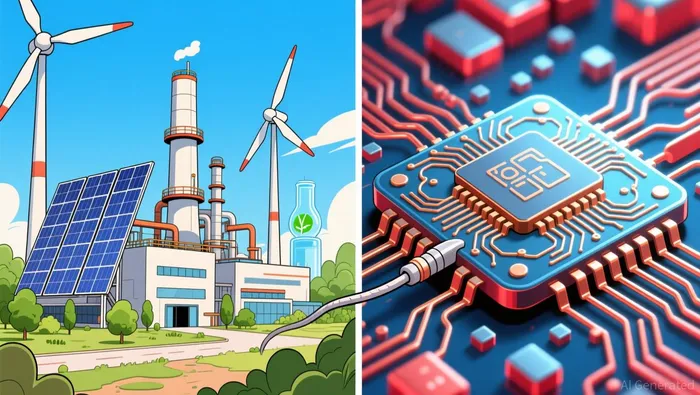
Conclusion: A New Inflationary Regime, A New Opportunity Set
The August PPI miss isn't just a data point—it's a signal that inflationary pressures are receding, creating a window for capital-intensive sectors to thrive. For semiconductors and chemical products, the interplay of falling input costs, policy-driven supply chain shifts, and rate cuts offers a compelling case for strategic entry. Investors who act now, with a focus on margin resilience and cost-of-carry advantages, may find themselves well-positioned for the next phase of the economic cycle.

Sumérjase en el mundo de las finanzas globales con Epic Events Finance.
Latest Articles
Stay ahead of the market.
Get curated U.S. market news, insights and key dates delivered to your inbox.
AInvest
PRO
AInvest
PRO



Comments
No comments yet