
Core Introduces Stricter SEO Requirements with March 2026 Google Core Update
 Aime Summary
Google's March 2026 Core Update includes tighter Core Web Vitals thresholds and enhanced E-E-A-T requirements. The update introduces Generative Engine Optimisation (GEO) and increases AI Overviews' prevalence in search results. Businesses must optimize for mobile-first indexing to avoid exclusion from Google's index after July 1st, 2026. Content quality and user experience are emphasized, with sites offering unhelpful or generic content likely to see traffic declines. Ranking volatility is reported as many websites fail to meet the updated Core Web Vitals benchmarks, including LCP, INP, CLS, and TTFB.
Google's March 2026 Core Update has introduced significant changes to SEO best practices, including tighter thresholds for Core Web Vitals and a stronger emphasis on E-E-A-T (Experience, Expertise, Authoritativeness, and Trustworthiness). This update has led to volatility in rankings as many websites now fail to meet the updated benchmarks. The update also introduces Generative Engine Optimisation (GEO), with AI Overviews now appearing in 41% of UK search queries.
Websites are expected to provide content that demonstrates first-hand expertise and meets the updated technical requirements for Core Web Vitals. Failure to do so could result in traffic drops for sites that previously relied on content created solely for search rankings. Businesses are advised to conduct content audits and update their SEO strategies to align with these new requirements.
How Does the March 2026 Core Update Impact SEO Strategies?
The March 2026 Core Update has reshaped SEO strategies by introducing stricter Core Web Vitals thresholds and placing greater weight on E-E-A-T signals. This means that businesses must now focus not only on technical SEO but also on creating content that demonstrates genuine expertise and trustworthiness. Content that previously earned high traffic may now be penalized if it lacks the necessary quality or fails to meet the updated technical benchmarks.
To adapt to these changes, businesses should monitor their organic traffic trends and analyze ranking flux for high-intent keywords. It is also important to ensure that previously indexed content is still performing and that unhelpful or non-unique pages are either improved or removed. By doing so, businesses can maintain visibility in search results and avoid potential traffic drops.
What Are the Key Technical Requirements Introduced in the March 2026 Core Update?
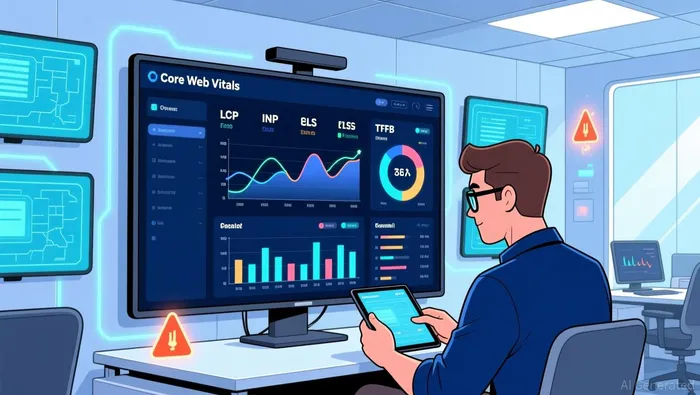
The March 2026 Core Update introduces several key technical requirements, including tighter thresholds for Core Web Vitals such as Largest Contentful Paint (LCP), Interaction to Next Paint (INP), Cumulative Layout Shift (CLS), and Time to First Byte (TTFB) according to technical benchmarks. These metrics are now more critical than ever in determining a site's search visibility and user experience. Websites that fail to meet these updated benchmarks may experience significant ranking volatility.
Additionally, the update emphasizes the importance of mobile-first indexing, with sites lacking a functional mobile version at risk of being excluded from Google's index after July 1st, 2026. This means that businesses must ensure their websites are optimized for mobile users, with fast load times and a responsive design. By addressing these technical requirements, businesses can improve their search visibility and user experience.
How Can Businesses Adapt to the March 2026 Core Update?
To adapt to the March 2026 Core Update, businesses should conduct content audits and update their SEO strategies to align with the new requirements. This includes optimizing for both traditional SEO and AI-driven ranking signals, ensuring that content is structured in a way that AI systems can parse and attribute. Businesses should also focus on improving content quality, ensuring that it provides genuine value to users rather than being created solely for search rankings.
Website structure and semantic HTML changes should be reviewed, and unhelpful or non-unique pages should be pruned or improved. Businesses should also track keyword relevance and perceived intent, as these factors are becoming increasingly important in the evolving SEO landscape. By taking proactive steps to improve speed, content quality, and overall user experience, businesses can maintain visibility in search results and avoid potential traffic drops.

Blending traditional trading wisdom with cutting-edge cryptocurrency insights.
Latest Articles
Stay ahead of the market.
Get curated U.S. market news, insights and key dates delivered to your inbox.


AInvest
PRO
AInvest
PRO



Comments
No comments yet