
CORE Introduces New Market Dynamics with Integration of AI and Blockchain Innovations
 Aime Summary
Blockchain technology is introducing transparency and automation in real estate through digital ownership models and smart contracts, with tokenisation enabling fractional participation in property markets.
SoFi Technologies has launched 'Big Business Banking,' a service powered by SolanaSOL--, bridging traditional finance and digital assets.
The March 2026 Google Core Update significantly impacted websites using generic AI content, with affiliate marketing sites experiencing the largest traffic drops. Google now prioritises content with original insights and E-E-A-T signals.
Blockchain is transforming traditional real estate markets by enabling programmable agreements and digital ownership through tokenisation. This shift allows property assets to be traded with greater accessibility and liquidity, particularly through fractional ownership models. The integration of blockchain infrastructure into real estate also [facilitates automated financial flows and enhances operational efficiency].
Smart contracts, which are self-executing programs stored on a blockchain, are central to this evolution. They operate autonomously once deployed and are used in various applications, including DeFi, NFT marketplaces, and real estate transactions. However, they also present challenges like code vulnerabilities and immutability risks.
With the rise of AI-generated content, maintaining trust and visibility requires a focus on E-E-A-T signals and verifiable author credentials. JetDigitalPro's analysis shows that websites providing unique insights maintained their positions despite traffic drops caused by the March 2026 Google Core Update.
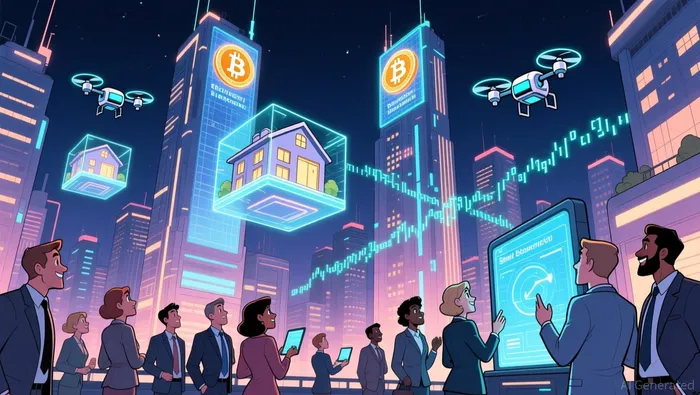
Fintech services like SoFiSOFI-- are leveraging blockchain to streamline financial processes. 'Big Business Banking' aims to provide efficient and scalable solutions by harnessing Solana's high-performance blockchain capabilities.
In parallel, the growing importance of smart contract security is evident as misuse of libraries can lead to vulnerabilities and financial losses. Tools like LibScan combine large language models and static analysis to detect such issues with high accuracy.
The integration of AI and blockchain is creating new opportunities for institutional capital through tokenisation. By bridging traditional industries with digital finance, these innovations are unlocking accessibility, transparency, and efficiency across sectors.
The March 2026 Google Core Update highlighted the importance of high-quality content with verifiable author credentials. Websites using AI without human editorial oversight saw traffic drops between 60% and 80%. This shift underscores the growing emphasis on experience and original insights in content creation.
Smart contract development requires precision and clarity, as these programs operate autonomously on blockchains like EthereumENS--. Despite their advantages, smart contracts pose risks like immutability and code vulnerabilities. Developers must use tools like Hardhat and oracles like Chainlink to ensure security and accuracy.
Tokenisation is revolutionising real estate by enabling fractional ownership and secondary markets, making high-value assets more accessible to a broader range of investors. Developers can attract new pools of capital through tokenised assets while maintaining legal enforceability.
This model also introduces programmable agreements and automated financial flows, streamlining operations and reducing reliance on intermediaries. As regulatory frameworks evolve, tokenisation is being explored as a way to democratise property ownership while preserving the integrity of property law systems.
Fintech companies like SoFi are using blockchain to enhance efficiency and scalability in business banking. By leveraging Solana's high-performance blockchain, they can provide seamless financial solutions that bridge traditional and digital finance.
The integration of blockchain into fintech services supports greater transparency and trust. This infrastructure allows for real-time transaction verification and reduces operational costs by automating financial flows.
Investors are closely watching these developments as they redefine market dynamics across sectors. The convergence of AI, blockchain, and digital finance is not only creating new investment opportunities but also reshaping how trust is established and managed in a digital economy. As these technologies continue to evolve, their impact on global markets will likely grow, influencing investor strategies and regulatory approaches.

Blending traditional trading wisdom with cutting-edge cryptocurrency insights.
Latest Articles
Stay ahead of the market.
Get curated U.S. market news, insights and key dates delivered to your inbox.


AInvest
PRO
AInvest
PRO



Comments
No comments yet