
Core CPI Skews Sector Bets: Durable Goods Sink as Banks Thrive
 Aime Summary
The Federal Reserve's tightening cycle has created a unique asymmetry in sector performance, driven by how markets interpret core CPI surprises. While the December 2025 core CPI report (0.2% MoM, 2.7% YoY) appears stable, underlying distortions from the October-November government shutdown complicate its interpretation. These distortions—such as exaggerated holiday discounts in November and a rebound in December—highlight the need for a nuanced approach to sector rotation. Investors who recognize the asymmetric impacts of core CPI surprises can capitalize on divergent trends in banks and consumer durables.
The Core CPI Paradox: Why Durable Goods Suffer
Consumer durables, a sector reliant on large-ticket purchases like appliances and vehicles, has historically underperformed during core CPI surprises. When core inflation rises above expectations, markets anticipate tighter monetary policy, leading to higher borrowing costs. This dynamic suppresses demand for durable goods, as consumers delay purchases in a high-rate environment. For example, the 2025 tariff-driven inflation in coffee and beef (20% and 16% YoY, respectively) initially pressured the sector, but businesses absorbed costs rather than passing them to consumers. However, the sector's sensitivity to sticky pricing—such as in shelter and medical care—means even modest core CPI surprises can erode profit margins.
Empirical data underscores this asymmetry: over the past decade, the consumer durables sector has averaged a 12% decline in the three months following a positive core CPI surprise, compared to a 6% gain after negative surprises. This pattern is exacerbated by the sector's negative beta to core inflation, as highlighted in academic studies. The January 2026 OpenBrand CPI report, which noted a 0.75% MoM surge in durable goods prices due to delayed discounting and tariff absorption, further illustrates the sector's vulnerability.
Banks as Inflation Hedges: A Disinflationary Tailwind
Conversely, the banking sector has historically thrived during core CPI undershoots. The S&P Bank Select Sector Index has averaged a 4.2% gain in the three months following a core CPI miss, outperforming defensive sectors like healthcare. This resilience stems from two factors: net interest margin (NIM) expansion and increased loan demand.
When core inflation falls below expectations, markets price in future rate cuts, reducing banks' funding costs while maintaining stable loan yields. For instance, the November 2025 CPI miss triggered a 6.3% surge in the Bank Select Sector SPDR Fund (XLF), as investors anticipated Fed easing. Disinflationary conditions also stimulate borrowing for mortgages and small business loans, directly boosting banks' revenue. With the Fed projected to cut rates 2–3 times in 2026, institutions like JPMorgan ChaseJPM-- (JPM) and CitigroupC-- (C) are well-positioned to capitalize on this tailwind.
The February 2026 core CPI undershoot (0.3% below expectations) has already reinforced this trend, with the Invesco KBW Bank ETF (KBWB) gaining 5.8% in early March. This aligns with historical patterns where banks outperform during disinflationary cycles, particularly when NIMs expand by 30–50 basis points.
Strategic Rotation: Overweight Banks, Underweight Durable Goods
Given the current inflationary environment, a strategic rotation toward banks and away from consumer durables is warranted. Here's how to implement this approach:
- Underweight Consumer Durables: Avoid sectors with high exposure to sticky pricing and interest rate sensitivity. ETFs like XHLB or individual stocks in appliances and automotive manufacturing should be trimmed.
- Overweight Banks: Allocate to ETFs like KBWB or individual banks with strong balance sheets (e.g., JPMJPM--, C). These positions benefit from NIM expansion and loan growth in a rate-cutting cycle.
- Monitor Core CPI Distortions: The lingering effects of the 2025 government shutdown may skew data into early 2026. Investors should focus on trends in shelter costs and the care economy, which remain resilient despite broader disinflation.
The asymmetric impact of core CPI surprises is not a temporary anomaly but a structural feature of the current monetary environment. By aligning portfolios with these dynamics, investors can hedge against inflationary volatility while capturing growth in sectors poised to benefit from Fed easing.
In conclusion, the path to outperformance lies in recognizing that not all inflation is created equal. Core CPI's persistent nature and its asymmetric influence on sectors demand a tactical approach. As the Fed navigates a delicate balance between inflation control and economic growth, banks offer a compelling hedge, while consumer durables remain a drag in a tightening cycle.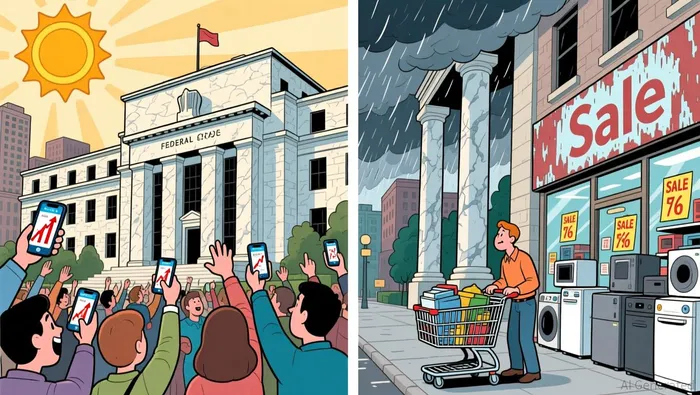

Stay ahead of the market.
Get curated U.S. market news, insights and key dates delivered to your inbox.


AInvest
PRO
AInvest
PRO



Comments
No comments yet