
U.S. Core CPI Falls Below Forecast, Signaling Monetary Easing and Sector Rotation Opportunities
 Aime Summary
The U.S. Core Consumer Price Index (CPI) for November 2025 fell to 2.6% on a 12-month annualized basis, below the expected 2.7% and marking the lowest level since 2021. This unexpected moderation in inflation, coupled with the Federal Reserve's cautious stance on easing, has sparked renewed debate about the timing of rate cuts and the potential for sector rotation in equities and fixed income. Investors now face a critical juncture: Should they prepare for a shift toward growth stocks and cyclical sectors, or remain defensive as the Fed signals patience in its battle against inflation?
The Fed's Dilemma: Price Stability vs. Employment
Federal Reserve Bank of Atlanta President Raphael Bostic's November 2025 speech underscored the central bank's internal tension. While the core CPI decline is a positive signal, Bostic emphasized that inflation remains 0.7% above the 2% target and that business surveys (e.g., Business Inflation Expectations, CFO Survey) indicate firms still expect price pressures to persist until mid-2026. Tariffs, rising unit costs, and structural labor market shifts—such as AI-driven automation and demographic trends—complicate the Fed's calculus. Bostic argued that premature easing could reignite inflation, anchoring the Fed's policy to a “marginally restrictive” stance until inflation shows “clear and compelling” progress toward 2%.
Sector Rotation: Value and Defensives Outperform
The November 2025 equity market reflected this cautious optimism. The S&P 500 gained 0.25% for the month, but the Russell 1000 Value Index surged 2.7%, outperforming the Russell 1000 Growth Index, which fell 1.8%. Health Care, Communication Services, and Materials led the charge, while Information Technology and Consumer Discretionary lagged. This rotation aligns with historical patterns during periods of tightening: investors favor sectors with stable cash flows and lower duration risk.
Fixed income markets also signaled anticipation of future easing. The 10-year Treasury yield dipped 6 basis points to 4.2%, while the 2-year yield fell 8 basis points to 4.5%. The Breckinridge Capital Advisors Investment Committee expects two rate cuts by mid-2026, with the 10-year yield likely to trade between 4.0% and 4.5%. This “steepening” of the yield curve suggests investors are pricing in a soft landing scenario, where inflation moderates without a severe recession.
Strategic Implications for Investors
- Equity Sector Rotation:
- Value Over Growth: The shift toward value stocks is likely to continue as long as the Fed maintains a restrictive stance. Sectors like Utilities, Consumer Staples, and Health Care—known for consistent dividends and low volatility—remain attractive.
- Defensive Tech Plays: While the broader Information Technology sector underperformed, subsectors like semiconductors and AI infrastructure (e.g., NVIDIA, AMD) could benefit from long-term demand, even if near-term growth is tempered by higher borrowing costs.
Avoid High-Beta Cyclicals: Consumer Discretionary and Industrials, which rely on discretionary spending and capital expenditures, face headwinds in a high-rate environment.
Fixed Income Adjustments:
- Corporate Bonds: Investment-grade sectors like Pharmaceuticals and Wirelines have shown resilience, while high-yield sectors (e.g., Metals and Mining) face tighter spreads. Investors should prioritize sectors with strong balance sheets and stable cash flows.
Municipal Bonds: With M/T ratios near 80%, munis offer a tax-advantaged yield premium, making them a compelling addition to diversified portfolios.
Securitized Markets:
- Mortgage-backed securities (MBS) and asset-backed securities (ABS) posted positive returns in November, with auto loan ABS outperforming credit card ABS. These sectors could benefit from continued demand for structured yield in a low-growth environment.
The Road Ahead: Patience or Pivotal Shift?
The Fed's reluctance to commit to aggressive easing has created a “wait-and-see” environment. While the November CPI data is encouraging, Bostic's emphasis on “structural forces” (e.g., AI adoption, demographic shifts) suggests that monetary policy will remain data-dependent. Investors should monitor the December FOMC meeting for hints of a 25-basis-point cut, but avoid overcommitting to cyclical sectors until inflation is clearly on a downward trajectory.
In the short term, a defensive posture—favoring value equities, high-quality bonds, and securitized assets—remains prudent. However, those with a longer time horizon may begin to position for a potential “soft landing” scenario, where a gradual easing of rates in mid-2026 could reignite growth in sectors like Technology and Industrials.
The key takeaway? The Fed's balancing act between inflation and employment will dictate market direction. For now, the data favors caution, but the seeds of rotation are already taking root. Investors who align their portfolios with the Fed's likely path—rather than its rhetoric—may find themselves well-positioned for the next phase of the economic cycle.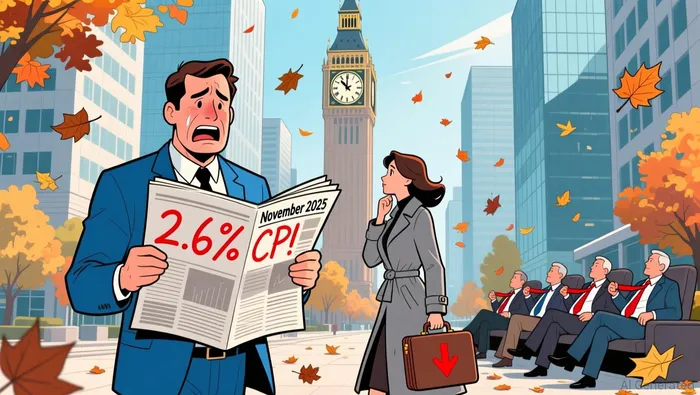

Stay ahead of the market.
Get curated U.S. market news, insights and key dates delivered to your inbox.






Comments
No comments yet