
U.S. Core CPI Falls Below Forecast, Alleviating Rate Hike Fears and Reshaping Sector Allocations
 Aime Summary
The U.S. Core Consumer Price Index (CPI) for November 2025 clocked in at 2.6% year-over-year, a 0.4 percentage point drop from September and a surprise below the 3.0% market expectation. This data, though clouded by the government shutdown's impact on October's data collection and November's truncated reporting period, has sparked optimism that inflation is cooling. The Federal Reserve, long wary of persistent price pressures, may now see a clearer path to rate cuts in early 2026. For investors, this shift in monetary policy expectations demands a recalibration of sector allocations, as historical patterns and current market dynamics converge to reshape capital flows.
The CPI Surprise: A Catalyst for Sector Rotation
The November CPI report, while imperfect, signals a broad deceleration in inflation. Shelter costs, which account for nearly 40% of the CPI basket, rose 3.0% year-on-year—a slower pace than previous months. Meanwhile, used car prices and medical care costs, two traditional inflationary drivers, showed signs of moderation. These trends align with broader economic indicators, such as slowing wage growth and a cooling labor market, suggesting that the Fed's dual mandate of price stability and maximum employment is inching toward balance.
However, the data's reliability remains under scrutiny. The government shutdown disrupted October's data collection entirely, and November's report was based on partial data. Economists caution that Black Friday sales and seasonal distortions may have artificially depressed certain price readings. Yet, the consistency of other inflation-related metrics—such as stable rent costs and declining energy prices—lends credibility to the narrative of easing inflation.
Historical Lessons: Sectors That Thrive in a Rate-Cutting Regime
When the Federal Reserve cuts interest rates, the economic landscape shifts. Historically, sectors sensitive to borrowing costs and consumer spending have outperformed. For example:
- Technology and Growth Sectors: Lower rates reduce the cost of capital, making long-term projects and innovation more feasible. During the 2020 pandemic, the S&P 500's tech-heavy constituents surged as Fed stimulus fueled demand for digital services.
- Real Estate and Housing: Mortgage rates fall, boosting homebuyer demand. In 2001 and 2008, Fed rate cuts supported housing markets, albeit with mixed long-term outcomes.
- Consumer Discretionary: Retail, travel, and entertainment benefit from increased consumer spending. The 2020-2022 period saw these sectors rebound sharply as stimulus checks and low rates spurred activity.
Conversely, sectors like Energy and Utilities often struggle during the initial phases of rate cuts but may stabilize as inflation eases. The key is to align allocations with the Fed's trajectory.
The 10-Year Treasury Yield: A Master Switch for Sector Rotation
The U.S. 10-Year Treasury Yield, currently near 4.10%, has become a critical barometer for sector rotation. This level acts as a psychological threshold:
- Above 4.10%: Income assets like REITs (IYR) and MLPs (MLPP) gain traction as the opportunity cost of equities rises.
- Below 4.10%: Growth equities, particularly in the S&P 500 (SPY), become more attractive as lower yields support valuations.
Technical indicators reinforce this dynamic. As of December 16, 2025, the 10-Year Yield's 5-day moving average is at 4.12%, while the 20-day and 50-day averages hover near 4.09% and 4.08%, respectively. A break above 4.15% could trigger a rotation into income assets, while a sustained drop below 4.10% may favor growth equities.
Tactical Recommendations for December 2025
With the Fed's rate-cutting cycle in motion and the 10-Year Yield near critical levels, investors should adopt a flexible approach:
1. Above 4.10%: Prioritize income assets. The Invesco Zacks Multi-Asset Income ETF (CVY), which tracks a basket of REITs and MLPs, has shown resilience as yields rise.
2. Below 4.10%: Reallocate to growth equities. The S&P 500 (SPY) and tech-heavy indices like the Nasdaq Composite (IXN) could benefit from lower discount rates.
3. Santa Rally Window: Monitor the yield's behavior in the final two weeks of December. A dip below 4.10% could validate the Santa rally, historically favoring healthcare and consumer discretionary sectors.
Conclusion: Navigating the New Normal
The November CPI report, while imperfect, has reshaped expectations for the Fed's 2026 policy path. As rate cuts loom, investors must remain agile, leveraging historical sector performance and technical signals to navigate shifting allocations. The 10-Year Yield's 4.10% threshold will likely remain a focal point, dictating the flow of capital between growth and income assets. In this evolving landscape, a disciplined, data-driven approach—rooted in both macroeconomic trends and technical analysis—will be key to capturing returns in 2026.
For now, the message is clear: inflation's retreat has opened a window for strategic sector rotation. The question is not whether to act, but how to position for the yield's next move.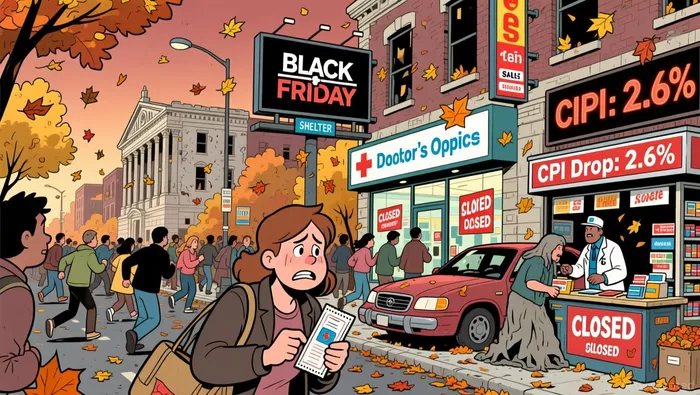

Stay ahead of the market.
Get curated U.S. market news, insights and key dates delivered to your inbox.
AInvest
PRO
AInvest
PRO



Comments
No comments yet