
CORE Advances in Sustainable Building and Agricultural Tools
 Aime Summary
- Harvard has received Living Building Challenge (Core) certifications for three major sustainable renovations, emphasizing holistic sustainability and historic preservation according to Harvard News.
- CORE is developing economic decision-support tools to help feedlot producers assess the cost-effectiveness of mortality reduction strategies as reported in their newsletter.
- The LBC Core certification requires operational performance validation, ensuring energy, water, and landscape metrics are met according to Harvard News.
Harvard has completed three pilot renovations on its Cambridge campus, achieving Living Building Challenge (LBC) Core certifications according to Harvard News. These projects include residential building renovations and a library renovation, adhering to Harvard's 2024 Sustainable Building Standards. The renovations emphasize energy efficiency, climate resilience, and healthier indoor environments by avoiding toxic materials.
CORE is creating practical tools to assist feedlot producers in evaluating strategies for reducing mortality as reported in their newsletter. These tools provide actionable insights for informed decisions regarding operations and management practices. They are designed to support producers in improving their efficiency and sustainability.
The LBC Core process includes a performance period to validate operational data on energy, water, and landscape usage according to Harvard News. Harvard's goal is to create healthier, more efficient buildings while meeting aggressive sustainability targets. The lessons from these pilot projects are being applied to seven additional projects aiming for LBC Core certification.
What is the significance of LBC Core certifications?
LBC Core certifications signify a commitment to holistic sustainability and decarbonization according to Harvard News. These certifications require not only design and construction documentation but also a performance period to verify operational data. The process ensures that energy, water, and landscape metrics are met, demonstrating a commitment to sustainability and healthier building environments.
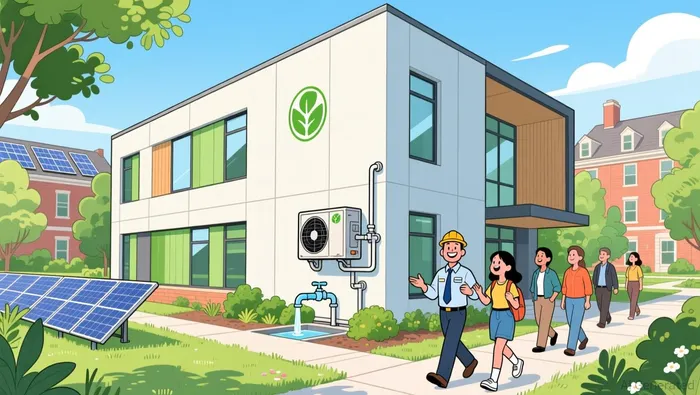
Harvard's projects have reduced embodied carbon and energy use significantly according to Harvard News. The renovations include high-efficiency heat pumps, low-flow fixtures, and sustainable outdoor landscapes. These projects serve as a model for future campus development and are informing additional LBC Core-targeted projects.
How does CORE support feedlot producers?
CORE supports feedlot producers by developing economic decision-support tools that assess the cost-effectiveness of mortality reduction strategies as reported in their newsletter. These tools provide actionable insights that help producers make informed decisions about their operations and management practices. The tools are intended to be practical and support the industry in improving efficiency and sustainability.
The economic tools developed by CORE are designed to provide actionable insights to guide producers in making informed decisions as reported in their newsletter. These tools help assess strategies aimed at reducing mortality, ensuring that producers can evaluate the cost-effectiveness of different approaches. By doing so, producers can implement strategies that are both economically viable and effective.
The projects at Harvard emphasize historic preservation, energy efficiency, and climate resilience according to Harvard News. The use of high-efficiency systems and sustainable materials ensures that the buildings are both functional and environmentally responsible. The renovations also align with Harvard's Healthier Building Academy, which removes toxic chemicals from building materials.
CORE's work with feedlot producers reflects a broader trend in economic and environmental sustainability as reported in their newsletter. By creating tools that support informed decision-making, CORE helps producers implement strategies that are both economically and environmentally sustainable. These tools are part of a larger effort to support the agricultural industry in improving efficiency and reducing environmental impact.

Blending traditional trading wisdom with cutting-edge cryptocurrency insights.
Latest Articles
Stay ahead of the market.
Get curated U.S. market news, insights and key dates delivered to your inbox.


AInvest
PRO
AInvest
PRO



Comments
No comments yet