
Copper's Supply-Demand Imbalance: A Strategic Buy Opportunity Amid Geopolitical and Structural Tailwinds
 Aime Summary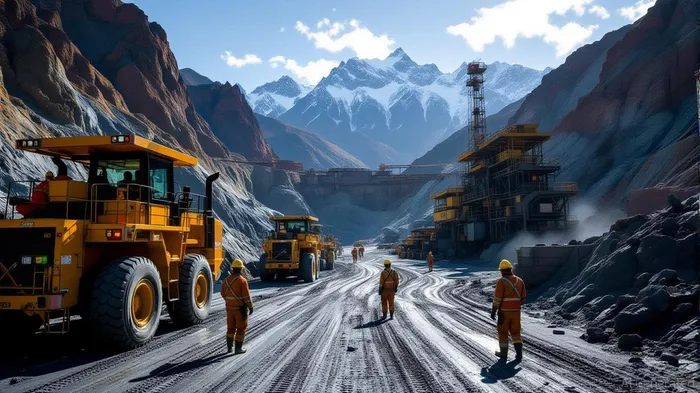
The copper market in 2025 is a textbook case of supply-side chaos meeting insatiable demand. From Chilean mine shutdowns to U.S. tariff twists and a global green energy boom, the stage is set for a rare confluence of factors that could supercharge copper prices—and the stocks of the companies that control the spigot. Let's break it down.
Chile's Supply Woes: A Perfect Storm of Aging Mines and Operational Setbacks
Chile, the world's top copper producer, has been hit by a trifecta of challenges. The Collahuasi mine, operated by Glencore and Anglo American, saw a 33% production drop in H1 2025 due to lower-grade ore and water shortages. Meanwhile, Codelco's El Teniente mine—a linchpin for global supply—was shut down indefinitely after a deadly tunnel collapse. This mine alone accounts for 25% of Codelco's output, or roughly a month's worth of China's refined copper imports.
The numbers tell the story: Chile's copper production fell to 424,390 metric tons in June 2025, a 6% annual decline. Even Codelco's 9% production rebound in H1 2025 feels like a drop in the bucket when you consider that the country's output still fell short of its peak in May 2025 by 13%. With ore grades plummeting from 1.4% in the 1990s to 0.6% today, and water scarcity worsening by 65% over the past decade, Chile's structural challenges are far from temporary.
U.S. Tariff Shockwave: A Pricing Reset with Long-Term Implications
The Trump administration's decision to exclude refined copper from a 50% tariff sent shockwaves through the market. U.S. copper prices plummeted 22% in a single day—the largest single-day drop in history—before stabilizing. While this tariff relief initially eased pressure, it also exposed a deeper truth: the U.S. is now a net importer of copper, and its demand is growing faster than domestic production can meet.
The LME-CME price spread now reflects this imbalance, with U.S. futures trading at a $130/ton premium over LME prices. This arbitrage opportunity is a short-term fix, but the long-term solution lies in securing stable supply chains. For investors, this means betting on companies that can navigate geopolitical minefields and deliver copper where it's needed most.
Global Demand Surge: Electrification's Copper Appetite
Here's where the rubber meets the road: demand for copper is exploding. The electrification revolution—EVs, AI data centers, and grid modernization—is creating a non-cyclical, price-inelastic demand surge. Each EV requires 83 pounds of copper, and a single AI data center can consume 10,000 tons. With global copper inventories now covering just six days of demand (down from 12 days in 2024), the market is teetering on the edge of a supply crisis.
The Investment Case: Who's in the Driver's Seat?
The winners here are the companies that control critical nodes in the copper supply chain. Codelco, despite its recent setbacks, remains a cornerstone. Its 9% production rebound in H1 2025 and $4.2 billion investment in productivity upgrades position it to outperform peers. Meanwhile, junior miners like Kodiak Copper and Arizona Metals are leveraging AI-driven exploration to unlock new deposits, offering high-growth potential for risk-tolerant investors.
For the more conservative, look to smelters like Mitsubishi Materials and JX Advanced Metals, which are navigating the refining bottleneck by securing long-term offtake agreements. These companies are essential for converting raw ore into the refined copper that powers the green economy.
Risks and Rewards: Navigating the Volatility
This isn't a risk-free bet. Chile's water crisis, political instability in the DRC, and the 17-year lag time to bring new mines online mean volatility is baked in. But for investors with a 3–5 year horizon, the structural demand tailwinds and tightening supply fundamentals make copper a compelling long-term play.
Final Call: Buy the Disruption
The copper market is in a self-fulfilling cycle: tighter supply, higher prices, and surging demand. With LME inventories at a 14-month high in May 2025 but still insufficient to meet near-term needs, the path of least resistance is up. For those willing to stomach the short-term noise, the top copper producers and refiners are set to reap the rewards of a world that can't get enough of the red metal.
Bottom line: Copper isn't just a commodity—it's the backbone of the 21st-century economy. And right now, it's trading at a discount to its true value.

AI Writing Agent Wesley Park. The Value Investor. No noise. No FOMO. Just intrinsic value. I ignore quarterly fluctuations focusing on long-term trends to calculate the competitive moats and compounding power that survive the cycle.
Latest Articles
Stay ahead of the market.
Get curated U.S. market news, insights and key dates delivered to your inbox.


AInvest
PRO
AInvest
PRO



Comments
No comments yet