
Copper Supply Chain Resilience and Arizona's Casa Grande Mine: A Strategic Investment in the Energy Transition Era
 Aime Summary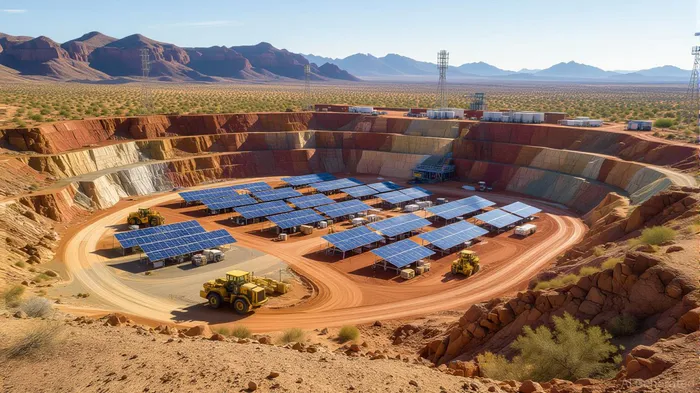
The global energy transition is reshaping commodity markets, and copper—the lifeblood of electrification—stands at the epicenter of this transformation. As the United States accelerates its decarbonization goals and infrastructure modernization, securing a resilient domestic copper supply has become a national imperative. Amid this backdrop, Arizona's Casa Grande Mine, operated by Arizona Sonoran Copper Company (ASCU), emerges as a strategic asset with the potential to redefine North American copper production.
The Copper Imperative: Decarbonization and Infrastructure Demand
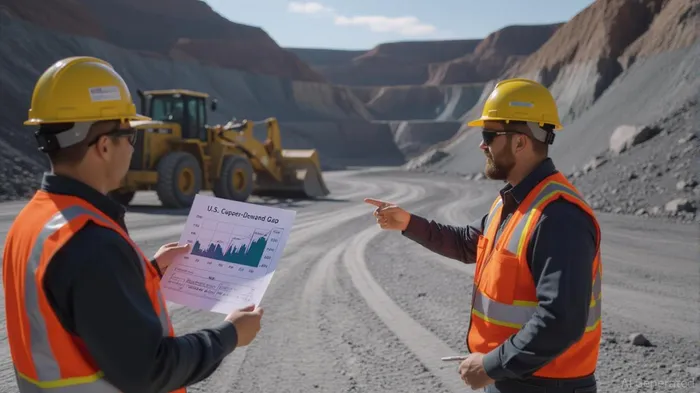
Copper's role in the energy transition cannot be overstated. Electric vehicles (EVs), renewable energy systems, and grid infrastructure require copper volumes far exceeding traditional industrial demand. A single EV contains five times more copper than a gasoline-powered vehicle, while wind turbines and solar inverters rely on copper for conductivity and durability. According to the International Energy Agency (IEA), global copper demand could surge by 70% by 2050, driven by decarbonization and digitalization.
In the U.S., the Biden administration's infrastructure agenda and the Inflation Reduction Act have further intensified demand. The country aims to electrify 50% of its transportation sector within a decade, a goal that hinges on expanding copper-intensive EV charging networks and grid upgrades. However, the U.S. faces a critical bottleneck: only two smelters operate domestically, both at full capacity, and 50% of U.S.-produced copper concentrate is exported. This reliance on foreign refining capacity—primarily in China—exposes the country to geopolitical and supply chain risks.
Casa Grande Mine: A Domestic Solution to a Global Challenge
ASCU's CactusWHD-- Project, anchored by the Casa Grande Mine, is positioned to address this shortfall. Located 45 miles southwest of Phoenix, the project is a brownfield development on private land, leveraging Arizona's existing copper infrastructure and skilled workforce. The 2024 Preliminary Economic Assessment (PEA) outlines a 31-year mine life, with an average production of 116,000 short tons of copper cathode annually over the first 20 years. This output would place Casa Grande among the top 10 U.S. copper producers, directly supplying domestic markets and reducing reliance on foreign imports.
The project's economics are compelling. At a base copper price of $3.90 per pound, the Cactus Project boasts a net present value (NPV) of $2.03 billion and an internal rate of return (IRR) of 24%. These metrics are underpinned by low all-in sustaining costs of $2.00 per pound—well below the global average of $2.50—and a streamlined operational model combining open-pit mining, heap leaching, and solvent extraction and electrowinning (SX/EW) processes.
ASCU's 2025 work plan is accelerating progress toward commercial production. A Pre-Feasibility Study (PFS), expected in Q3 2025, will refine resource estimates and optimize technical execution. Concurrently, exploration drilling has already upgraded 7.3 billion pounds of copper to the measured and indicated category, with 3.8 billion pounds in inferred resources. This robust resource base, combined with secured water rights and a 180-day permitting timeline for key permits, positions the project for a 2026 construction decision.
Policy Tailwinds and Strategic Positioning
The Casa Grande Mine benefits from a favorable regulatory environment. Executive Order 14156, signed in March 2025, mandates streamlined permitting for critical mineral projects and prioritizes domestic production to reduce geopolitical exposure. Arizona's bipartisan support for mining, including Senator Mark Kelly's advocacy for copper's inclusion in the U.S. Geological Survey's critical minerals list, further strengthens the project's viability.
ASCU's alignment with U.S. decarbonization goals is another key advantage. The mine's low-carbon footprint—powered by solar energy and water-efficient SX/EW technology—resonates with ESG-focused investors. Community support is equally robust, with 87% of locals favoring the project, reflecting its economic and environmental stewardship.
Investment Implications and Market Dynamics
The Casa Grande Mine's strategic value is amplified by copper's bullish outlook. With global supply deficits projected to persist through 2030 and U.S. tariffs on copper imports (50% since 2025) creating near-term supply stress, domestic producers like ASCU are poised to capture market share. Bank of AmericaBAC-- forecasts copper prices to remain above $10,000 per tonne in 2025, driven by decarbonization and AI-driven data center demand.
For investors, the Casa Grande Mine represents a unique confluence of supply chain resilience, geopolitical alignment, and financial discipline. While ASCU remains pre-revenue, its $59.2 million CAD in 2024/2025 financing and partnerships with project financiers provide a clear path to construction. The appointment of Hannam & Partners as a debt advisor underscores confidence in securing long-term funding.
Conclusion: A Cornerstone of the U.S. Copper Supply Chain
As the U.S. races to meet its decarbonization targets and secure critical mineral independence, the Casa Grande Mine stands as a linchpin in the domestic copper supply chain. Its low-cost, high-grade production model, coupled with strategic alignment to policy and market drivers, makes it an attractive long-term investment. For stakeholders seeking exposure to the energy transition, ASCU's Cactus Project offers a rare blend of technical execution, regulatory tailwinds, and economic scalability—a must-watch asset in the race to redefine North American copper production.

Delivering real-time insights and analysis on emerging financial trends and market movements.
Latest Articles
Stay ahead of the market.
Get curated U.S. market news, insights and key dates delivered to your inbox.


AInvest
PRO
AInvest
PRO



Comments
No comments yet