
Copper Speculative Net Positions: A Leading Indicator for Industrial and Distribution Sector Rotation
 Aime Summary
Copper, often dubbed "Dr. Copper" for its uncanny ability to predict economic cycles, has once again positioned itself as a critical barometer for industrial and distribution sector investments. As of December 2025, speculative net positions in copper futures markets reveal a striking divergence between non-commercial (speculative) traders and commercial entities. This divergence, coupled with structural demand drivers, offers a compelling case for investors to rotate into industrial and distribution sectors ahead of a potential economic upturn.
The Copper Sentiment Divide: Speculators vs. Commercial Players
The latest Commitments of Traders (COT) report from the Commodity Futures Trading Commission (CFTC) highlights a 31.2% allocation of long positions to non-commercial traders, who now hold a net long of 25,658 contracts in copper futures. This contrasts sharply with commercial traders, who maintain a net short of 33,950 contracts. While speculative traders are betting on higher prices, commercial entities—typically producers and consumers of copper—are hedging against near-term price declines. This classic "bullish speculator, bearish producer" dynamic often signals a tightening market, where supply constraints and rising demand create a self-fulfilling price trajectory.
The increase in open interest (up 5,624 contracts since early September 2025) further underscores growing speculative activity. Non-commercial traders have added 9,136 contracts to their net longs, while commercial short positions have expanded by 7,248 contracts. This suggests that while industrial players are hedging against near-term volatility, speculators are pricing in long-term structural demand—particularly from electric vehicles, AI-driven data centers, and renewable energy infrastructure.
Copper as a Sector Rotation Signal
Copper's role as a leading indicator is rooted in its inelastic supply and its deep ties to global industrial output. When speculative net positions rise, it often precedes a shift in economic momentum. For example, the 2025 AI infrastructure boom and U.S. tariff announcements on refined metals have already driven copper prices to $5.35 per pound, a 33.23% annual gain. This surge has been mirrored by outperformance in industrial and distribution sectors, which are now at a strategic inflection point.
The S&P Industrial Select Sector Index (XLI) has risen 18% year-to-date, outpacing the S&P 500 by 5 percentage points. Similarly, logistics and distribution stocks—such as those in the Dow Jones Transportation Average—have gained 12% in the same period. These gains align with copper's speculative positioning, as both sectors benefit from the same macroeconomic tailwinds: infrastructure spending, supply chain reconfiguration, and energy transition demand.
Strategic Sector Rotation: Where to Position Now
Investors should consider overweighting industrial and distribution sectors when copper speculative net positions remain elevated. Key beneficiaries include:
- Industrial Conglomerates: Companies like 3M (MMM) and Honeywell (HON) are well-positioned to capitalize on AI-driven manufacturing and energy transition projects.
- Logistics and Distribution: Firms such as FedEx (FDX) and DHL's parent company Deutsche Post (DPWGY) stand to gain from global supply chain shifts and e-commerce growth.
- Copper Producers with Hedging Flexibility: While commercial traders are short copper, producers like Southern CopperSCCO-- (SCCO) and Freeport-McMoRanFCX-- (FCX) have hedged portions of their output, allowing them to benefit from rising prices while mitigating near-term volatility.
Risks and Cautions
While the case for industrial and distribution sectors is strong, investors must remain mindful of cyclical risks. A slowdown in Chinese infrastructure spending or a U.S. interest rate hike could temporarily dampen copper demand. Additionally, the recent 7% drop in Southern Copper's production due to lower ore grades highlights operational risks in the mining sector.
However, the structural drivers—AI, electrification, and decarbonization—remain intact. J.P. Morgan forecasts a global copper deficit of 330,000 metric tons in 2026, with prices potentially reaching $12,500 per ton. For sectors tied to copper's demand curve, this creates a durable tailwind.
Conclusion: Copper as a Strategic Compass
Copper speculative net positions are more than a commodity market curiosity—they are a strategic compass for sector rotation. As non-commercial traders extend their bullish bets and industrial demand remains resilient, investors should allocate capital to industrial and distribution sectors with a medium-term horizon. By aligning with copper's leading edge, portfolios can position themselves to capitalize on the next phase of the economic cycle.
In a world of shifting economic cycles, copper's speculative positioning offers clarity. The question is no longer whether industrial and distribution sectors will outperform—but when.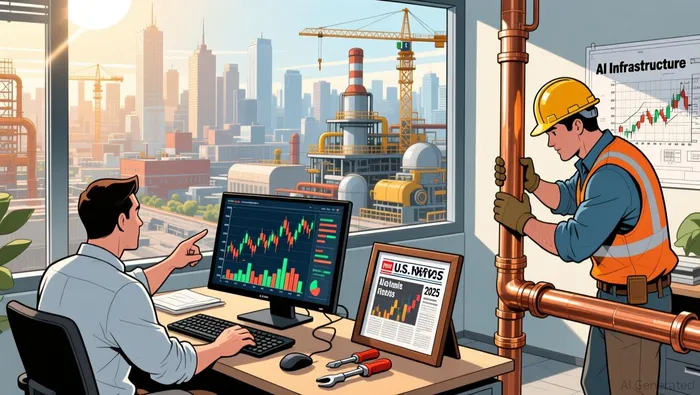

Stay ahead of the market.
Get curated U.S. market news, insights and key dates delivered to your inbox.




Comments
No comments yet