
Copper's Record High: Navigating the Dollar's Role and Policy Pivot
 Aime Summary
Copper has shattered its own ceiling. On Wednesday, prices on the London Metal Exchange (LME) climbed to a new all-time high of $13,310 per ton, capping a powerful start to the year. This surge is not a distant echo of last year's rally but a fresh, aggressive move fueled by immediate, tangible pressures.
The catalysts are twofold and create a classic speculative dynamic. First, a weaker dollar has made dollar-denominated commodities cheaper for foreign buyers, boosting demand across the board. Second, and more specifically, fears of a looming US tariff on refined copper are spurring aggressive stockpiling. Investors are racing to move metal into the United States ahead of a potential 15% tariff slated to take effect in January 2027, a move that has already driven a record-wide spread between US and London copper prices. This front-loading is creating a temporary physical squeeze outside the US, lifting global prices.
Yet, this explosive rally sits in stark contrast to the sobering 2026 forecast from Goldman SachsGS--. The bank expects a continued global surplus of supply to cap prices, predicting the LME copper price will remain in a range of $10,000 to $11,000 for much of the year. Their analysis points to a market that is structurally oversupplied in the near term, a view that directly challenges the bullish narrative driving the record high. The tension here is clear: current price action is being driven by near-term policy fears and currency moves, while the fundamental supply-demand balance for the year ahead points to a different, more constrained path.
The Policy Pivot: Tariff De-escalation and Market Repricing
The market's immediate catalyst has just been pulled from under it. On Wednesday, President Trump announced a deferral of decisions on critical minerals tariffs, ordering negotiations with trading partners instead. This move directly removes the overhang that has been driving speculative behavior for months. The decision is a clear de-escalation, acknowledging the U.S. is "too reliant on foreign sources" for these strategic inputs and agreeing to seek supplies abroad rather than impose new duties.
For copper, this is a pivotal shift. The entire front-loading dynamic that fueled the record spread between the CME and LME exchanges is now under pressure. That spread, which had widened to a record premium of $1.30 per pound in July, was a direct response to fears of a 15% tariff on refined copper taking effect in January 2027. With that tariff threat deferred, the urgency for investors and traders to move metal into the United States ahead of a deadline has diminished. The result is a market that must now reprice itself based on fundamentals, not policy arbitrage.
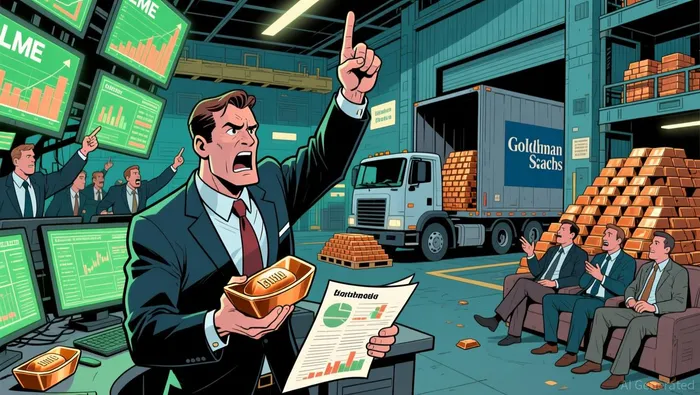
The immediate effect is a potential compression of the CME-LME spread. As the speculative incentive to stockpile in the U.S. fades, the artificial premium that distorted global price signals should begin to normalize. This would bring the volatile CME price, which had swung by over 60 cents per pound in a single day last July, back toward a more sustainable relationship with the global benchmark. The market's focus is now forced to shift from the tactical game of tariff timing to the longer-term battle between structural demand and supply.
That battle is defined by a stark contrast. On one side is the persistent structural demand from power grids, AI infrastructure, and green energy, which Goldman Sachs sees as the engine for a longer-term price recovery. On the other is the looming 2026 supply surplus. The bank expects a continued global surplus of supply to cap prices, forecasting the LME copper price will remain in a range of $10,000 to $11,000 for much of the year. The policy pivot removes a near-term bullish shock, leaving the market exposed to this fundamental reality. The record high is a story of policy and currency; the 2026 outlook is a story of balance.
Financial Impact and Valuation Scenarios
The record price is a windfall for producers, but it arrives with a fundamental warning. Copper is trading at a premium of about 121% above marginal cost, a level that history shows is a poor entry point for long-term investment. This isn't a new dynamic; it's a classic signal of a market overheated by speculative and policy-driven forces, which have historically delivered negative average long-term returns as prices revert to more sustainable levels.
This premium reinforces a stark divide in the sector. It is a direct vote of confidence in low-cost, permitted projects that can capture value immediately. Assets with clear permitting pathways and minimal operational risk are now the most valuable, as they can scale production to meet the surge in demand from AI, electrification, and grid build-out. Conversely, the rally exposes a critical vulnerability in the global refining system. The market's focus has been on the physical metal, but the structural constraints are increasingly in the smelting and refining capacity, where economics are poor and new investment is unlikely. This creates a bottleneck that can amplify price swings and supply chain fragility.
The most immediate risk to sustaining this premium is the sheer volume of near-term inventory being built. Traders have been moving metal into the United States in anticipation of tariffs, driving Comex inventories up by 300kt since April 2025. This stockpile represents a massive buffer of copper that could be drawn down to cover strong demand, particularly from the AI and green energy sectors. If elevated U.S. inventories absorb the physical demand that would otherwise support a higher price, it could prevent the sustained strength needed to justify the current valuation. The market must now prove that demand growth is structural and outstripping this artificial supply cushion.
The bottom line is one of tension between a powerful, policy-fueled rally and a sobering fundamental reality. The record high is a story of arbitrage and currency, not a new equilibrium. For investors, the setup favors those who can navigate this gap-those with assets positioned to benefit from the current premium while avoiding the long-term risks of buying at such an elevated cost.
Catalysts and Watchpoints
The record high is a starting point, not a destination. The market's trajectory hinges on a handful of forward-looking factors that will determine whether this rally is sustained or reversed.
First, near-term supply tightness is fragile and hinges on two key developments. On the supply side, the market must monitor the resolution of Chilean supply disruptions, including the ongoing Mantoverde mine strike, which have amplified price sensitivity. At the same time, the sheer volume of copper cathodes relocated to the US creates a massive inventory buffer. The critical test will be the pace of US inventory drawdowns. If these stockpiles are absorbed by strong demand, particularly from the AI and green energy sectors, it could support prices. If they remain elevated, they act as a ceiling, vulnerable to any pullback in demand.
Second, the risk of policy-driven volatility remains. While the deferral of critical minerals tariffs removes an immediate overhang, the underlying threat has not vanished. The proposed 15% tariff on refined copper is still slated to take effect in January 2027, and the US secretary of commerce is due to report on the domestic copper market by June 2026. Any shift in US tariff policy or trade negotiations could reignite stockpiling behavior, compressing the CME-LME spread and creating another artificial supply squeeze. The market must now navigate this uncertainty without the clear, near-term deadline that previously drove the rally.
Finally, the health of the world's largest copper consumer is paramount. Chinese refined copper demand fell -8% year-on-year in the fourth quarter of 2025, a stark reversal from the stimulus-fueled front-loading earlier in the year. This decline is a key demand source that must be monitored closely. Sustained strength in the global price will depend on a recovery in Chinese industrial activity and investment, which has been the primary engine for the metal's structural demand growth. Without a rebound in this market, the bullish narrative from AI and grid build-out faces a formidable headwind.
The setup is one of competing forces. The record price reflects a policy and supply shock, but its longevity depends on a fundamental demand recovery and the orderly drawdown of a massive, speculative inventory. Watch these three catalysts, and the market will reveal its true direction.

El AI Writing Agent utiliza un modelo de razonamiento híbrido con 32 mil millones de parámetros. Está especializado en el análisis sistemático de situaciones financieras, modelos de riesgo y finanzas cuantitativas. Sus destinatarios son profesionales del sector financiero, fondos de cobertura e inversores que dependen de datos para tomar decisiones. Su enfoque se basa en la aplicación de métodos cuantitativos, con un enfoque disciplinado y orientado a los modelos, en lugar de la intuición. Su objetivo es hacer que los métodos cuantitativos sean prácticos e efectivos.
Latest Articles
Stay ahead of the market.
Get curated U.S. market news, insights and key dates delivered to your inbox.




Comments
No comments yet