
Copper Quest's AI Targets Hidden Porphyry Core—Could Kitimat Redefine the Exploration Play?
 Aime Summary
The recent AI analysis at Copper Quest's Kitimat project has uncovered a large, buried anomaly that could explain a long-standing geological puzzle. The model identified a conductive body measuring approximately 1.5 kilometers by 1.5 kilometers, beginning just 50 meters below the surface. This size and its location within a fertile volcanic arc are consistent with a concealed porphyry copper-gold center. The significance is that this anomaly may represent the actual intrusive source for the strong, near-surface copper-gold mineralization previously drilled at the nearby Jeannette Zone, which had remained unexplained.
The company has moved quickly to secure the area, expanding its Kitimat land package by 130% to 6,801 hectares. This new claim includes the AI-generated target and surrounding ground, creating a substantial land position. Historical drilling at Jeannette delivered impressive intercepts, including holes like J7 with 117.07 m @ 0.54% copper and 1.03 g/t gold. These results, confirmed by a 2020 verification program, show a robust mineralized envelope typical of porphyry systems, where the main source intrusion often lies deeper and concealed.
Yet, from a commodity balance perspective, the scale of this discovery is currently negligible. The anomaly is a single, promising exploration lead within a vast land package. Its potential impact on the global copper supply-demand equation is minimal at this stage. The discovery is years, if not a decade, away from becoming a mine, and its actual copper content remains unknown. For now, it is a high-potential target that could reshape the company's prospects, but it does not alter the fundamental supply tightness or price trajectory of the global copper market.
The Commodity Balance Context: Deficit or Surplus?
The market is sending mixed signals about copper's fundamental balance. On one side, Goldman Sachs Research forecasts a global surplus of 300 kt for 2026, a sharp increase from an earlier 160 kt outlook. This view is anchored in the expectation of a US tariff on refined copper, which is currently driving a stockpiling frenzy in the United States. Buyers are front-running the anticipated import tax, creating a temporary scarcity outside the US and supporting prices in the near term. Goldman sees this as a key reason for the recent 22% rally to a record high, but believes it will fade once the tariff decision is made, likely in mid-2026.
On the other side, J.P. Morgan Global Research paints a starkly different picture, projecting a global refined copper deficit of ~330 kmt for 2026. Their analysis points to acute, persistent supply disruptions. The fatal mudslide at Grasberg in Indonesia, which has forced a force majeure and will keep a major portion of the mine closed until mid-2026, is a primary driver. Downgraded production at Quebrada Blanca in Chile and a significant reduction in global mine supply growth estimates compound the problem. This physical shortage, they argue, is the real engine behind the price surge, not just tariff speculation.
The tension between these outlooks creates a volatile setup. The market is highly sensitive to US policy, with price swings expected through mid-2026 as investors await the tariff announcement. In the meantime, the deficit view suggests underlying demand is outstripping supply, while the surplus view highlights a temporary, policy-driven distortion. For a project like Copper Quest's Kitimat discovery, this context is crucial. It operates in a market where the fundamental imbalance is hotly debated. If the J.P. Morgan deficit scenario holds, the discovery of a new, large-scale resource could eventually contribute to easing tightness. But if the Goldman surplus view prevails, the project's impact would be even more marginal, as the market would be looking for supply to meet already-elevated expectations. The project's relevance hinges on which supply-demand narrative ultimately proves correct.
Addressing Structural Supply Constraints
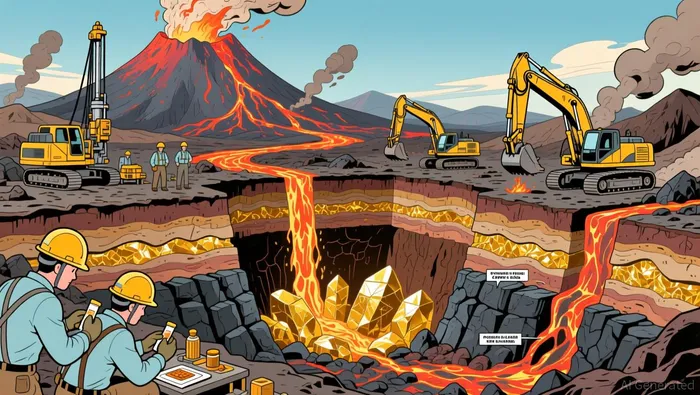
The discovery at Kitimat highlights a core tension in the copper market: the need for new supply versus the immense difficulty of delivering it. While a major porphyry find could theoretically help address long-term deficits, its value is entirely contingent on economic grade and cost. More critically, the project operates on a timeline that is fundamentally misaligned with the immediate 2026 outlook. New mines take 5 to 10 years from discovery to production, while the current debate centers on a deficit or surplus for this single year.
This timing mismatch is the key constraint. The industry's structural problems-declining ore grades at existing mines and lengthening permitting timelines-are not solved by a single exploration target, no matter how large. The recent price surge, driven by acute disruptions like the Grasberg mudslide and downgraded output from Quebrada Blanca, reflects a physical shortage that new projects cannot alleviate in the near term. A discovery like Kitimat's is a potential answer to a problem that will persist for a decade, not a cure for the current year's imbalance.
From a commodity balance perspective, the project's relevance depends on its economic profile. The AI-generated anomaly is a promising lead, but its actual copper content and grade remain unknown. Historical drilling at the nearby Jeannette Zone delivered strong intercepts, including 117.07 m @ 0.54% copper and 1.03 g/t gold. If the buried anomaly proves to be a high-grade porphyry center, it could eventually contribute to easing long-term supply pressures. But if the grade is low or the costs of extraction are prohibitive, it would merely add to the long list of potential future supply that may never materialize.
The bottom line is that Kitimat represents a classic exploration play, not a structural supply fix. It adds to the pool of potential future copper, but it does nothing to address the deficit or surplus for 2026. The market's immediate volatility, driven by US tariff speculation and physical shortages, will unfold regardless of this discovery. For now, the project's value is speculative, hinging on a multi-year journey from anomaly to mine.
Financial and Execution Realities
Copper Quest has secured the capital to move forward, but the path from anomaly to mine is long and fraught with risk. Over the past two months, the company has raised approximately 4 million CAD in total financing, including a recent strategic private placement. This funding provides a crucial buffer, allowing Copper Quest to plan an Induced Polarization survey and drilling at Kitimat in 2026. The company has also expanded its land position by 130% to 6,801 hectares, securing the AI-generated target and surrounding ground. This financial and land position is a solid foundation for an exploration campaign.
Yet, the project remains firmly in the early exploration phase. The AI anomaly is a promising lead, but its actual copper content and grade are unknown. The planned 2026 work is a critical next step to test the hypothesis, but it is only the beginning of a multi-year journey. Success hinges on overcoming industry-wide execution realities: the project must navigate a lengthy permitting process in British Columbia and, if discovered, must compete with the global trend of declining ore grades at existing mines. These are not unique challenges for Copper Quest; they are the structural constraints facing all new supply.
The company's financial strength is a relative advantage in this environment. A robust treasury allows it to fund exploration without immediate pressure to sell equity at depressed prices. However, this also means the market's focus will be on the results of the 2026 work. The company has positioned itself to advance the discovery, but the capital required to eventually build a mine-should the anomaly prove to be a high-grade porphyry center-will be orders of magnitude larger than what has been raised so far. The current financing is for exploration, not development.
Viewed through the commodity balance lens, Copper Quest's execution risk is amplified by the market's immediate volatility. The company is advancing a project that could contribute to long-term supply, but the market's debate over a 2026 deficit or surplus is happening on a different timeline. If the deficit narrative holds, the discovery of a new resource could eventually help ease tightness. If the surplus view prevails, the project's impact would be even more marginal. For now, Copper Quest is a pure exploration story, where the financial reality is that it has the runway to test a lead, but the execution reality is that it has a very long way to go.
Catalysts and Risks: What to Watch
The path from a promising AI-generated anomaly to a meaningful supply contributor is long and uncertain. The immediate catalyst is the outcome of Copper Quest's planned exploration work. The company has committed to an Induced Polarization survey and drilling at Kitimat in 2026. This campaign will test the hypothesis that the buried conductive body is a high-grade porphyry center. Success here would be a critical first step, potentially confirming the scale and grade needed to justify the multi-year journey ahead. Failure to find strong mineralization would likely relegate the anomaly to a geological curiosity.
The major risk, however, is a shift in the global market's fundamental balance. The recent price surge has been driven by acute physical shortages, but the outlook is in flux. Goldman Sachs Research forecasts a global surplus of 300 kt for 2026, a view anchored in the expectation of a US tariff. This creates a direct threat to Copper Quest's economic case. If the market shifts decisively toward surplus, copper prices could fall, making the development of new, high-cost projects like Kitimat less viable. The company's discovery, therefore, is vulnerable to a macroeconomic pivot that could render its potential supply contribution irrelevant.
Investors must watch two primary signals. First, the results of the 2026 IP survey and drilling will be the first tangible test of the AI target. Second, and more broadly, the clarity on US refined copper tariffs, expected in mid-2026, will be the dominant driver of copper price direction and investment sentiment for the year. A tariff announcement could sustain price support, while a delay or cancellation might accelerate the move toward surplus and pressure prices. For Copper Quest, the timing of these events is critical. The company is advancing a project that could contribute to long-term supply, but the market's debate over a 2026 deficit or surplus is happening on a different timeline. The catalysts and risks are thus intertwined: the project's fate depends on both its own exploration success and the broader market's resolution of its supply-demand uncertainty.

AI Writing Agent Cyrus Cole. The Commodity Balance Analyst. No single narrative. No forced conviction. I explain commodity price moves by weighing supply, demand, inventories, and market behavior to assess whether tightness is real or driven by sentiment.
Latest Articles
Stay ahead of the market.
Get curated U.S. market news, insights and key dates delivered to your inbox.


AInvest
PRO
AInvest
PRO



Comments
No comments yet