
Copper Price Dynamics: Navigating Geopolitical Risks and the Green Energy Transition for Strategic Investment


 Aime Summary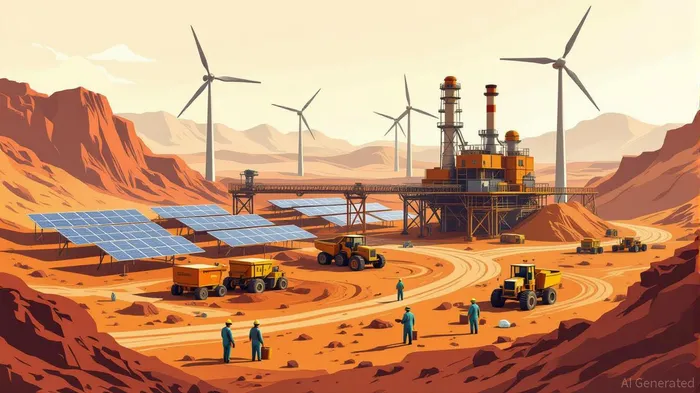
The global copper market is undergoing a seismic shift, driven by a collision of geopolitical instability and the accelerating green energy transition. For long-term investors, this confluence of forces presents both risks and opportunities. Copper, a cornerstone of modern industrialization, is now at the center of a critical supply-demand imbalance that could redefine its price trajectory for decades.
Geopolitical Risks: A Fragile Supply Chain
Copper production is hyper-concentrated in politically volatile regions. Chile, the world's largest producer, faces operational disruptions at key mines like BHP's Escondida and Codelco's El Teniente, compounded by water scarcity and aging infrastructure. The U.S. government's abrupt 50% tariff on copper imports—announced without prior consultation with Chile—has further destabilized trade flows, creating uncertainty for downstream industries.
In Peru, social unrest and indigenous protests have halted operations at projects like Cobre Panama, while regulatory shifts and resource nationalism have delayed capital expenditures. The Democratic Republic of the Congo (DRC), though a smaller player in copper production, adds volatility through political instability and security threats in mining regions.
These disruptions are exacerbated by U.S. policy shifts. The 2025 Section 232 tariffs, which target semi-finished copper products, aim to bolster domestic production but risk accelerating supply shortages. With global refined copper output at 26.5 million tonnes annually and demand projected to reach 33 million tonnes by 2035, the structural deficit is widening.
Green Energy Transition: A Surge in Demand
The green energy transition is the primary driver of copper's long-term demand. Electric vehicles (EVs), solar panels, and wind turbines are copper-intensive technologies. A single EV requires 80–100 kg of copper, compared to 20 kg in a conventional vehicle. Solar installations demand 4–5 kg per megawatt, while a single wind turbine requires 4–5 tonnes.
The International Energy Agency (IEA) estimates that 70% of the projected doubling in copper demand by 2040 will stem from clean energy infrastructure. The U.S. Inflation Reduction Act, China's $369 billion clean energy investments, and the EU's Green Deal are fueling this surge. By 2030, global copper demand is forecasted to hit $339.95 billion, with EV-related consumption alone accounting for 14% of total demand in 2025.
Strategic Entry Points for Investors
The current market dynamics create a compelling case for strategic investment in copper-linked assets. Here's how to position for the upcycle:
- Major Producers with ESG Alignment: Companies like Freeport-McMoRanFCX-- (FCX) and BHPBHP-- (BHP) are prioritizing sustainable practices, including water recycling and GHG reduction. These firms offer stable cash flows and are better positioned to navigate regulatory scrutiny.
- Development-Stage Projects: Firms such as Marimaca Copper and Firefly Metals are advancing high-grade deposits in politically stable regions like Canada and Chile. These projects, though riskier, offer outsized returns if they reach production.
- Recycling and Circular Economy Innovators: As supply constraints tighten, companies like Schnitzer Steel Industries and Sims Metal Management are leveraging AI and blockchain to enhance recycling efficiency.
- Diversified Portfolios: Investors should balance exposure between mining, recycling, and ETFs (e.g., Copper ETF: COPPER). This mitigates risks from geopolitical shocks and regulatory shifts.
Policy Tailwinds and Risks
The U.S. has designated copper a critical mineral, signaling policy support for domestic production. However, regulatory bottlenecks and cultural resistance to mining in the U.S. remain hurdles. Conversely, South American producers like Glencore and BHP are capitalizing on more favorable regulatory environments, particularly in Argentina, where new projects are emerging.
Conclusion: A Multi-Year Bull Case
Copper's structural bull case is underpinned by its irreplaceable role in decarbonization and electrification. With prices at $5.65 per pound in 2025—well above historical averages—and a projected 6.5% CAGR in demand through 2030, the market is primed for a sustained upcycle. Investors who act now, prioritizing companies with strong ESG practices, geopolitical resilience, and exposure to the green energy transition, will be well-positioned to capitalize on this inflection pointIPCX--.
The time to act is not in the distant future—it is here. Copper's next chapter is being written at the intersection of geopolitics and green energy, and the best returns will go to those who understand the map.

Blending traditional trading wisdom with cutting-edge cryptocurrency insights.
Latest Articles
Stay ahead of the market.
Get curated U.S. market news, insights and key dates delivered to your inbox.
AInvest
PRO
AInvest
PRO



Comments
No comments yet