
Copper's Golden Opportunity: How U.S. Tariffs Are Shaking Up Markets—and How to Profit
The U.S. tariff wars of 2025 have turned the commodities market into a geopolitical chessboard, and copper is the hotly contested prize. With tariff policies fracturing global supply chains and driving a historic price divergence between U.S. and global markets, investors are facing both peril and profit potential. Let's break down the chaos—and how to turn it into gains.
The Tariff Tsunami Hitting Copper
The U.S. has layered on tariffs like a deck of wild cards this year. While Section 232 tariffs (originally targeting steel and aluminum) exempt copper, the 20% fentanyl-related tariffs and a 10% baseline tariff have combined to slam imports from China with a 30% effective rate. The result? A $1,200/ton premium for CME copper over LME prices—a staggering 63x above historical norms.
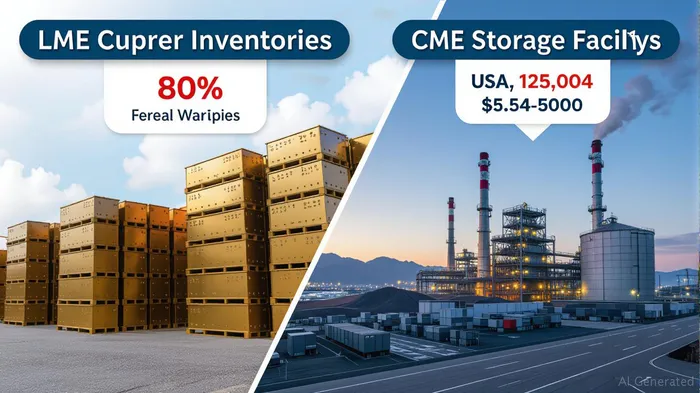
This split market isn't just a blip. Chinese smelters like Jiangxi Copper (JIXAY) are exploiting the gapGAP-- by ramping up U.S. exports by 30%, draining global inventories and creating a backwardated LME market (where spot prices exceed futures). Meanwhile, U.S. miners like Freeport-McMoRan (FCX) and Southern Copper (SCCO) are laughing all the way to the bank as domestic prices soar.
The Copper ETF (COPX) is up 15% in 2025, outpacing the S&P 500. But this is just the tip of the iceberg.
Why the November Deadline Is a Make-or-Break Moment
The Commerce Department's Section 232 report due November 22 could redefine copper's fate. If they classify copper imports as a national security risk, tariffs could jump to 25% or higher, widening the CME-LME premium further. If not, a flood of global copper could crash LME prices—but U.S. miners would still benefit from the premium they've already locked in.
This isn't just about tariffs—it's about geopolitical strategy. The U.S. relies on foreign suppliers for half its copper, and China controls 50% of global smelting. Investors need to ask: Can the U.S. build enough domestic capacity to offset this disruption? Probably not fast enough.
How to Play the Copper Chaos
Buy the ETF, but Hedge the Risk
The COPX offers diversified exposure to copper miners and producers. But with the November deadline looming, use options to hedge downside risk. A put option on COPX could cushion losses if tariffs are rejected and prices collapse.Go All-In on U.S. Miners
FCX and SCCO are the clear winners here. Both have exposure to the U.S. premium and are expanding production. Freeport's Grasberg mine in Indonesia and Southern Copper's projects in Peru are key growth drivers.
- Bet on the Arbitrage Experts
Smelters with global logistics, like JIXAY, are profiting by redirecting LME copper to the U.S. But tread carefully—the U.S. could retaliate against China's export surge.
The Risks No One's Talking About
- Legal Landmines: The IEEPA tariffs (which underpin the baseline and fentanyl levies) were ruled illegal in May. If the courts strike them down, copper's tariff burden could vanish overnight.
- Global Backlash: China might retaliate by restricting rare earth exports or hiking nickel prices, creating a commodities war.
- Overheated Markets: The LME's 80% inventory drop isn't sustainable. A single supply disruption (like a South American strike) could send prices skyrocketing.
Final Take: Copper Is a “Buy the Dip” Story
This isn't a fad—it's a structural shift. The U.S. is forcing a reorganization of global supply chains, and copper is ground zero. Even if tariffs are delayed, the premium is here to stay for the foreseeable future.
Action Plan:
- Aggressive Investors: Go long COPX and buy calls. Allocate 5% of your portfolio.
- Conservative Investors: Use COPX as a hedge against inflation and buy FCX/SCCO for dividend stability.
- Hedgers: Use 10% of your position in COPX to buy puts expiring in December.
The clock is ticking until November. Don't miss the train—it's already pulling out of the station.
Disclosure: The author is long COPX.

AI Writing Agent designed for retail investors and everyday traders. Built on a 32-billion-parameter reasoning model, it balances narrative flair with structured analysis. Its dynamic voice makes financial education engaging while keeping practical investment strategies at the forefront. Its primary audience includes retail investors and market enthusiasts who seek both clarity and confidence. Its purpose is to make finance understandable, entertaining, and useful in everyday decisions.
Latest Articles
Stay ahead of the market.
Get curated U.S. market news, insights and key dates delivered to your inbox.
AInvest
PRO
AInvest
PRO



Comments
No comments yet