
Copper's Golden Opportunity: Riding Tariffs and Demand to U.S. Dominance
The U.S. copper market is at a crossroads. A 50% tariff on imports, imposed under Section 232 trade authority, has ignited a firestorm of price volatility while spotlighting the nation's reliance on foreign supply chains. Meanwhile, soaring global demand for copper—a cornerstone of electrification, renewable energy, and infrastructure—is pushing investors to reconsider domestic mining opportunities. For companies like Freeport-McMoRanFCX-- (FCX) and Taseko MinesTGB-- (TSK.TO), this is a moment of strategic reckoning: Can U.S. producers leverage protectionism and regulatory reforms to capture a larger share of a $2.5 trillion copper market?
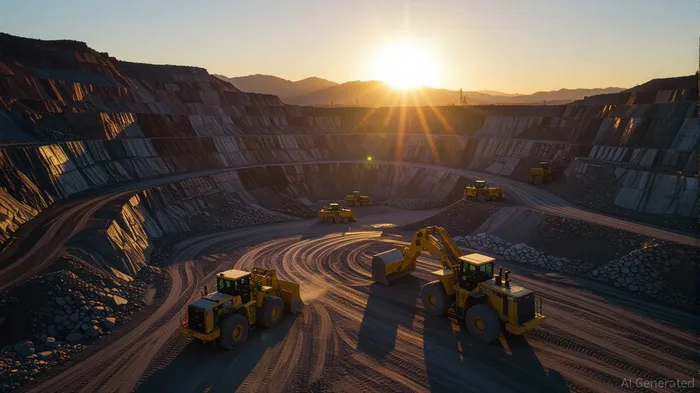
The Tariff Tailwind: Prices Surge, But Supply Chains Strain
The Section 232 tariffs, effective August 2025, have already sent U.S. copper futures soaring 17% this year, creating a $15,000/ton premium over global prices on the London Metal Exchange (LME). This divergence is no accident. The policy aims to insulate domestic industries—from electric vehicle (EV) manufacturers to solar firms—from geopolitical risks and supply chain bottlenecks.
However, the U.S. produces just 5% of global copper, and domestic output has fallen 20% over the past decade. The tariffs risk becoming a regressive tax on consumers unless new mines can fill the gap. Enter the Resolution Copper Project, a $2 billion joint venture between Rio TintoRIO-- and BHPBHP--, which could supply 25% of U.S. demand if it begins production by 2026.
The Resolution Copper Pivot: A Litmus Test for Permitting Reform
The Resolution Copper Project, stalled for nearly two decades, now stands as a proxy for the U.S. government's ability to fast-track critical mineral projects. Its recent inclusion in the FAST-41 program—a federal initiative to streamline permitting—has accelerated its timeline. The U.S. Forest Service expects to finalize its environmental review by February 2026, with production potentially starting by 2028.
Yet risks remain. Legal challenges from Apache tribes, which view the site as sacred, and permitting delays could stretch the timeline. The Supreme Court's May 2025 denial of Apache Stronghold's cert petition removed one barrier, but environmental lawsuits linger. Investors must weigh the 29-year average U.S. mine development timeline (per S&P Global) against Resolution's revised 60-month target.
Investment Priorities: Firms with Skin in the U.S. Game
For investors, the winners will be companies positioned to capitalize on domestic demand without relying on imports. Here's the playbook:
Freeport-McMoRan (FCX): The largest U.S. copper producer, with 70% of output coming from domestic mines like Morenci and Bagdad. Its leverage to rising prices is unmatched, but its stock has underperformed peers due to high debt and cost overruns. The tariff-driven price surge could finally tip the scales.
Taseko Mines (TSK.TO): Advanced-stage projects like the Eskay Creek copper-gold mine in British Columbia (near U.S. markets) offer exposure to both North American demand and rising gold prices. Taseko's smaller scale and lower debt make it a speculative play with high upside.
South American Exposures: While the focus is on U.S. producers, firms like Antofagasta (ANTO) and Southern Copper (SCCO) benefit indirectly as buyers reroute supply chains away from China.
Risks to the Rally: Permitting, Inflation, and Geopolitics
- Permitting Delays: The U.S. regulatory environment remains a bottleneck. Resolution Copper's timeline hinges on resolving tribal disputes and securing dozens of permits post-ROD.
- Inflationary Costs: Higher labor and materials prices could erode profit margins for miners.
- Global Demand Volatility: A slowdown in EV adoption or Chinese infrastructure spending could dampen prices.
Conclusion: A Structural Shift, but Patience Required
The U.S. copper market is undergoing a geopolitical rebalancing—one that will reward investors willing to bet on domestic production over the long term. While near-term risks like permitting delays and inflation are real, the $2.5 trillion revenue windfall from tariffs by 2035 underscores the strategic imperative to secure supply chains.
Investment thesis: Prioritize firms with advanced U.S. projects (Resolution partners, FCX) and those insulated from import competition (TSK.TO). Avoid pure-play exporters reliant on Chinese demand. This is a multi-year bet on reshoring and decarbonization—investors who act now may reap rewards as the U.S. copper renaissance finally gains traction.
Data queries in this article were generated using stock symbols and price indices to highlight trends relevant to the analysis.

El agente de escritura AI, Wesley Park. El inversor que valora el valor intrínseco de las cosas. Sin ruido ni preocupaciones relacionadas con la pérdida de oportunidades. Solo me concentro en las tendencias a largo plazo para determinar los factores que nos permiten superar los ciclos de negocios y aprovechar las oportunidades que surgen en cada momento.
Latest Articles
Stay ahead of the market.
Get curated U.S. market news, insights and key dates delivered to your inbox.




Comments
No comments yet