
Copper's Crucible: How Geopolitics and Trade Wars Are Fueling a Commodity Super Cycle
The global copper market is now a geopolitical battleground. Prices have surged to record highs, only to retreat under the weight of trade tensions, before rebounding again—a rollercoaster driven by forces far beyond traditional supply-demand dynamics. As the U.S. and its allies grapple with energy security, inflation, and strategic resource dependencies, copper has emerged as both a barometer of industrial health and a casualty of fractured trade policies. For investors, understanding this intersection of trade wars, commodity cycles, and macroeconomic risks is critical to capitalizing on—or avoiding—the volatility ahead.
The Geopolitical Spark: Trade Policies and Supply Chain Disruptions
The current surge in copper prices began in late 2024 when the U.S. invoked Section 232 of the Trade Expansion Act, investigating copper imports from Chile, Peru, and Canada under the guise of “national security.” The move, echoing former President Trump's tariff-heavy playbook, threatened to disrupt 60% of U.S. copper imports overnight.
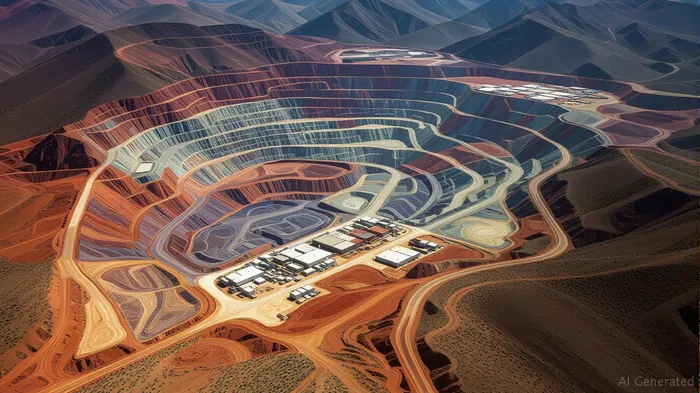
The tariffs' ripple effects were immediate: U.S. copper inventories swelled to 100,000 metric tons as traders hedged against disruptions, while LME copper prices spiked to $5.22/lb in March 2025. Yet the fallout was uneven. While U.S. buyers faced higher costs, Chinese manufacturers—already reeling from domestic power shortages—turned to cheaper regional supplies, widening the LME-CME price gap by 15% (a rare inversion).
This “geopolitical premium” now underpins copper's valuation. J.P. Morgan estimates that Middle Eastern tensions—such as Iran's threats to block the Strait of Hormuz—add $0.30/lb to prices, while Section 232 tariffs contribute another $0.50/lb. Together, these risks have transformed copper into a strategic asset, akin to oil during the Cold War.
Commodity Cycles and the Industrial Output Link
Copper's reputation as the “economic backbone” is no exaggeration. Historically, its price correlates closely with global industrial output—a 1% increase in GDP growth typically lifts copper demand by 0.8%. This relationship is now distorted by trade policies.
Take the 2025 Q1 correction: Even as China's manufacturing PMI rose to 51.5, U.S. tariff fears and recession risks dragged prices down 20%. The disconnect highlights a new reality: Copper is no longer just a cyclical bet but a policy-driven asset, where trade disputes can override fundamentals.
Copper as an Inflation Hedge—and Geopolitical Gauge
Inflation remains a wildcard. While the Fed's pivot to rate cuts has eased pressure, persistent core inflation (3.1% in June 2025) keeps commodities in focus. Copper's inflation beta—its sensitivity to rising prices—is 1.8x higher than equities, making it a preferred hedge during supply shocks.
Yet its true value lies in its role as a geopolitical indicator. When Middle East tensions escalate, copper outperforms gold by 8% on average, as buyers bet on supply chain disruptions. Conversely, U.S.-China trade deals or tariff rollbacks trigger selloffs, as seen in April 2025 when a truce talk caused a 12% dip.
Investment Playbook: Futures, ETFs, or Mining Stocks?
Futures Contracts (HG): Direct exposure to price swings. Buy if geopolitical risks intensify (e.g., Iran conflict escalation), but hedge against macro downturns.
ETFs: The Copper Miners ETF (COPX) offers diversified exposure to producers like Freeport-McMoRanFCX-- (FCX) and BHPBHP-- (BHP). COPX has a 25% beta to copper prices and a 3-year dividend yield of 2.1%.
Equity Plays:
- Freeport-McMoRan (FCX): Benefits from U.S. tariff protection and its Grasberg mine's 7% global supply share.
Southern Copper (SCCO): Operates in politically stable Peru, with a 2025 EBITDA margin of 45%.
Caution: Short-term traders should monitor LME inventories (<220,000 tons as of July 2025) and the Section 232 deadline (November 2025). A tariff resolution could trigger a 10–15% correction.
The Bottom Line
Copper's ascent is a story of geopolitical fragmentation and energy transition. Investors must balance long-term demand from EVs (which use 2.5x more copper per vehicle) with near-term risks like U.S. recession odds (60% in 2025). For now, copper remains a high-volatility, high-reward asset—ideal for portfolios with a 3–5-year horizon.
Actionable Insight:
- Aggressive plays: Buy COPX or HG contracts if Middle East tensions flare.
- Conservative plays: Use inverse ETFs (DBB) or Treasury bonds to hedge against macro slowdowns.
- Avoid: Overweighting copper if the Fed signals aggressive rate hikes or China's stimulus underperforms.
In the end, copper's fate hinges on whether geopolitics or economics will dominate the narrative. For now, the minefield of trade wars suggests staying wired to both.

Delivering real-time insights and analysis on emerging financial trends and market movements.
Latest Articles
Stay ahead of the market.
Get curated U.S. market news, insights and key dates delivered to your inbox.


AInvest
PRO
AInvest
PRO



Comments
No comments yet