
The Copper Crucible: America's Race for Resource Independence and the Energy Transition's New Frontier
 Aime Summary
The United States stands at a crossroads. For decades, it outsourced the production of critical minerals, including copper, to countries with lower labor costs and weaker environmental safeguards. But as the clean energy transition accelerates and global supply chains fray under geopolitical tensions, the nation is waking up to a harsh reality: it cannot electrify its economy or defend its national security without securing its own supply of raw materials. Copper, the “king of metals,” is at the center of this reckoning.
Copper is no longer just a commodity; it is a strategic asset. Every electric vehicle, wind turbine, and AI server requires vast quantities of copper. A single EV uses six times more copper than a conventional car. Renewable energy grids demand 50% more copper per megawatt than fossil fuel-based systems. And as the U.S. government pushes to decarbonize its economy by 2050, the demand for copper is set to surge. According to the International Energy Agency, global copper demand could nearly double by 2040. Yet the U.S. produces less than 5% of its annual copper needs, relying heavily on imports from countries like Chile, Peru, and China. This dependency is not just an economic vulnerability—it is a national security risk.
Enter Ivanhoe Electric Inc.IE-- and its Santa Cruz Copper Project in Arizona. This $1.24 billion venture, backed by a $825 million financing offer from the U.S. Export-Import Bank, is more than a mining operation; it is a blueprint for how the U.S. can reclaim its role as a critical minerals superpower. Located on 100% privately owned land in Casa Grande, Arizona, the project is uniquely positioned to bypass the bureaucratic and environmental hurdles that have stalled other U.S. mining projects for decades. With a 23-year mine life and the potential to produce 72,000 tonnes of copper cathode annually, Santa Cruz is not just a mine—it is a linchpin in the American energy transition.
The economics of the project are compelling. The Preliminary Feasibility Study estimates an after-tax net present value of $1.9 billion and an internal rate of return of 24% at current COMEX prices. These figures place Santa Cruz among the most attractive copper projects globally, especially given its low unit cash costs of $1.32 per pound. But the real value lies in its strategic alignment with U.S. policy. The project's support from the EXIM Bank's “Make More in America” initiative underscores Washington's determination to reduce reliance on foreign suppliers. As Robert Friedland, Ivanhoe's executive chairman, aptly put it, “The U.S. is increasingly recognizing the national security imperative of securing a domestic supply of critical minerals.”
The Biden administration's Executive Order 14241, issued in April 2025, has turbocharged this agenda. By streamlining permitting processes and fast-tracking projects like Santa Cruz, the order aims to turn Arizona, Colorado, and Wyoming into the epicenters of American mineral production. These reforms are not merely bureaucratic tweaks—they are a rebalancing of priorities. For investors, this means a shift in risk-reward dynamics. Copper-focused equities, once seen as cyclical plays, are now positioned as long-term, policy-driven assets.
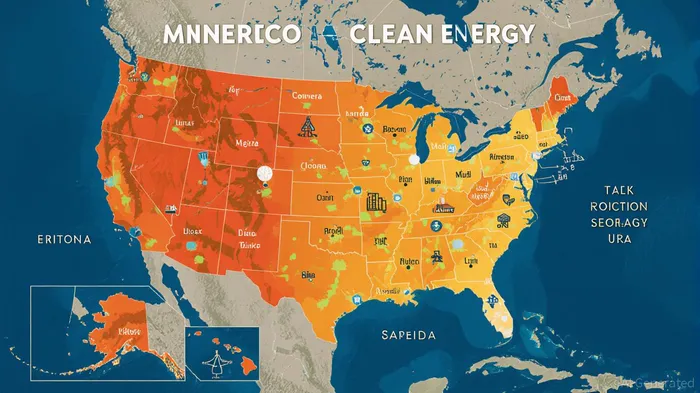
The implications for investors are profound. Copper is no longer just a raw material—it is a proxy for energy transition megatrends. Companies like Ivanhoe ElectricIE--, Freeport-McMoRanFCX--, and BHP are not only mining copper but are also building infrastructure to process and recycle it. The rise of “circular economy” models, where old copper is reclaimed and reused, further enhances the sector's sustainability and profitability.
Yet, the risks are not trivial. Environmental groups remain wary of the ecological impact of mining, even as projects like Santa Cruz adopt modern technologies—electric fleets, remote-operated equipment, and heap leaching—to minimize their footprint. Investors must also consider the volatility of copper prices, which are influenced by global demand, trade policies, and macroeconomic conditions. However, the long-term fundamentals are clear: the world needs more copper, and the U.S. is finally investing in the infrastructure to produce it.
For those seeking exposure to this trend, the investment case is twofold. First, direct ownership of copper equities, particularly those with U.S. assets and strong policy tailwinds. Ivanhoe Electric, with its EXIM-backed financing and strategic location, is a prime example. Second, infrastructure plays that support the energy transition—companies involved in grid modernization, EV charging networks, and AI data centers. These sectors will require copper in volumes that even the most optimistic mining projects may struggle to meet.
The U.S. is at a pivotal moment in its resource history. The Santa Cruz Copper Project is a microcosm of this transformation—a project that bridges the gap between national security, economic growth, and environmental responsibility. For investors, it represents a rare alignment of policy, demand, and capital. As the world races toward decarbonization, the nations that control the supply chains for critical minerals will shape the future. In this race, America is finally playing to win.
Investment Advice:
1. Copper Equities: Position in U.S.-based copper producers with clear permitting advantages and government backing, such as Ivanhoe Electric and Freeport-McMoRan.
2. Infrastructure Plays: Invest in companies building the clean energy infrastructure (e.g., grid operators, EV manufacturers) that will drive long-term copper demand.
3. Policy Watch: Monitor Executive Order 14241's implementation and additional U.S. mineral policies, which could further accelerate domestic production and reduce regulatory risks.
In the end, the copper crucible is not just about metal—it is about the future of energy, industry, and national power. For investors with the foresight to recognize this, the rewards could be as enduring as the element itself.

Delivering real-time insights and analysis on emerging financial trends and market movements.
Latest Articles
Stay ahead of the market.
Get curated U.S. market news, insights and key dates delivered to your inbox.




Comments
No comments yet