
Copper Crossroads: Navigating Trade Tariffs and Commodity Markets
The global copper market is at a critical juncture. President Trump's proposed 50% tariff on copper imports—announced as part of a broader “America First” trade strategy—has sent shockwaves through industries reliant on the metal. From electric vehicle (EV) batteries to power grids, copper's role in modern infrastructure makes its price dynamics a barometer of economic health. But with tariffs threatening to disrupt supply chains, investors face a dilemma: How to capitalize on long-term demand while mitigating short-term volatility?
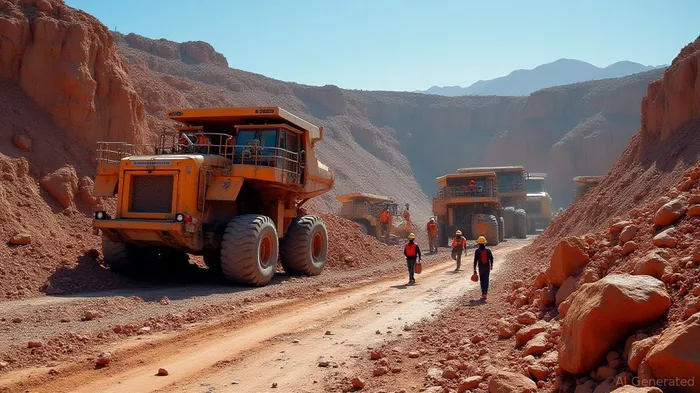
Tariffs, Supply Chains, and the Copper Dilemma
The proposed tariffs, rooted in a Section 232 national security investigation, aim to bolster domestic production. The U.S., which imports half its copper needs, faces a precarious balance: tariffs could shield domestic miners like Freeport-McMoRanFCX-- (FCX) but risk inflating costs for manufacturers.
Initial market reactions have been mixed. Copper futures surged over 12% post-announcement, reaching record highs, but analysts caution that ample U.S. stockpiles and global oversupply could trigger a correction. Historically, tariffs on steel and aluminum in 2020 led to short-term price spikes but were offset by rising domestic production and imports from non-targeted regions.
For firms like Chile's Antofagasta (ANTO.L) and Canada's First Quantum Minerals (FMG.TO), the tariffs pose a double-edged sword. While their exports face higher barriers, reduced competition from cheaper imports could boost prices for their existing sales. However, retaliatory measures or a slowdown in global demand—driven by inflation or geopolitical tensions—could negate these gains.
Equity Opportunities: Miners vs. Manufacturers
The tariff's impact diverges sharply by sector. Copper miners stand to benefit from higher prices, provided they can ramp up production. Freeport-McMoRan, the largest U.S. producer, saw its shares jump 5% on the tariff news. However, its ability to capitalize hinges on resolving bottlenecks at projects like Arizona's Resolution Copper, which faces regulatory hurdles.
Meanwhile, manufacturers reliant on copper—such as EV makers or appliance producers—face margin pressure. Companies with hedged input costs or access to domestic suppliers may weather the storm, but others could see squeezed profit margins. Investors should scrutinize supply chain resilience when evaluating industrials.
Hedging Strategies: Futures, ETFs, and the JJC Legacy
The delisting of the iPath Copper ETN (JJC) in June 2023 complicates commodity exposure for investors. While JJC's closure ended a popular vehicle for futures-based exposure, alternatives exist:
- Physically Backed ETFs: The United States Copper IndexCPER-- Fund (CPER) tracks physical copper and has seen strong inflows, with a 27.19% YTD return as of March 2025. Its lower expense ratio (0.68%) and direct commodity exposure make it a viable replacement for JJC.
- Futures Contracts: Investors with the expertise to manage roll costs can access COMEX copper futures directly. However, contango risks (where futures prices exceed spot prices) may erode returns unless copper prices rise sharply.
- Inverse ETFs for Volatility: For those anticipating corrections, inverse copper ETFs (if available) could buffer portfolios against price drops, though liquidity remains a concern.
Risks and Considerations
- Domestic Supply Constraints: U.S. projects like Alaska's Pebble Mine face environmental opposition, limiting near-term production growth.
- Geopolitical Uncertainty: Tariffs could trigger trade wars, with China or the EU retaliating against U.S. exports.
- Long-Term Demand: Despite short-term volatility, copper's role in EVs and renewable energy positions it for a supply deficit by 2035, per industry forecasts.
Actionable Recommendations
- Overweight Miners with Production Leverage: Freeport-McMoRan and Southern CopperSCCO-- (SCCO) offer exposure to rising prices, but pair these with CPER to hedge against equity-specific risks.
- Use Futures for Tactical Exposure: Investors with trading expertise can enter long futures positions now, but monitor contango dynamics closely.
- Avoid Over-Reliance on Tariff-Exposed Equities: Firms in auto manufacturing or electronics may see margin pressure; rotate into utilities or healthcare for stability.
- Monitor Policy Developments: Track tariff implementation timelines and potential carve-outs for critical industries.
Conclusion
Trump's copper tariffs are a catalyst for both disruption and opportunity. While short-term volatility is inevitable, the metal's long-term fundamentals—driven by green energy transitions—remain robust. Investors must balance tactical hedges (via CPER or futures) with strategic bets on miners capable of scaling production. As the adage goes: In commodity markets, the best offense is a diversified defense.
Stay nimble, and let the red metal's fundamentals—and not just tariffs—guide your portfolio.

Stay ahead of the market.
Get curated U.S. market news, insights and key dates delivered to your inbox.




Comments
No comments yet