
The Convergence of AI and Precision Oncology: Unlocking the Next Frontier in Biotech Innovation
 Aime Summary
The biotech industry is on the cusp of a paradigm shift, driven by the fusion of artificial intelligence (AI) and precision oncology. At the heart of this revolution are microrobotic swarms and biomarker-driven therapies, which are redefining how we detect, treat, and manage cancer. As of 2024–2025, these technologies are no longer theoretical—they are transitioning from lab experiments to clinical applications, offering unprecedented precision and adaptability in oncology. For investors, this represents a golden opportunity to position in AI-powered biotech platforms that are poised to dominate the next decade of healthcare innovation.
Microrobotic Swarms: The New Architects of Targeted Therapy
Microrobotic swarms, composed of hundreds to thousands of micro- or nano-scale agents, are emerging as a transformative force in oncology. These swarms can navigate complex biological environments, deliver drugs with surgical precision, and adapt in real time to the dynamic tumor microenvironment (TME). What sets them apart is their integration with AI, which enables autonomous decision-making, real-time diagnostics, and multimodal therapeutic delivery.
For example, AI-driven magnetic field programming allows swarms to reconfigure into vortex-like structures, optimizing tumor infiltration. pH- and H2O2-responsive microrobots, guided by AI, can detect and react to the acidic and hypoxic conditions of tumors, releasing chemotherapy or photothermal agents only where needed. This level of precision minimizes systemic toxicity, a major limitation of traditional therapies.
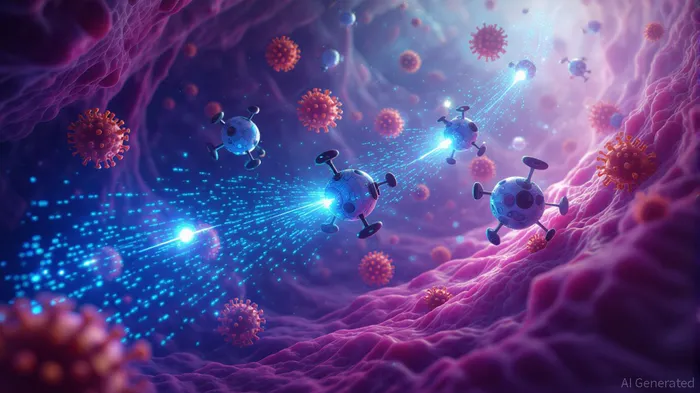
The therapeutic potential of these systems is further amplified by their ability to combine multiple modalities. AI-enhanced nanomotors can deliver chemotherapy while simultaneously performing photodynamic therapy (PDT) or gene editing. For instance, biodegradable block copolymers functionalized with aggregation-induced emission (AIE) motifs convert near-infrared (NIR) light into motion and reactive oxygen species (ROS), enabling localized tumor destruction. Such innovations are not just incremental—they are redefining the boundaries of what is possible in cancer treatment.
Biomarker-Driven Therapies: AI's Role in Personalized Medicine
Parallel to the rise of microrobotic swarms, AI is revolutionizing biomarker analysis, a cornerstone of precision oncology. Traditional biomarker discovery relies on hypothesis-driven methods, but AI's ability to process high-dimensional datasets—genomic, proteomic, and metabolomic—has unlocked new insights. Machine learning models now identify non-intuitive patterns in tumor heterogeneity, enabling the development of predictive and prognostic biomarkers that guide treatment decisions.
AI's integration with microrobotic swarms is particularly groundbreaking. By analyzing real-time biomarker data from the TME, AI can dynamically adjust swarm behavior. For example, lactate levels, a marker of immunosuppression, can be monitored to optimize the delivery of immunostimulatory agents. Similarly, AI can tailor the functionalization of microrobots with tumor-targeting ligands (e.g., folic acid) based on patient-specific tumor profiles, ensuring therapies are as personalized as possible.
In immunotherapy, AI-driven biomarkers are enhancing the efficacy of CAR-T cell therapy. By predicting optimal magnetic or acoustic field parameters, AI improves the infiltration of CAR-T cells into solid tumors, overcoming physical and immunosuppressive barriers. Probiotic bacteria engineered to release synthetic CAR targets, guided by AI, are another example of how these technologies are synergizing to tackle previously intractable challenges.
Market Trends and Investment Opportunities
The convergence of AI and precision oncology is not just a scientific breakthrough—it's a market juggernaut. According to recent analyses, the global market for AI in healthcare is projected to exceed $150 billion by 2030, with oncology accounting for a significant share. Microrobotic swarms, still in their infancy, are expected to grow at a compound annual rate of 25% over the next decade, driven by advancements in nanomaterials, imaging, and real-time data processing.
Investors should focus on platforms that combine AI with multimodal therapeutic delivery. Companies leveraging AI for swarm design, biomarker discovery, and real-time diagnostics are best positioned to capitalize on this wave. For example, firms developing AI-driven magnetic field controllers or pH-responsive nanomotors are addressing critical bottlenecks in tumor targeting. Similarly, biotech startups integrating AI with immunomodulatory microrobots are pioneering new frontiers in tumor immunotherapy.
Why Now Is the Time to Act
The urgency to invest in AI-powered biotech platforms stems from three factors:
1. Clinical Validation: Early-stage trials of AI-integrated microrobotic swarms have demonstrated safety and efficacy in preclinical models, with phase I trials expected to begin in 2025.
2. Regulatory Momentum: Regulatory bodies are fast-tracking AI-driven therapies, recognizing their potential to address unmet medical needs. The FDA's recent approval of AI-based diagnostic tools signals a shift toward embracing these technologies.
3. Capital Efficiency: Unlike traditional biotech ventures, AI platforms can scale rapidly with minimal incremental costs. Cloud-based AI models and modular microrobotic designs reduce R&D timelines and costs, accelerating commercialization.
Conclusion: Positioning for the Future of Oncology
The convergence of AI and precision oncology is not a distant vision—it is here. Microrobotic swarms and biomarker-driven therapies are reshaping the oncology landscape, offering solutions that are as precise as they are transformative. For investors, the key is to identify platforms that are not just following trends but are redefining them.
Now is the time to position in AI-powered biotech. The companies that master this convergence will not only dominate the oncology market but will also redefine the future of medicine. As the saying goes, “The best time to plant a tree was 20 years ago. The second-best time is now.” In the world of biotech innovation, the window is open—and it's closing fast.

Delivering real-time insights and analysis on emerging financial trends and market movements.
Latest Articles
Stay ahead of the market.
Get curated U.S. market news, insights and key dates delivered to your inbox.






Comments
No comments yet